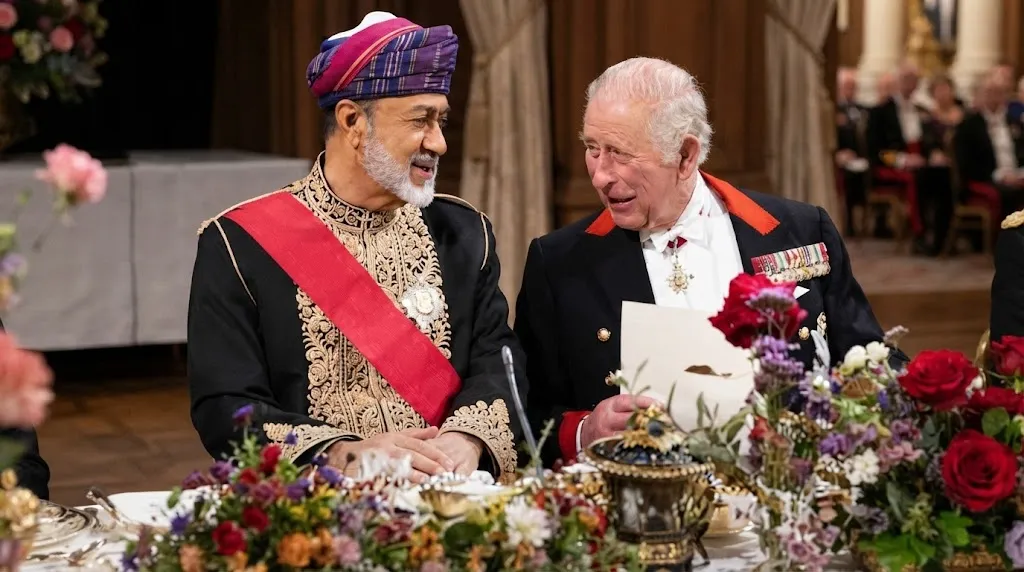
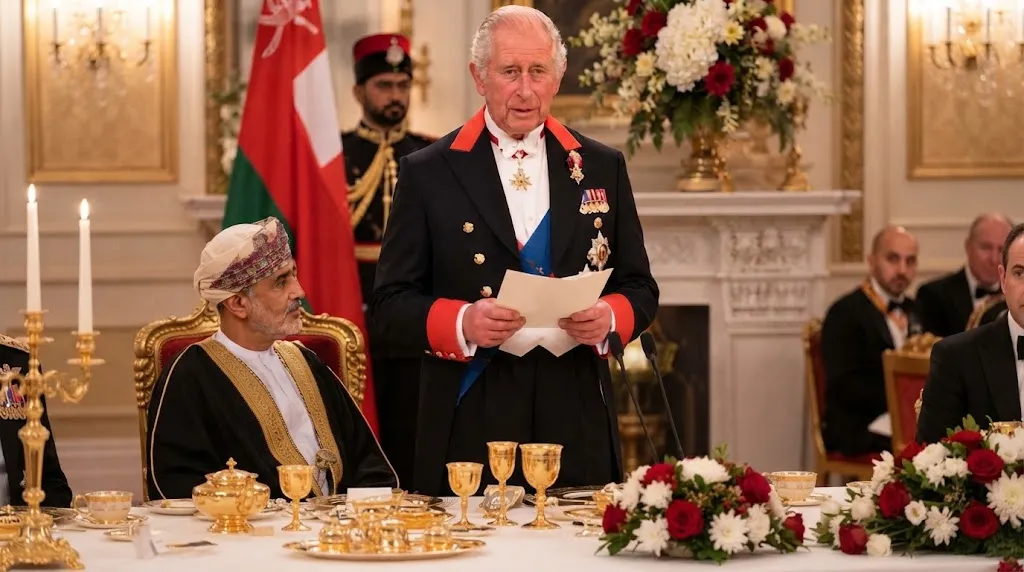
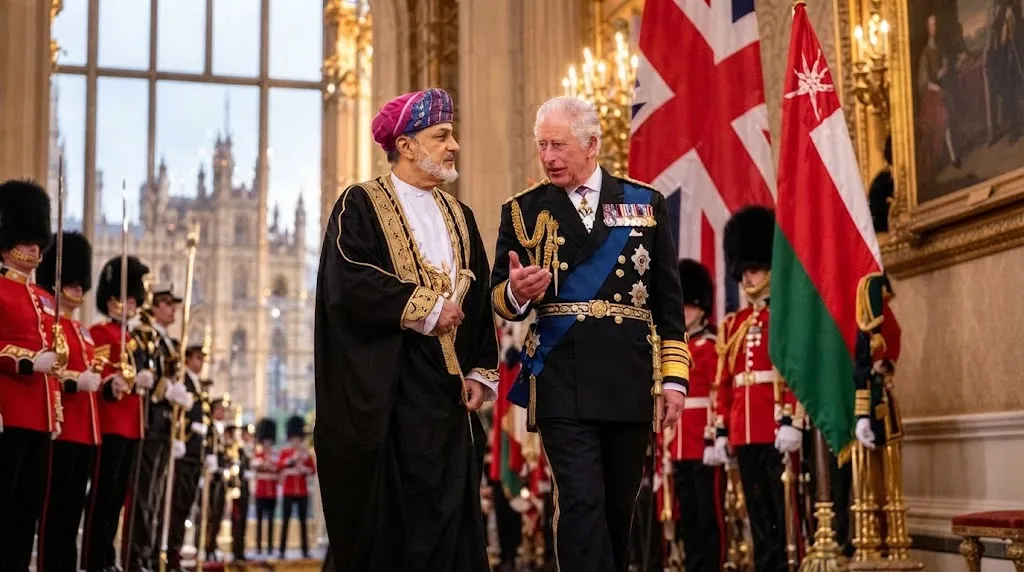








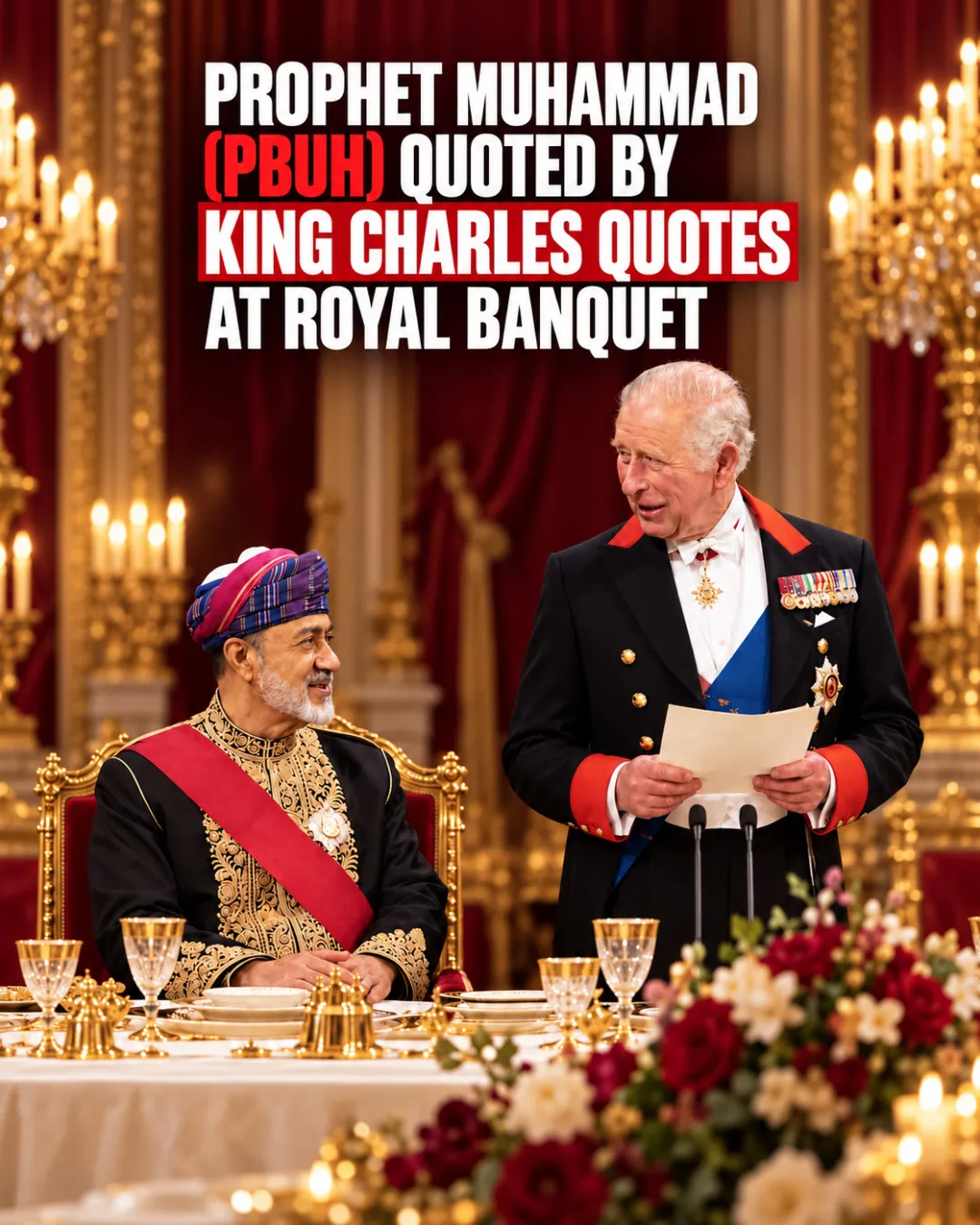

King Charles III drew widespread attention after quoting a Hadith of Prophet Muhammad (PBUH) in Arabic during a royal banquet honouring Oman’s Sultan Haitham bin Tariq. The gathering took place at Windsor Castle on October 20, 2026, as part of the Sultan’s three-day state visit to the United Kingdom.
The British monarch referred to a saying associated with the people of Oman, highlighting their reputation for kindness and good character. The moment stood out during the formal proceedings, bringing Islamic tradition into a speech celebrating the longstanding relationship between Britain and Oman.

The Hadith quoted by King Charles conveys the meaning that visitors to Oman would not be insulted or physically harmed by its people. The saying is referenced in Sahih Muslim in a passage concerning the virtues of the people of Oman. By reciting it in Arabic, the King acknowledged a religious and cultural tradition with particular significance for his guest.
During his address, King Charles also recognised Oman’s role in encouraging dialogue and helping ease regional tensions. His remarks reflected the country’s diplomatic approach and its efforts to maintain communication between parties during periods of conflict.

Sultan Haitham’s visit marked the first state visit to Britain by an Omani Sultan since 1982, when Sultan Qaboos bin Said was welcomed by Queen Elizabeth II. The occasion included a ceremonial reception, a carriage procession, a guard of honour and a state banquet hosted by King Charles and Queen Camilla.
Beyond the royal ceremonies, the visit highlighted the longstanding relationship between the two countries, built through generations of diplomatic, commercial and defence ties. The King’s reference to Islamic teachings added a cultural dimension to the occasion, while discussions surrounding the visit provided an opportunity to explore future cooperation.