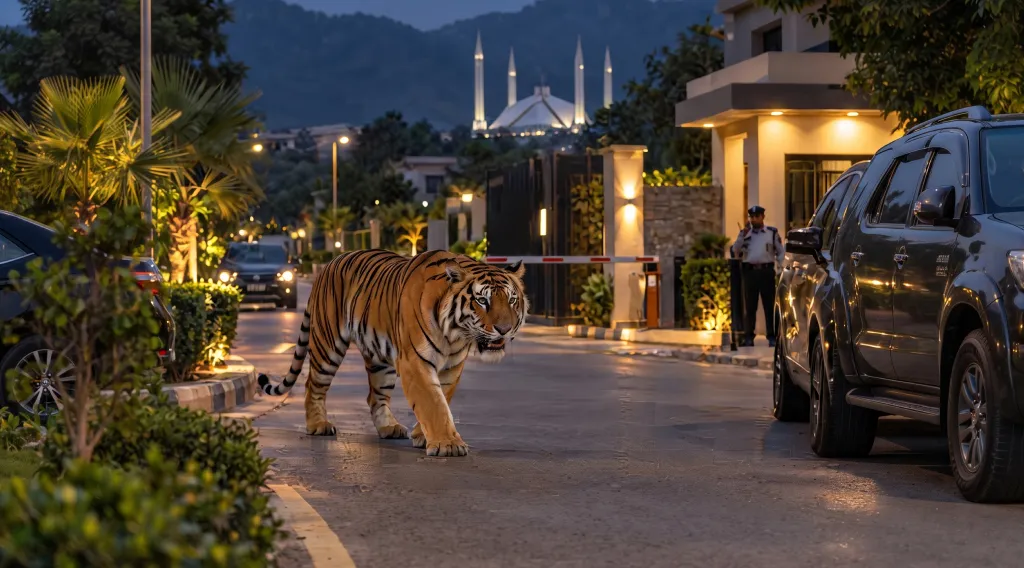
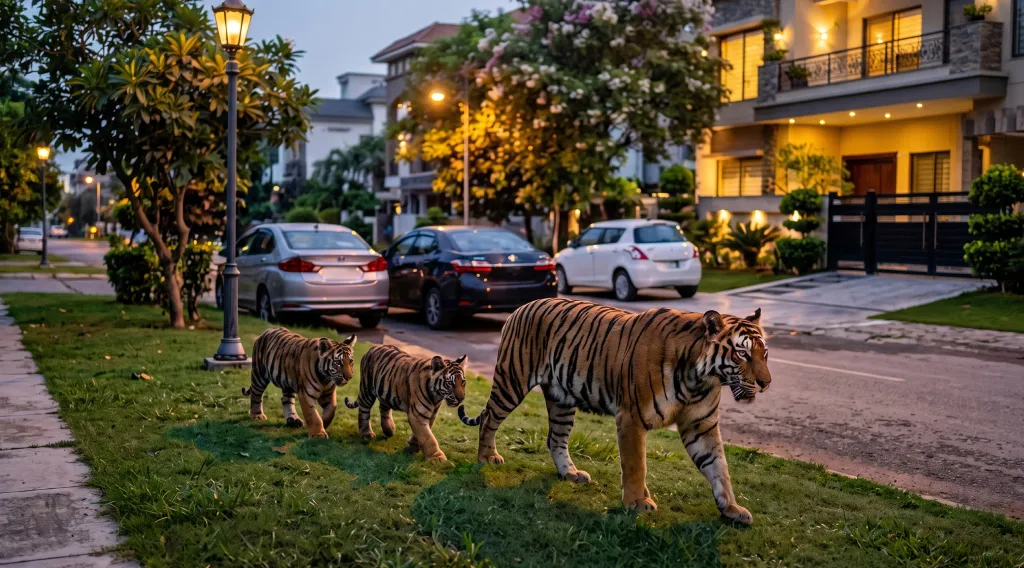
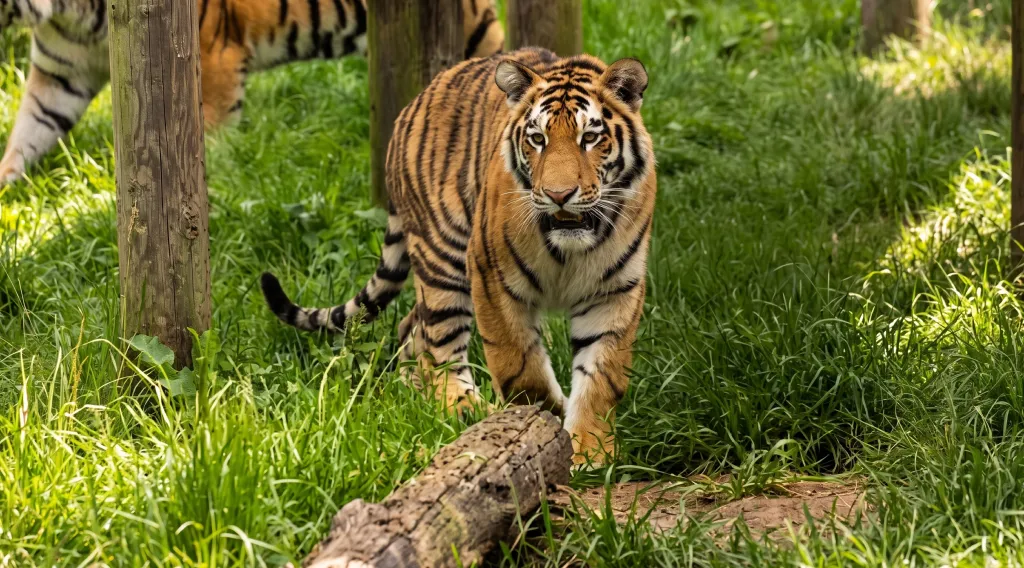
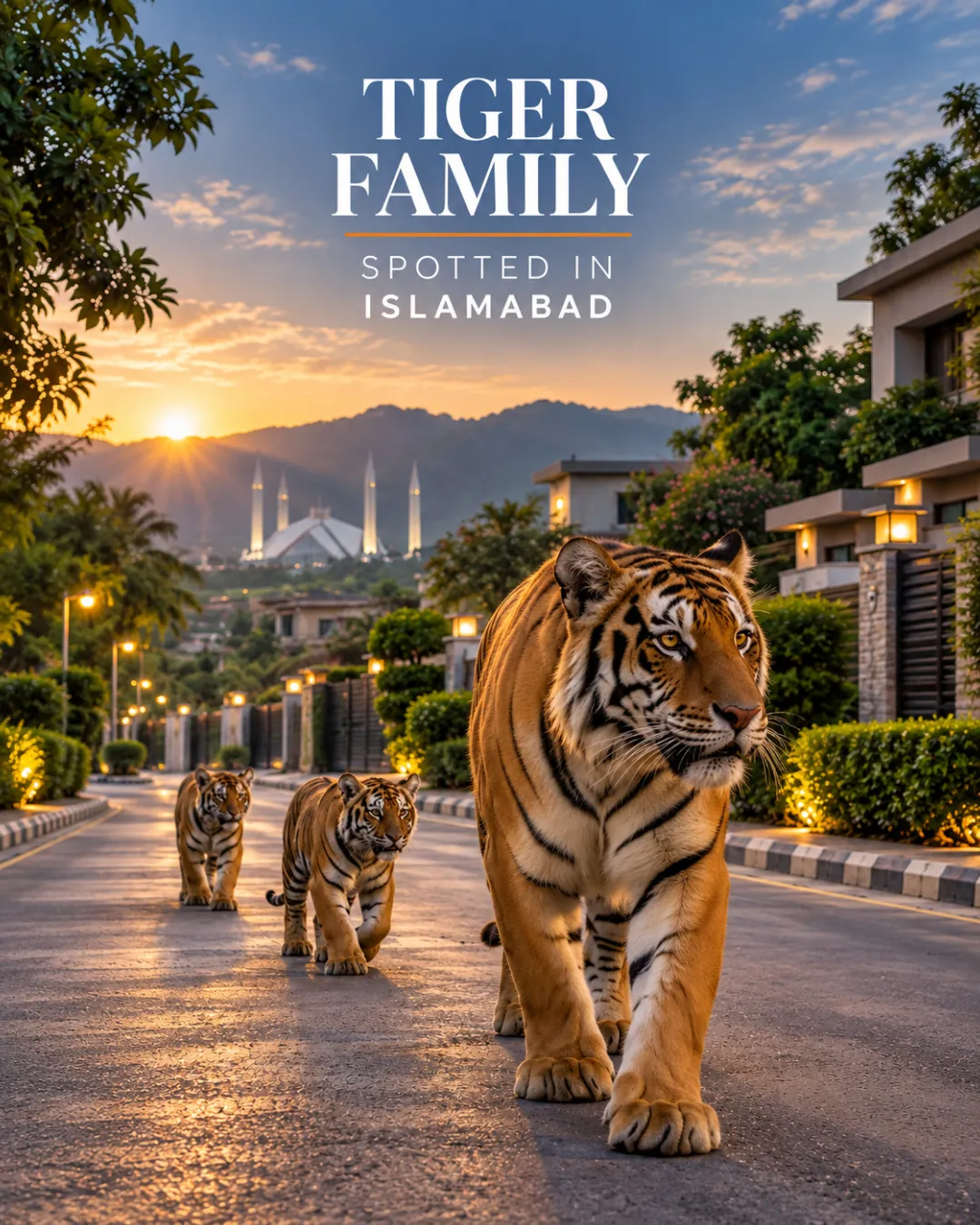

An extraordinary scene unfolded in Gulberg Greens, Islamabad, after residents reported seeing a Bengal tiger moving through B Block, Street 15, with two cubs nearby.
The sighting immediately stood out in a neighbourhood where residents are accustomed to everyday city life rather than a tiger family passing through. Images and videos reportedly began circulating in local community groups, drawing widespread attention.
For residents living nearby, however, the unusual sighting was more than a viral moment. Security teams increased monitoring while families were advised to remain cautious and limit unnecessary outdoor activity.

The presence of two cubs makes the situation particularly sensitive. A tiger protecting its young may react defensively if it believes that people are approaching or creating a threat.
Residents were therefore advised against following the animals, approaching them or attempting to capture close range footage. What may appear to be a fascinating opportunity for a photograph can quickly become unpredictable when dealing with wild animals.
The safest response is to keep away and alert security personnel if the animals are spotted again. Giving the tiger family space allows trained teams to assess the situation while reducing the possibility of a dangerous encounter.

The incident also raises questions about the relationship between Islamabad’s expanding residential communities and the natural spaces surrounding the capital. Encounters like this highlight how closely urban development and wildlife habitats can sometimes exist alongside one another.
Exactly how the tiger and cubs reached the residential area remains an important question. Establishing their origin and movements could help authorities understand the circumstances and determine appropriate steps for future wildlife encounters.
For residents, the message remains simple: stay alert, follow safety instructions and report sightings rather than intervening.