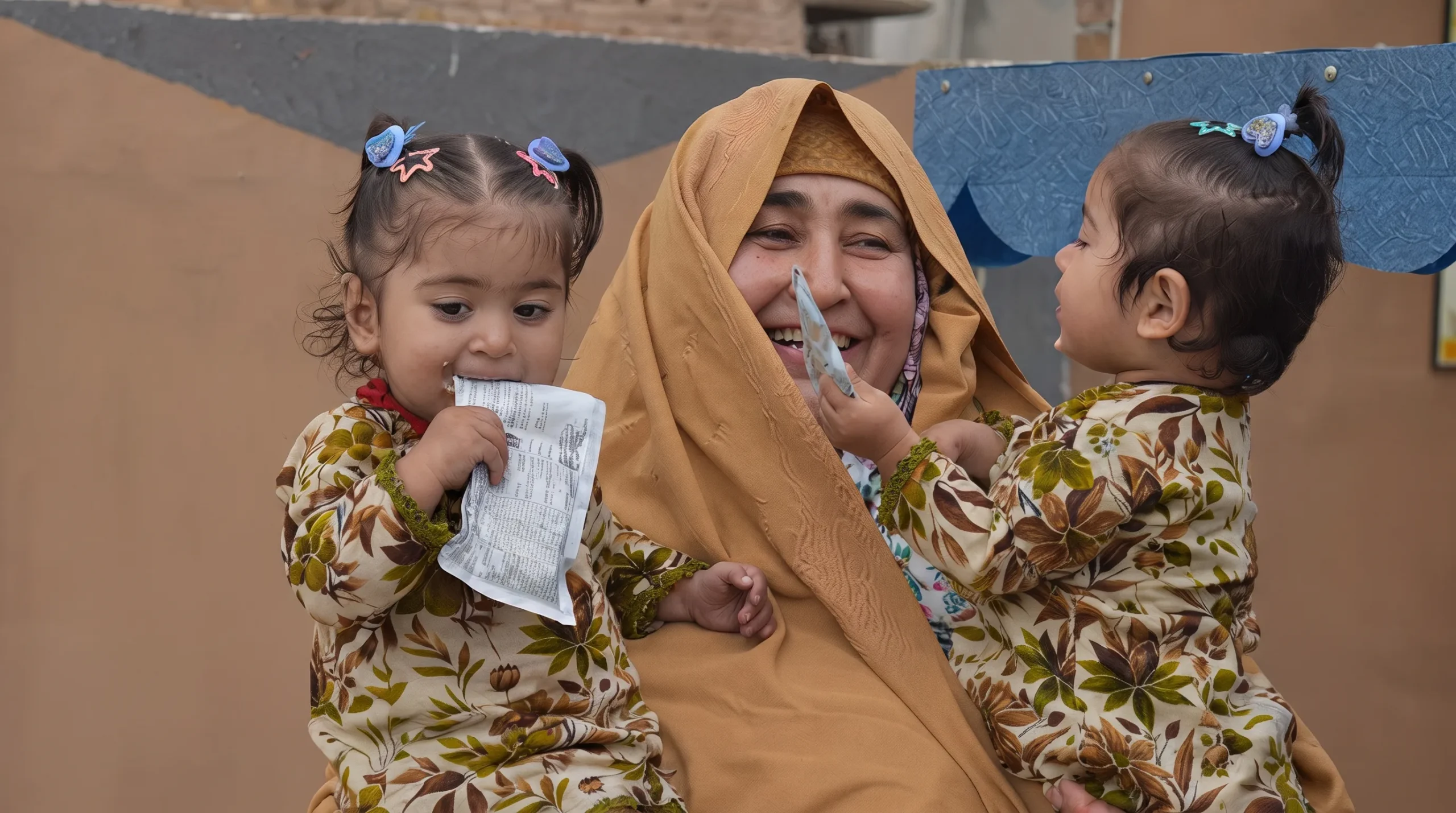
When Dilbara Bibi’s daughter-in-law, Zaiba Khan, went into labour in Peshawar in December 2024, the family feared the worst. Zaiba was expecting twins, and there were concerns about whether both babies would survive. When a nurse finally brought out the newborns, Safa and Shifa, the news that both were alive brought immense relief.
But the family’s happiness soon gave way to worry. The girls faced serious nutritional challenges during their first months of life, with Safa particularly vulnerable. Dilbara, a mother of seven herself, found herself watching her granddaughters struggle through a period when they needed care and support the family could not provide on its own.

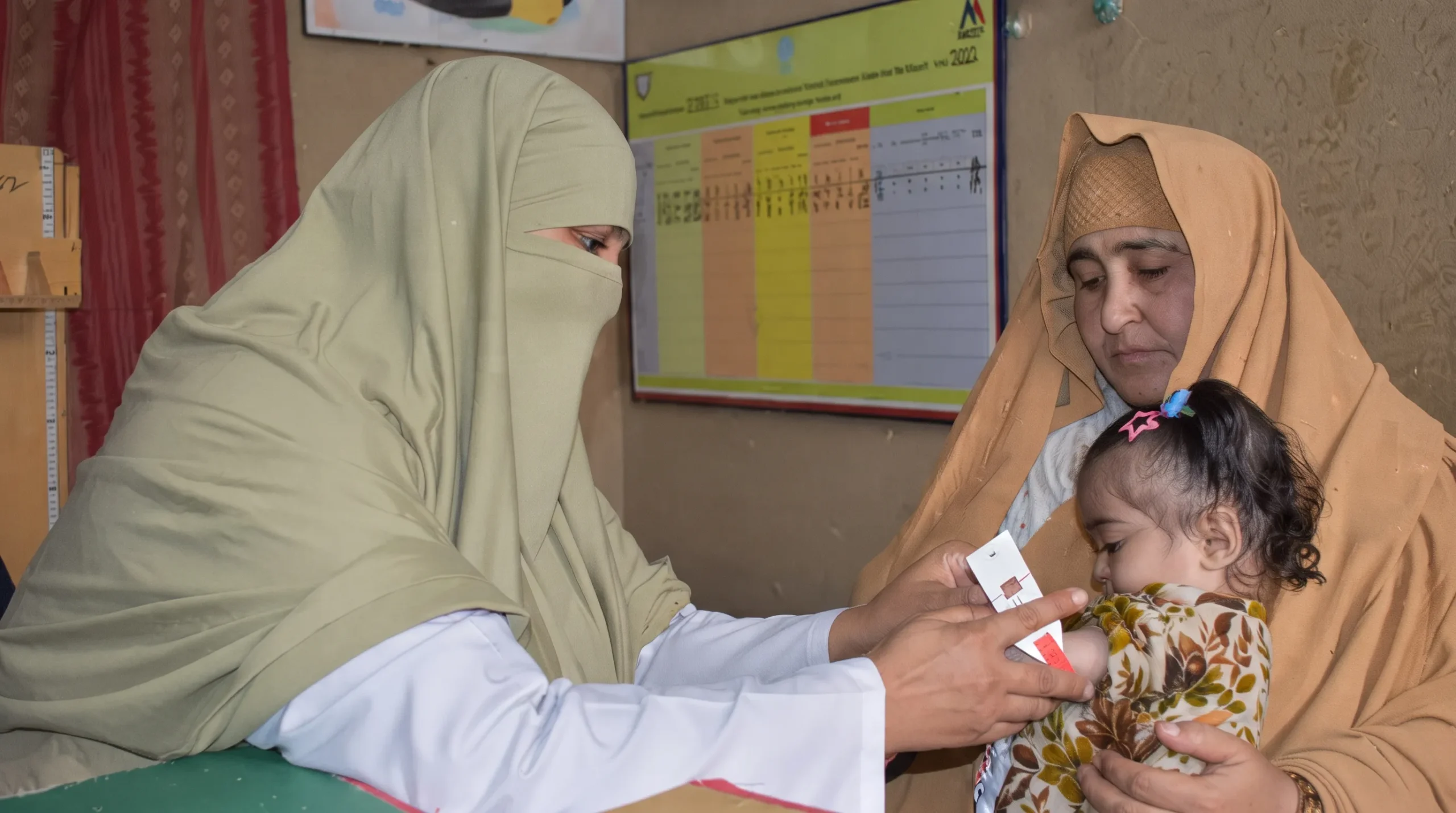
By the time Safa and Shifa were seven months old, both had developed severe acute malnutrition. Their family sought help at the Civil Dispensary in Nazar Bostan, Peshawar, where a treatment programme supported by UNICEF and the Children’s Investment Fund Foundation provided specialised nutritional care.
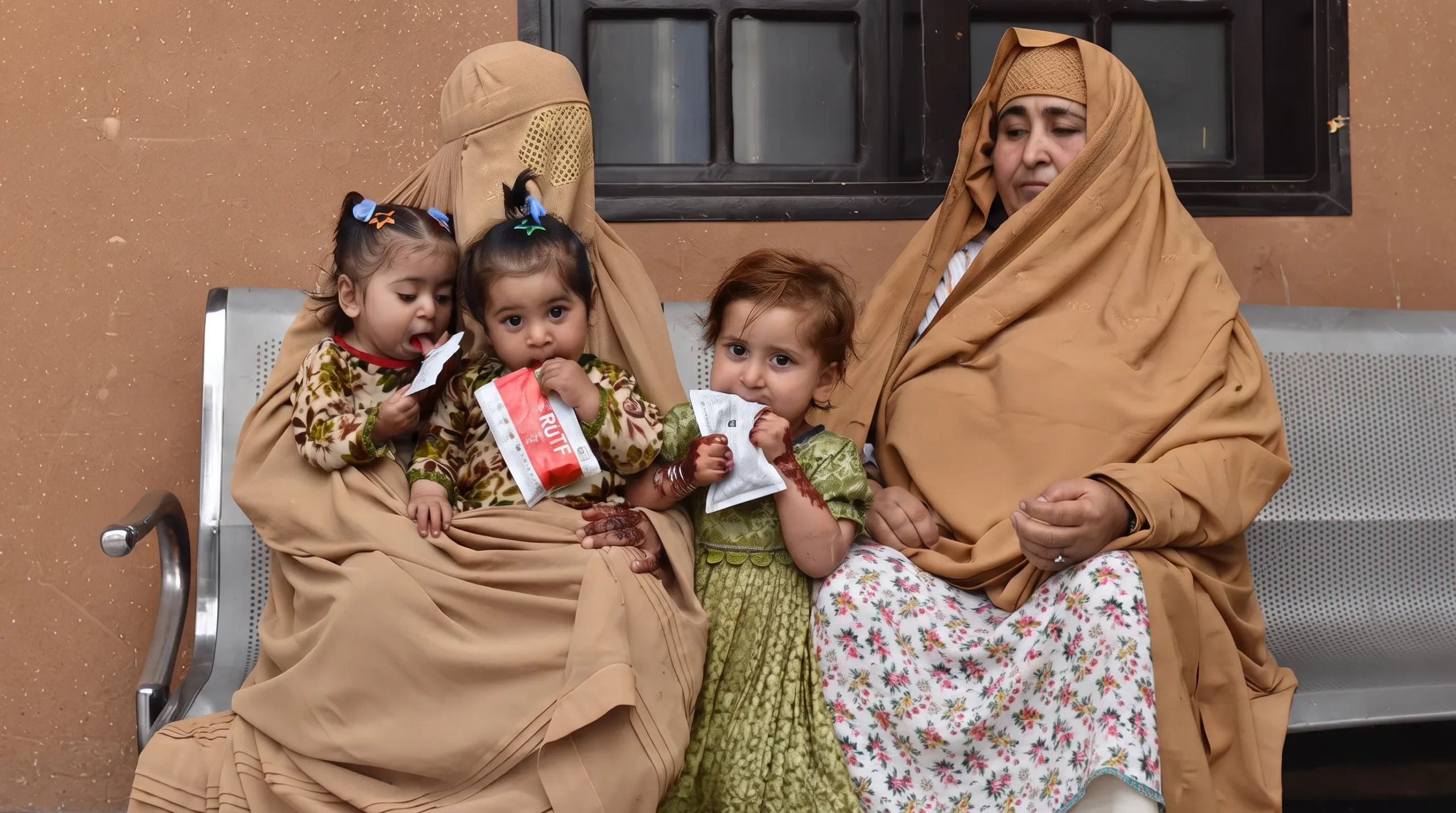
The twins received ready-to-use therapeutic food, a nutrient-rich treatment used to help children recover from severe malnutrition. Nutrition Assistant Sehrish Khan also guided their mother on feeding, hygiene and ways to support their recovery at home.
As treatment continued, the girls gradually regained strength. For Dilbara, watching Safa attempt to stand by holding onto nearby objects was a meaningful moment. After seeing her granddaughter so weak, even these small signs of progress brought renewed hope.
Their experience also reflects a wider challenge in Khyber Pakhtunkhwa, where many children face inadequate nutrition and limited access to diverse diets. UNICEF reported that its supported outpatient treatment sites across the province treated more than 60,000 children with severe acute malnutrition in 2025.
When Dilbara Bibi’s daughter-in-law, Zaiba Khan, went into labour in Peshawar in December 2024, the family feared the worst.
When Dilbara Bibi’s daughter-in-law, Zaiba Khan, went into labour in Peshawar in December 2024, the family feared the worst. Zaiba was expecting twins, and there were concerns about whether both babies would survive. When a nurse finally brought out the newborns, Safa and Shifa, the news that both were alive brought immense relief.
But the family’s happiness soon gave way to worry. The girls faced serious nutritional challenges during their first months of life, with Safa particularly vulnerable. Dilbara, a mother of seven herself, found herself watching her granddaughters struggle through a period when they needed care and support the family could not provide on its own.
By the time Safa and Shifa were seven months old, both had developed severe acute malnutrition. Their family sought help at the Civil Dispensary in Nazar Bostan, Peshawar, where a treatment programme supported by UNICEF and the Children’s Investment Fund Foundation provided specialised nutritional care.
The twins received ready-to-use therapeutic food, a nutrient-rich treatment used to help children recover from severe malnutrition. Nutrition Assistant Sehrish Khan also guided their mother on feeding, hygiene and ways to support their recovery at home.
As treatment continued, the girls gradually regained strength. For Dilbara, watching Safa attempt to stand by holding onto nearby objects was a meaningful moment. After seeing her granddaughter so weak, even these small signs of progress brought renewed hope.
Their experience also reflects a wider challenge in Khyber Pakhtunkhwa, where many children face inadequate nutrition and limited access to diverse diets. UNICEF reported that its supported outpatient treatment sites across the province treated more than 60,000 children with severe acute malnutrition in 2025.



