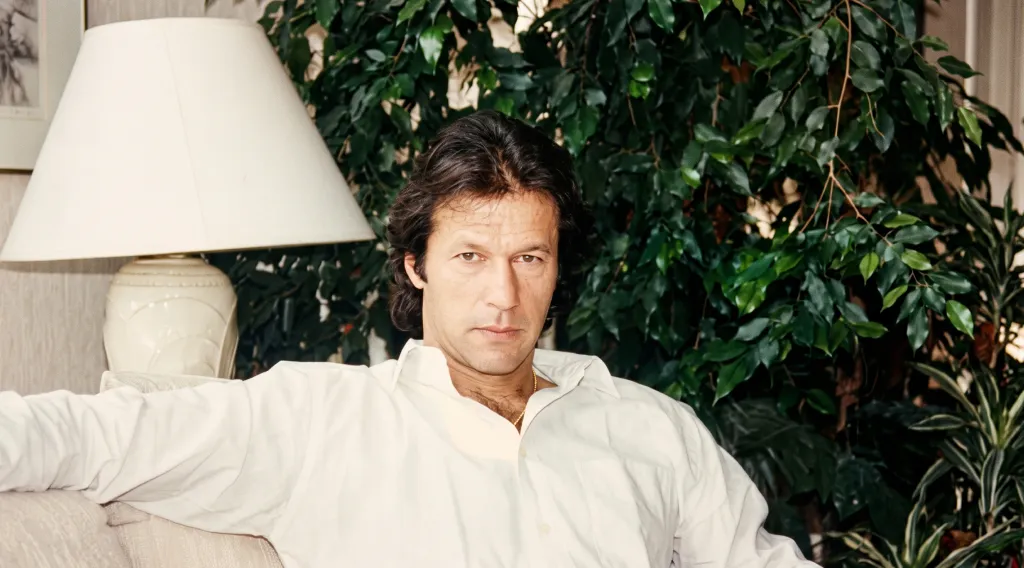
In the 1980s, Imran Khan was not simply Pakistan’s cricket hero. He was becoming an international celebrity with the kind of visual presence usually reserved for film stars. His 1982–83 portraits already captured the formula: long hair, athletic build, intense eyes and the effortless confidence that became synonymous with his image.
His fame travelled well beyond cricket. An Oxford graduate who spent significant time in London, Imran moved comfortably through British high society and celebrity circles. His Chelsea home became part of his London life, while his appearances at fashionable venues helped build his reputation as one of the decade’s most talked-about bachelors.

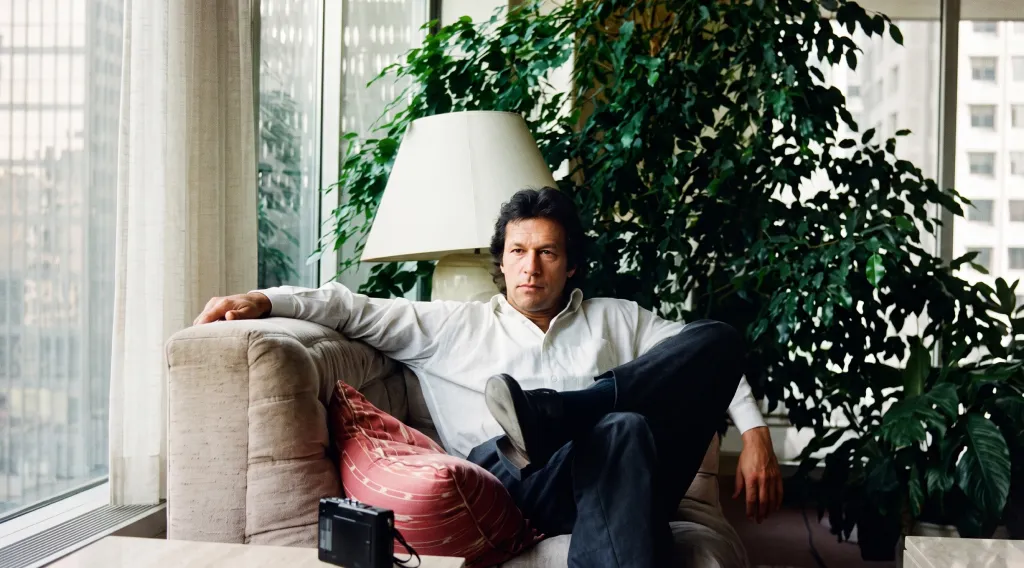
London was a major part of Imran’s 80s mythology. His Chelsea residence placed him close to the city’s fashionable social world, while the legendary Tramp nightclub in St James’s became one of the places associated with his nightlife. British accounts describe him as a regular presence in London’s elite social circles.
His social life also brought him into contact with prominent figures from British society. His relationship with artist Emma Sergeant, which began in 1982, connected him further to that world.
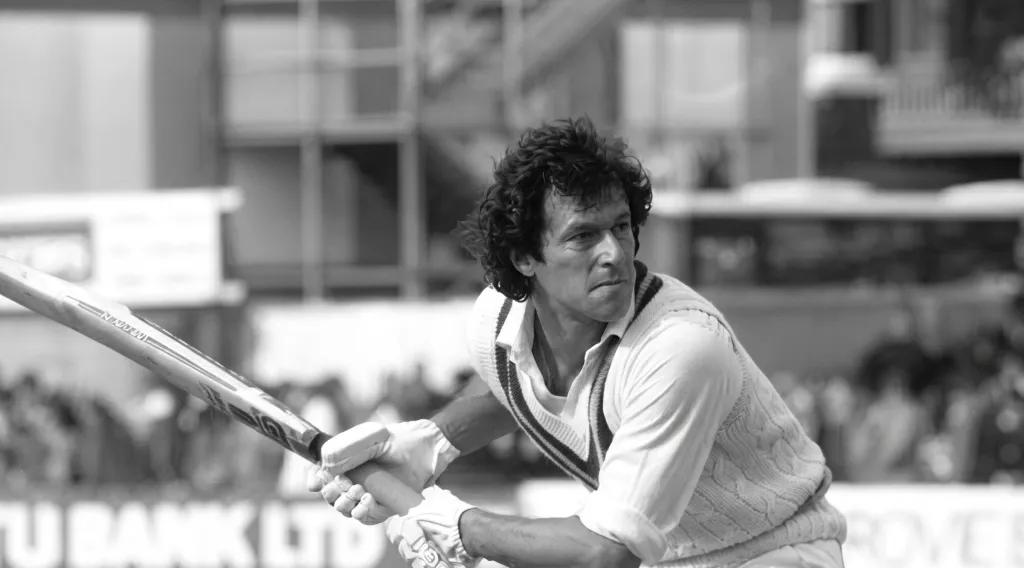
The glamour never existed separately from his sporting success. In 1982, Imran led Pakistan to its first Test series victory in England, taking 21 wickets in the five-match series.
In 1983, he was named Wisden Cricketer of the Year, cementing his position among the biggest names in world cricket. Then came 1987. Pakistan won its first Test series in India and its first Test series in England in the same year.
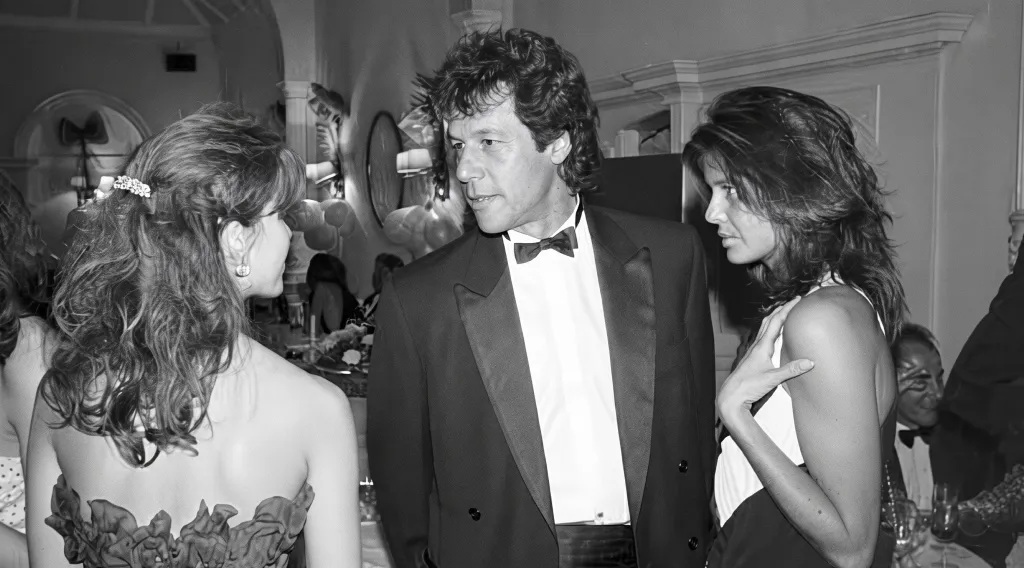
What makes the 80s Imran photographs so fascinating today is how naturally they fit the current nostalgia for that decade. There are no carefully planned Instagram campaigns or celebrity stylists in sight. Just oversized silhouettes, open collars, big hair, film-camera flash and a man who seemed completely comfortable being watched.
His social reputation became part of the mythology too. British media portrayed him as one of the era’s most eligible bachelors, while his friendships and relationships repeatedly placed him around artists, socialites and celebrities.
In the 1980s, Imran Khan was not simply Pakistan’s cricket hero. He was becoming an international celebrity with the kind of visual presence usually reserved for film stars.
In the 1980s, Imran Khan was not simply Pakistan’s cricket hero. He was becoming an international celebrity with the kind of visual presence usually reserved for film stars. His 1982–83 portraits already captured the formula: long hair, athletic build, intense eyes and the effortless confidence that became synonymous with his image.
His fame travelled well beyond cricket. An Oxford graduate who spent significant time in London, Imran moved comfortably through British high society and celebrity circles. His Chelsea home became part of his London life, while his appearances at fashionable venues helped build his reputation as one of the decade’s most talked-about bachelors.
London was a major part of Imran’s 80s mythology. His Chelsea residence placed him close to the city’s fashionable social world, while the legendary Tramp nightclub in St James’s became one of the places associated with his nightlife. British accounts describe him as a regular presence in London’s elite social circles.
His social life also brought him into contact with prominent figures from British society. His relationship with artist Emma Sergeant, which began in 1982, connected him further to that world.
The glamour never existed separately from his sporting success. In 1982, Imran led Pakistan to its first Test series victory in England, taking 21 wickets in the five-match series.
In 1983, he was named Wisden Cricketer of the Year, cementing his position among the biggest names in world cricket. Then came 1987. Pakistan won its first Test series in India and its first Test series in England in the same year.
What makes the 80s Imran photographs so fascinating today is how naturally they fit the current nostalgia for that decade. There are no carefully planned Instagram campaigns or celebrity stylists in sight. Just oversized silhouettes, open collars, big hair, film-camera flash and a man who seemed completely comfortable being watched.
His social reputation became part of the mythology too. British media portrayed him as one of the era’s most eligible bachelors, while his friendships and relationships repeatedly placed him around artists, socialites and celebrities.



