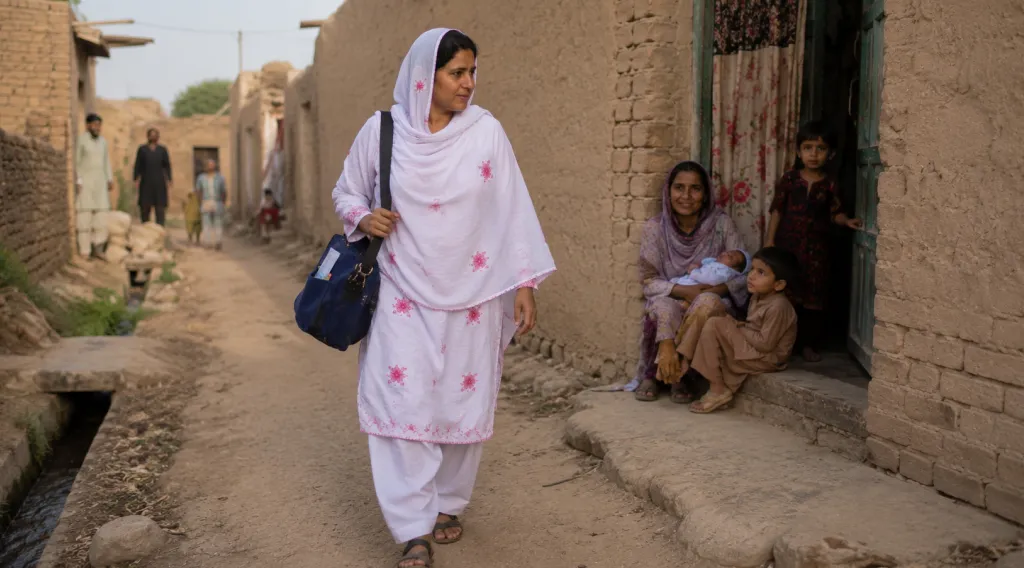
Every day, Shehnaz Begum walks through communities in Charsadda, visiting families and checking on mothers and newborn babies.
As a Lady Health Worker, her work often takes her far beyond the comfort of a clinic or hospital.
She enters homes where families may not always recognise the warning signs of a seriously ill newborn. Instead of waiting for a crisis, Shehnaz helps parents understand when a baby needs immediate medical attention.

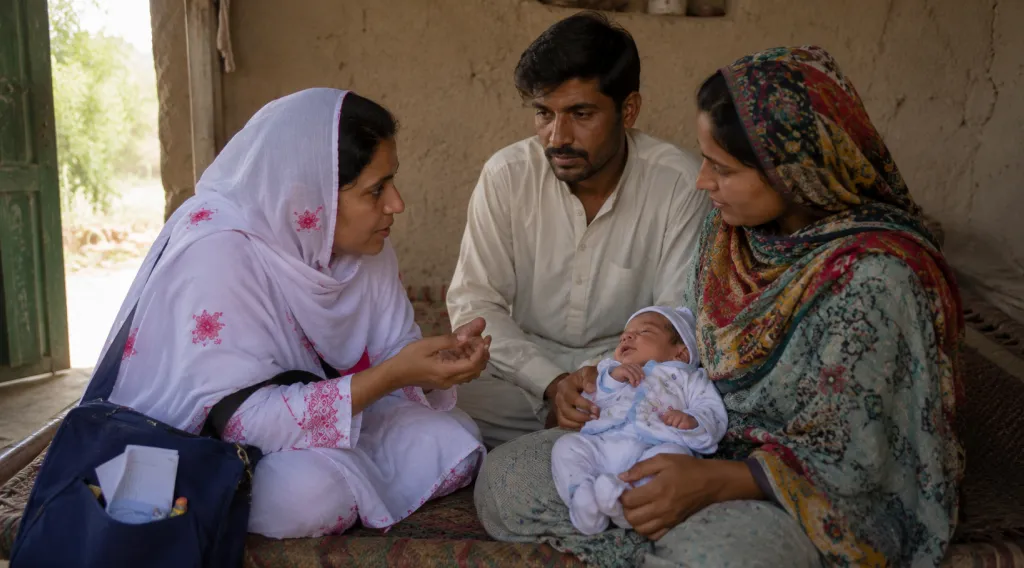
Newborn babies can become seriously ill very quickly, yet dangerous symptoms are not always easy for families to recognise.
In some communities, traditional beliefs and misconceptions can also influence decisions about when and where to seek treatment. This is where Shehnaz’s role becomes particularly important.
During her home visits, she speaks with families about newborn danger signs and explains why certain symptoms require professional medical care. Rather than simply giving instructions, she works to build trust with the families she serves.
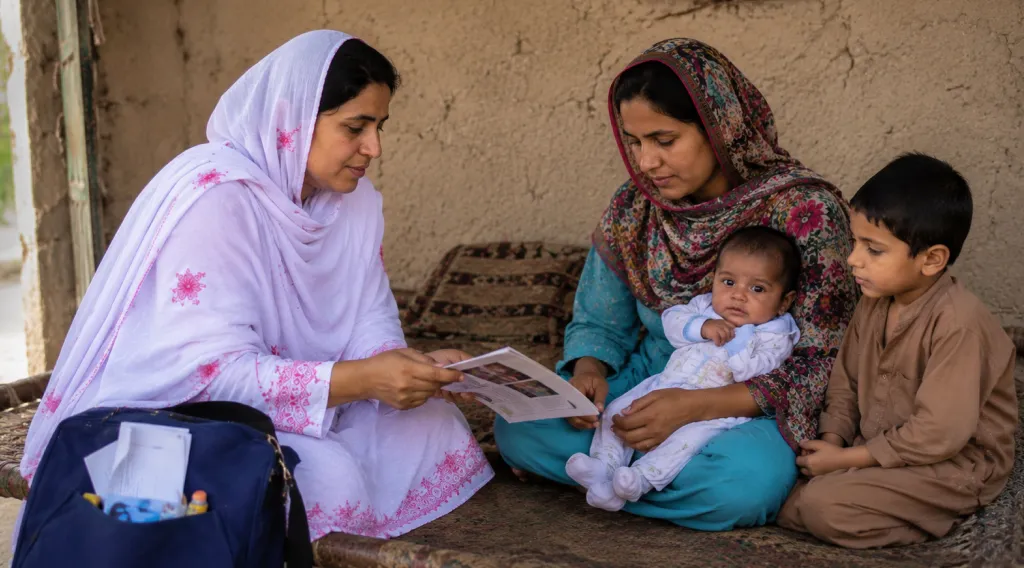
For many families, accessing healthcare is not always as straightforward as visiting a nearby hospital. Distance, limited resources, lack of information and deeply rooted beliefs can all become barriers, particularly for mothers and newborns.
Shehnaz helps bridge that gap by taking essential health guidance directly into people’s homes. Her visits allow her to speak with families in a familiar environment and understand the challenges they face.
Her work represents an important idea in community healthcare: prevention can begin at the doorstep.
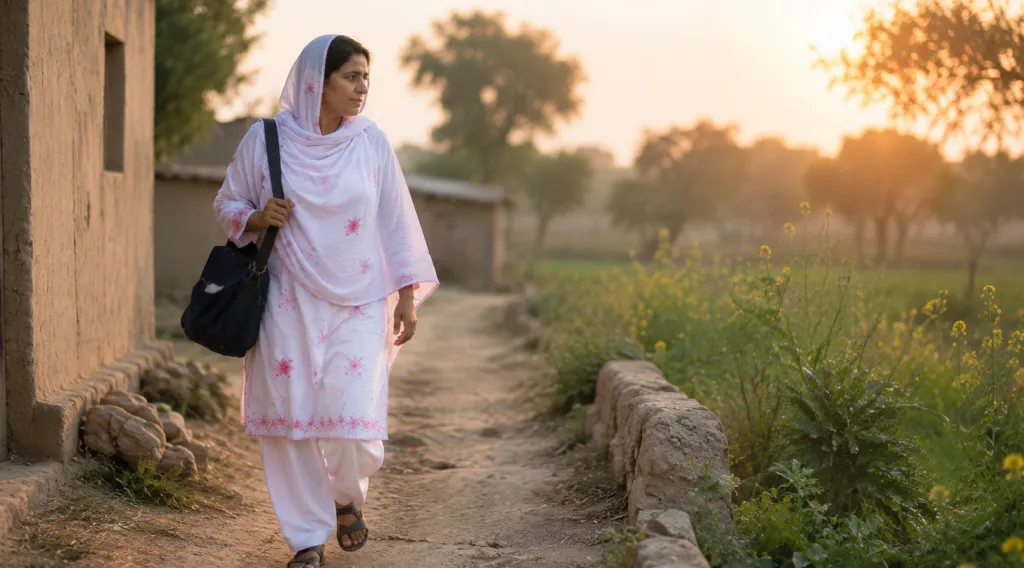
Shehnaz’s story is not about one dramatic moment or a single extraordinary achievement. It is about the impact of showing up, day after day, for families who need someone to guide them.
Every home she visits gives her another opportunity to share information, challenge harmful misconceptions and encourage parents to take newborn health seriously. Her work may rarely make headlines, but its value is measured in the families she reaches.
Across Pakistan, thousands of community health workers perform similar roles, often quietly and with limited recognition.
Every day, Shehnaz Begum walks through communities in Charsadda, visiting families and checking on mothers and newborn babies.
Every day, Shehnaz Begum walks through communities in Charsadda, visiting families and checking on mothers and newborn babies.
As a Lady Health Worker, her work often takes her far beyond the comfort of a clinic or hospital.
She enters homes where families may not always recognise the warning signs of a seriously ill newborn. Instead of waiting for a crisis, Shehnaz helps parents understand when a baby needs immediate medical attention.
Newborn babies can become seriously ill very quickly, yet dangerous symptoms are not always easy for families to recognise.
In some communities, traditional beliefs and misconceptions can also influence decisions about when and where to seek treatment. This is where Shehnaz’s role becomes particularly important.
During her home visits, she speaks with families about newborn danger signs and explains why certain symptoms require professional medical care. Rather than simply giving instructions, she works to build trust with the families she serves.
For many families, accessing healthcare is not always as straightforward as visiting a nearby hospital. Distance, limited resources, lack of information and deeply rooted beliefs can all become barriers, particularly for mothers and newborns.
Shehnaz helps bridge that gap by taking essential health guidance directly into people’s homes. Her visits allow her to speak with families in a familiar environment and understand the challenges they face.
Her work represents an important idea in community healthcare: prevention can begin at the doorstep.
Shehnaz’s story is not about one dramatic moment or a single extraordinary achievement. It is about the impact of showing up, day after day, for families who need someone to guide them.
Every home she visits gives her another opportunity to share information, challenge harmful misconceptions and encourage parents to take newborn health seriously. Her work may rarely make headlines, but its value is measured in the families she reaches.
Across Pakistan, thousands of community health workers perform similar roles, often quietly and with limited recognition.



