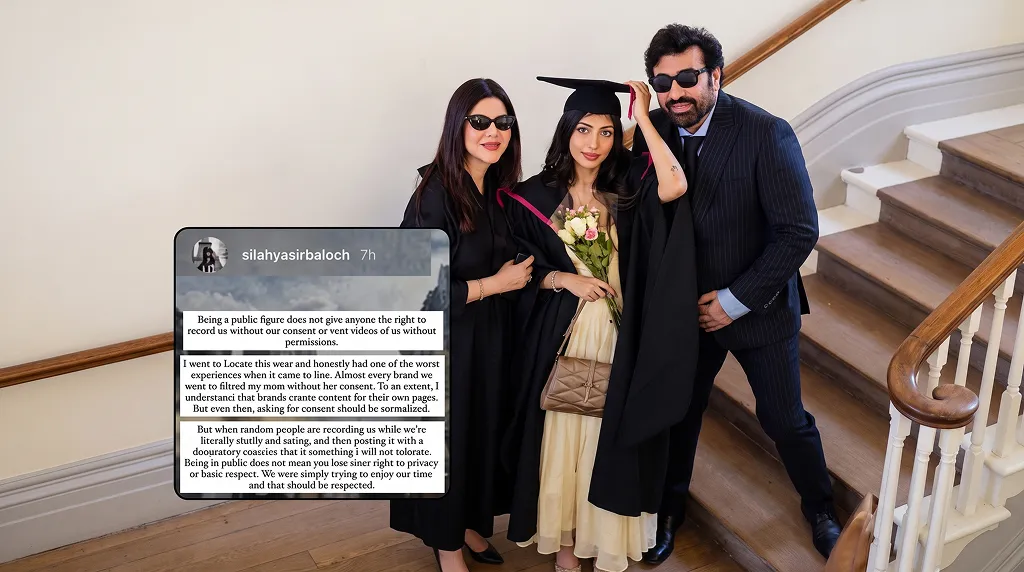
Silah Yasir, daughter of television host Nida Yasir and actor Yasir Nawaz, has opened up about the importance of asking permission before filming people, even when they are public figures.
Sharing her experience on Instagram Stories, Silah said her family encountered repeated filming during a recent event. She claimed that several brands recorded her mother without first seeking permission, while acknowledging that brands often create social media content featuring celebrities.


Silah also spoke about situations beyond organised events, saying that strangers had recorded her family while they were sitting and eating together.
She objected particularly to footage being shared online with captions she considered derogatory, stressing that being in a public place should not automatically mean giving up every expectation of privacy or respect.
Her comments have opened a wider conversation around the growing culture of recording everyday moments for social media.
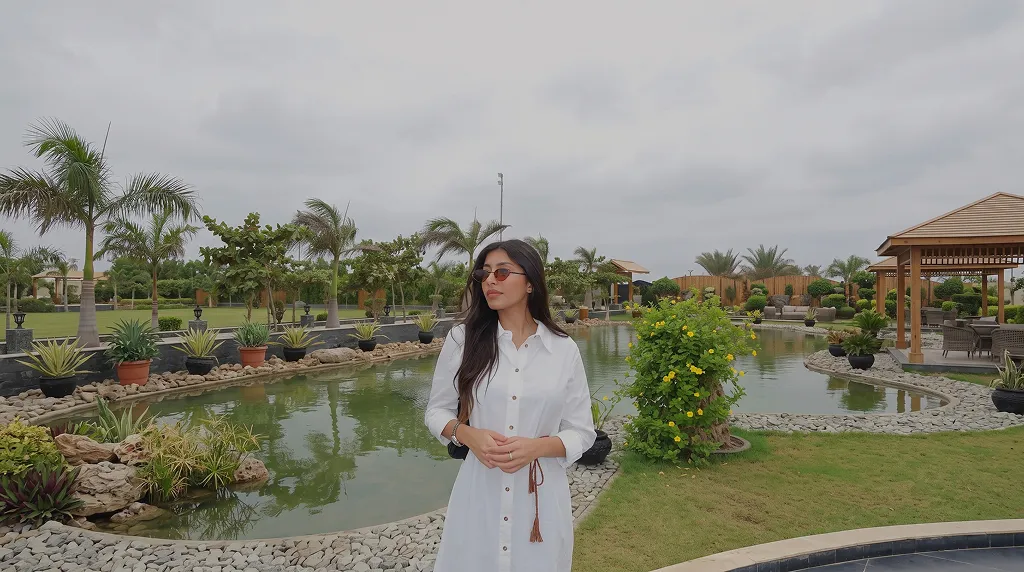
Silah’s remarks ultimately focused on consent, consideration and responsible content creation. Rather than objecting to public interest altogether, she distinguished between promotional content and unexpected filming during personal moments.
Her comments come at a time when celebrities and ordinary social media users alike are frequently captured in videos that can quickly circulate online. The experience she described highlights why seeking permission can help create healthier boundaries between public attention and personal life.
Silah Yasir, daughter of television host Nida Yasir and actor Yasir Nawaz, has opened up about the importance of asking permission before filming people, even when they are public figures.
Silah Yasir, daughter of television host Nida Yasir and actor Yasir Nawaz, has opened up about the importance of asking permission before filming people, even when they are public figures.
Sharing her experience on Instagram Stories, Silah said her family encountered repeated filming during a recent event. She claimed that several brands recorded her mother without first seeking permission, while acknowledging that brands often create social media content featuring celebrities.
Silah also spoke about situations beyond organised events, saying that strangers had recorded her family while they were sitting and eating together.
She objected particularly to footage being shared online with captions she considered derogatory, stressing that being in a public place should not automatically mean giving up every expectation of privacy or respect.
Her comments have opened a wider conversation around the growing culture of recording everyday moments for social media.
Silah’s remarks ultimately focused on consent, consideration and responsible content creation. Rather than objecting to public interest altogether, she distinguished between promotional content and unexpected filming during personal moments.
Her comments come at a time when celebrities and ordinary social media users alike are frequently captured in videos that can quickly circulate online. The experience she described highlights why seeking permission can help create healthier boundaries between public attention and personal life.



