
Pakistani singer and actor Samar Jafri’s much-anticipated performance in Hyderabad took an unexpected turn when concerns over audience behaviour led to the show being called off.
What was meant to be an enjoyable evening of music instead became a reminder of the responsibilities that come with organising large public events.
According to a statement issued by his team, the situation at the venue raised concerns about the safety of concert-goers. The possibility of harassment, particularly involving women, and the danger of overcrowding or a stampede prompted the decision to stop the performance.

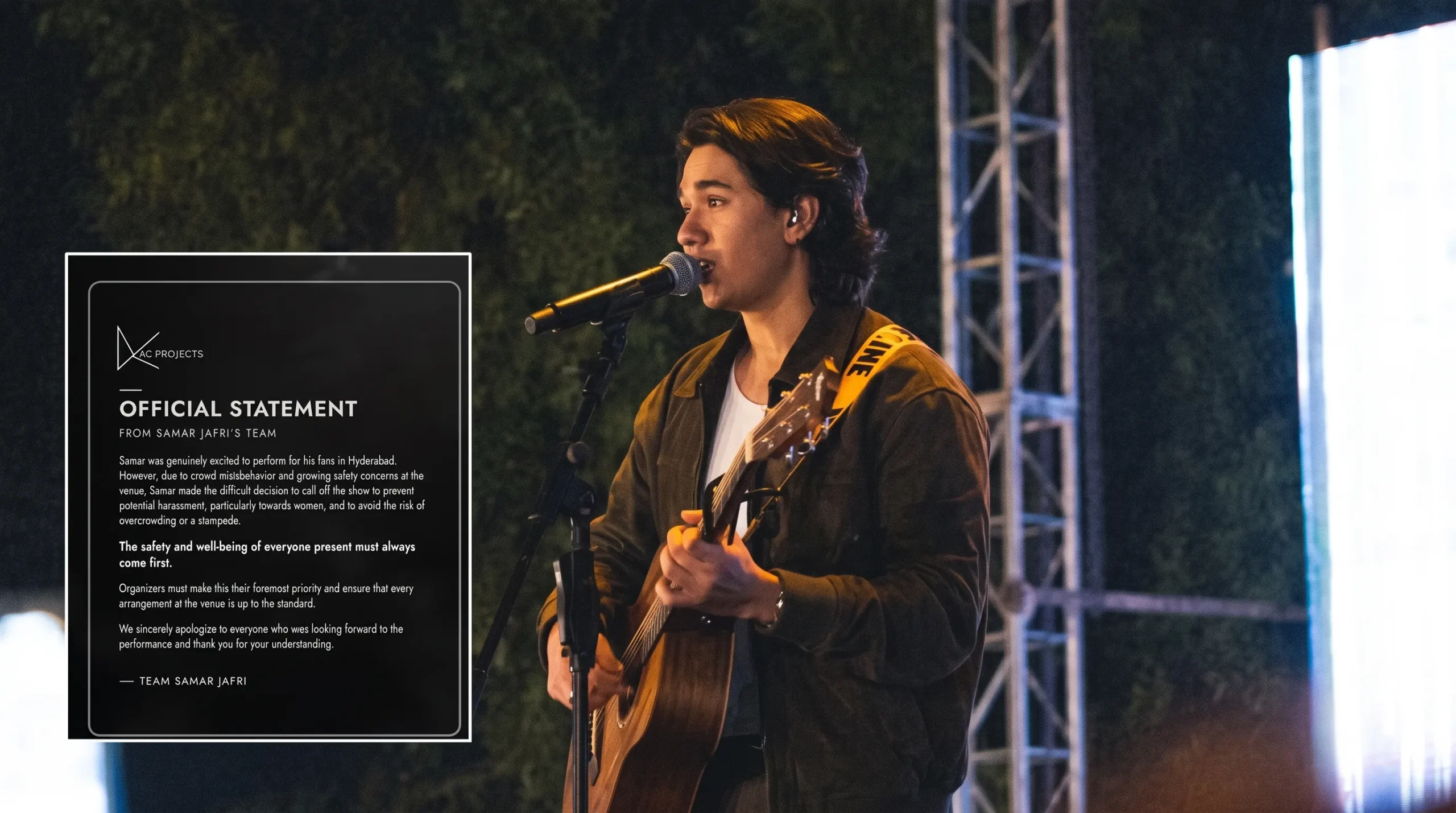
After the incident, Samar shared a personal message for his Hyderabad audience, expressing how deeply he regretted the way the evening had unfolded. He explained that he had been looking forward to performing and creating lasting memories with the people who came to see him.
The singer made it clear that ending the show was not what he had planned. However, the growing safety concerns left him unwilling to take the risk, especially when women and children were among those attending. He stressed that preventing a potentially more serious situation had to come first.
Samar also apologised to fans who had arrived expecting a memorable musical experience.

The incident has brought renewed attention to a crucial question for Pakistan’s live entertainment industry: are event organisers doing enough to protect the people who attend their shows? Successful concerts require more than a popular performer and an enthusiastic audience. They also depend on proper planning, crowd control and reliable security arrangements.
Organisers have a responsibility to assess venue capacity, manage entry and exit points, maintain order and prepare for emergencies. These precautions become especially important when large crowds gather in confined spaces, where poor management can quickly turn a celebration into a dangerous situation.
Pakistani singer and actor Samar Jafri’s much-anticipated performance in Hyderabad took an unexpected turn when concerns over audience behaviour led to the show being called off.
Pakistani singer and actor Samar Jafri’s much-anticipated performance in Hyderabad took an unexpected turn when concerns over audience behaviour led to the show being called off.
What was meant to be an enjoyable evening of music instead became a reminder of the responsibilities that come with organising large public events.
According to a statement issued by his team, the situation at the venue raised concerns about the safety of concert-goers. The possibility of harassment, particularly involving women, and the danger of overcrowding or a stampede prompted the decision to stop the performance.
After the incident, Samar shared a personal message for his Hyderabad audience, expressing how deeply he regretted the way the evening had unfolded. He explained that he had been looking forward to performing and creating lasting memories with the people who came to see him.
The singer made it clear that ending the show was not what he had planned. However, the growing safety concerns left him unwilling to take the risk, especially when women and children were among those attending. He stressed that preventing a potentially more serious situation had to come first.
Samar also apologised to fans who had arrived expecting a memorable musical experience.
The incident has brought renewed attention to a crucial question for Pakistan’s live entertainment industry: are event organisers doing enough to protect the people who attend their shows? Successful concerts require more than a popular performer and an enthusiastic audience. They also depend on proper planning, crowd control and reliable security arrangements.
Organisers have a responsibility to assess venue capacity, manage entry and exit points, maintain order and prepare for emergencies. These precautions become especially important when large crowds gather in confined spaces, where poor management can quickly turn a celebration into a dangerous situation.



