
Pakistan has secured a significant legal victory in Australia in the long running dispute over the Basmati rice name.
The Federal Court of Australia dismissed an appeal filed by India’s Agricultural and Processed Food Products Export Development Authority (APEDA), backing the outcome that favoured Pakistan’s position.
At the centre of the dispute was a key question: can the word Basmati be claimed exclusively by one country?

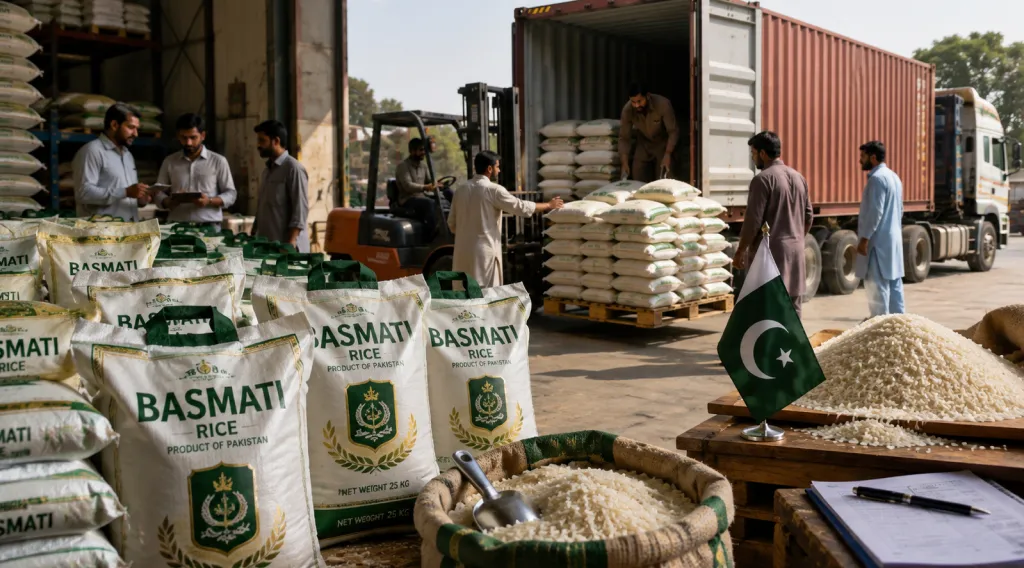
Basmati is far more than a variety of rice. Its distinctive aroma, long grains and cooking qualities have made it one of South Asia’s best known agricultural products in international markets.
For Pakistan, Basmati is also an important export commodity, supporting farmers, traders, processors and exporters connected to the rice industry.
The legal recognition of Pakistan’s position therefore has significance beyond the courtroom.

Pakistan’s efforts to protect Basmati do not stop with the Australian case. The country has also been pursuing legal recognition in other major international markets.
The European Union has formally published Pakistan’s application to register Basmati as a Protected Geographical Indication (PGI). The application covers Basmati rice produced in specified areas of Pakistan.
Geographical indications are important because they connect a product’s name with its place of origin and established characteristics.

The Australian ruling marks another step in Pakistan’s efforts to safeguard one of its most recognisable agricultural products in international markets.
The court not only dismissed APEDA’s appeal but also ordered the Indian authority to pay the respondent’s legal costs.
The decision could strengthen Pakistan’s position as it continues pursuing protection for Basmati in other markets, particularly as its EU application moves through the registration process.
For farmers and exporters, the issue is ultimately about more than the name on a package.
Pakistan has secured a significant legal victory in Australia in the long running dispute over the Basmati rice name.
Pakistan has secured a significant legal victory in Australia in the long running dispute over the Basmati rice name.
The Federal Court of Australia dismissed an appeal filed by India’s Agricultural and Processed Food Products Export Development Authority (APEDA), backing the outcome that favoured Pakistan’s position.
At the centre of the dispute was a key question: can the word Basmati be claimed exclusively by one country?
Basmati is far more than a variety of rice. Its distinctive aroma, long grains and cooking qualities have made it one of South Asia’s best known agricultural products in international markets.
For Pakistan, Basmati is also an important export commodity, supporting farmers, traders, processors and exporters connected to the rice industry.
The legal recognition of Pakistan’s position therefore has significance beyond the courtroom.
Pakistan’s efforts to protect Basmati do not stop with the Australian case. The country has also been pursuing legal recognition in other major international markets.
The European Union has formally published Pakistan’s application to register Basmati as a Protected Geographical Indication (PGI). The application covers Basmati rice produced in specified areas of Pakistan.
Geographical indications are important because they connect a product’s name with its place of origin and established characteristics.
The Australian ruling marks another step in Pakistan’s efforts to safeguard one of its most recognisable agricultural products in international markets.
The court not only dismissed APEDA’s appeal but also ordered the Indian authority to pay the respondent’s legal costs.
The decision could strengthen Pakistan’s position as it continues pursuing protection for Basmati in other markets, particularly as its EU application moves through the registration process.
For farmers and exporters, the issue is ultimately about more than the name on a package.



