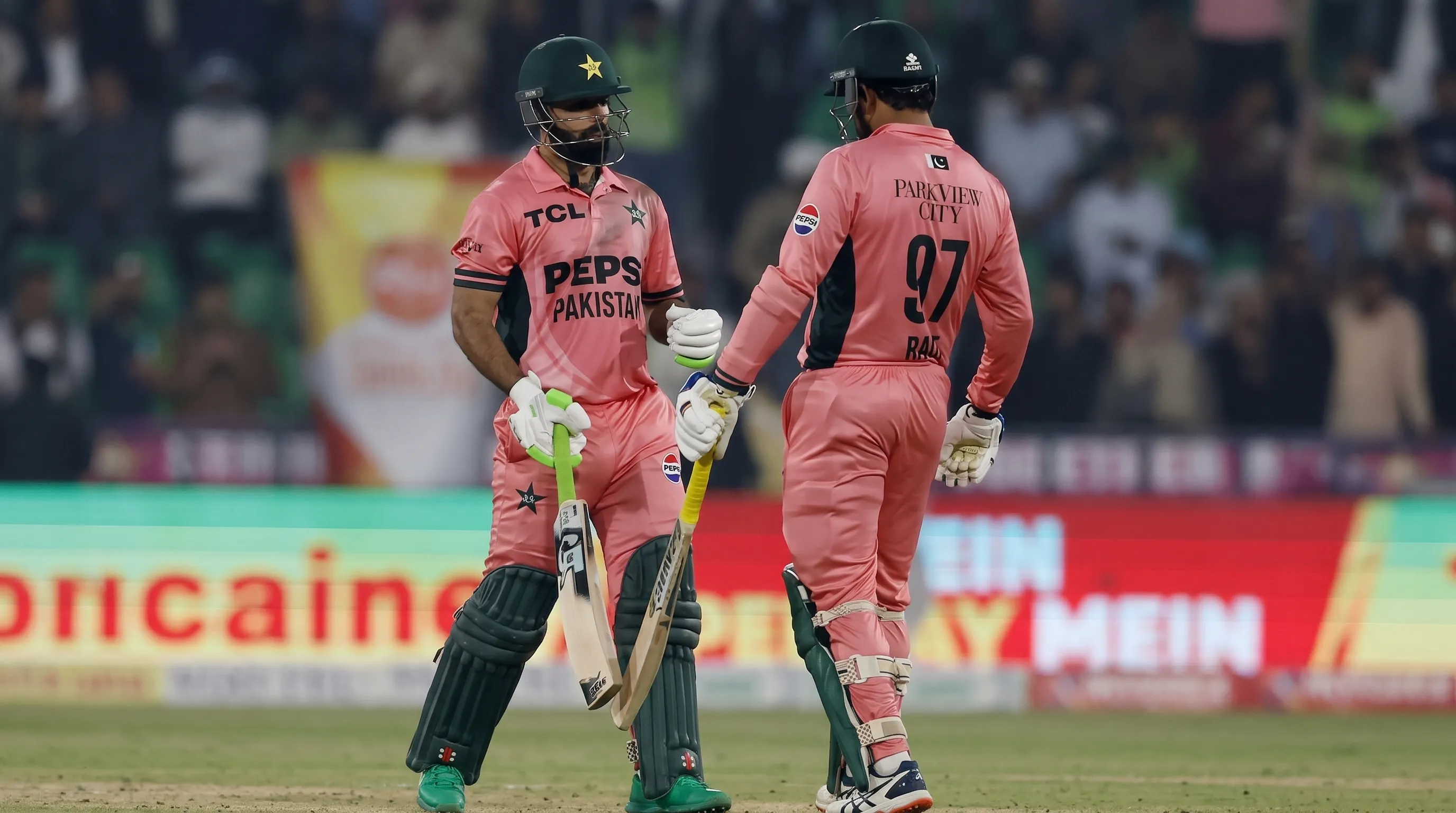
Pakistan’s match against England in Lahore produced a finish few cricket fans could have anticipated. Chasing 242 runs, Pakistan were reduced to 154 for nine, leaving Shadab Khan with only tailender Haris Rauf for company. With defeat seemingly imminent, the pair mounted an extraordinary comeback to secure a one-wicket victory and send Pakistan into the tri-series final.
Shadab remained unbeaten on 113 from 96 balls, recording his maiden ODI century with 13 fours and five sixes. Haris supported him with an unbeaten seven from 19 deliveries before striking the winning boundary. Their determination turned a difficult chase into a memorable victory and created a new milestone in men’s ODI cricket.

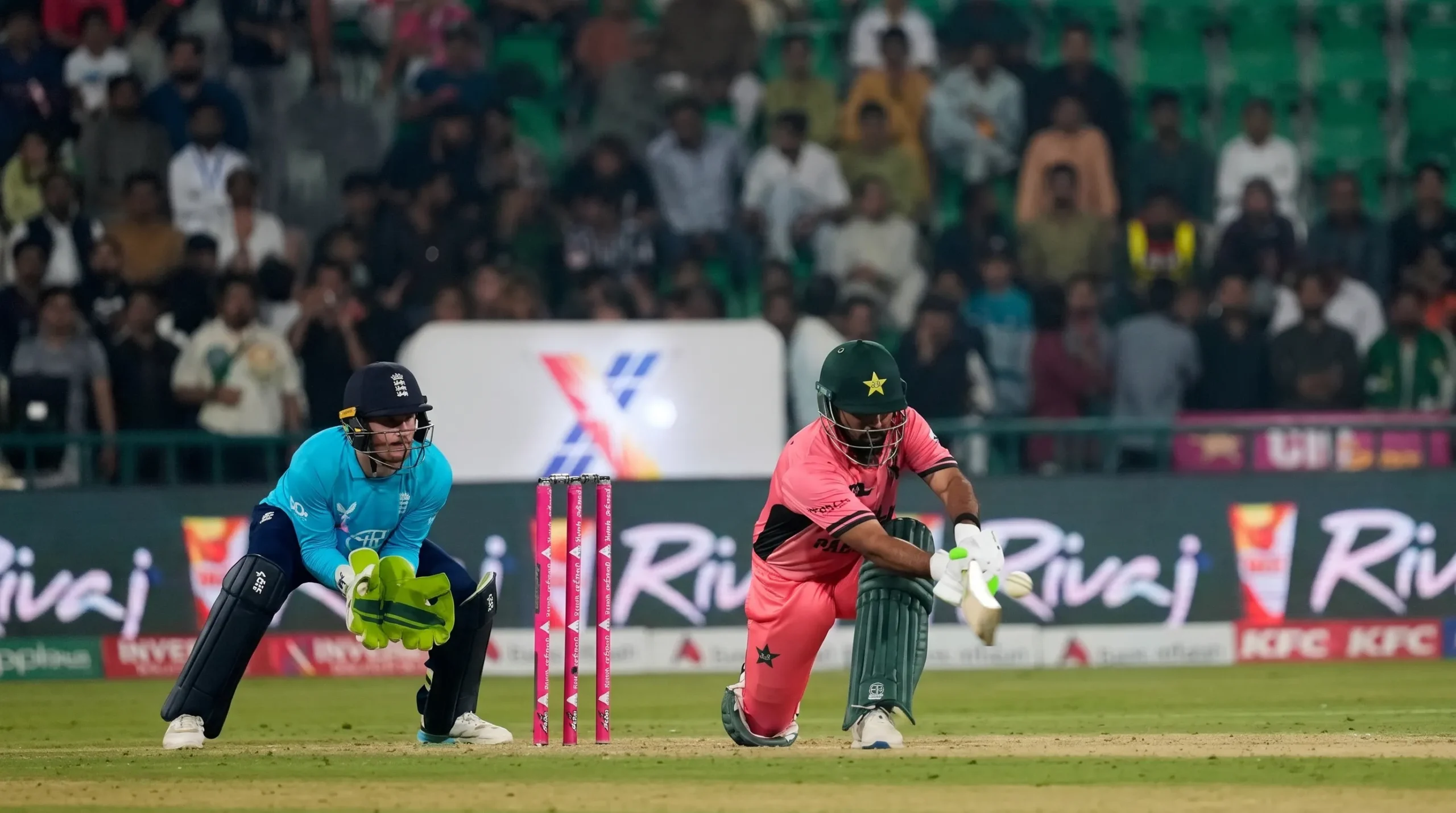
The partnership between Shadab and Haris produced the highest 10th-wicket stand in a successful men’s ODI run chase. Their unbeaten 89 runs surpassed the previous record of 64, established by West Indies batters Deryck Murray and Andy Roberts against Pakistan during the 1975 World Cup in Birmingham.
Shadab controlled the chase with attacking strokes and careful management of the strike, while Haris held his ground against England’s bowling attack. The finish became even more dramatic when Shadab was initially given out leg-before-wicket on 97. A successful review overturned the decision after an inside edge was detected, allowing him to continue and complete his century.
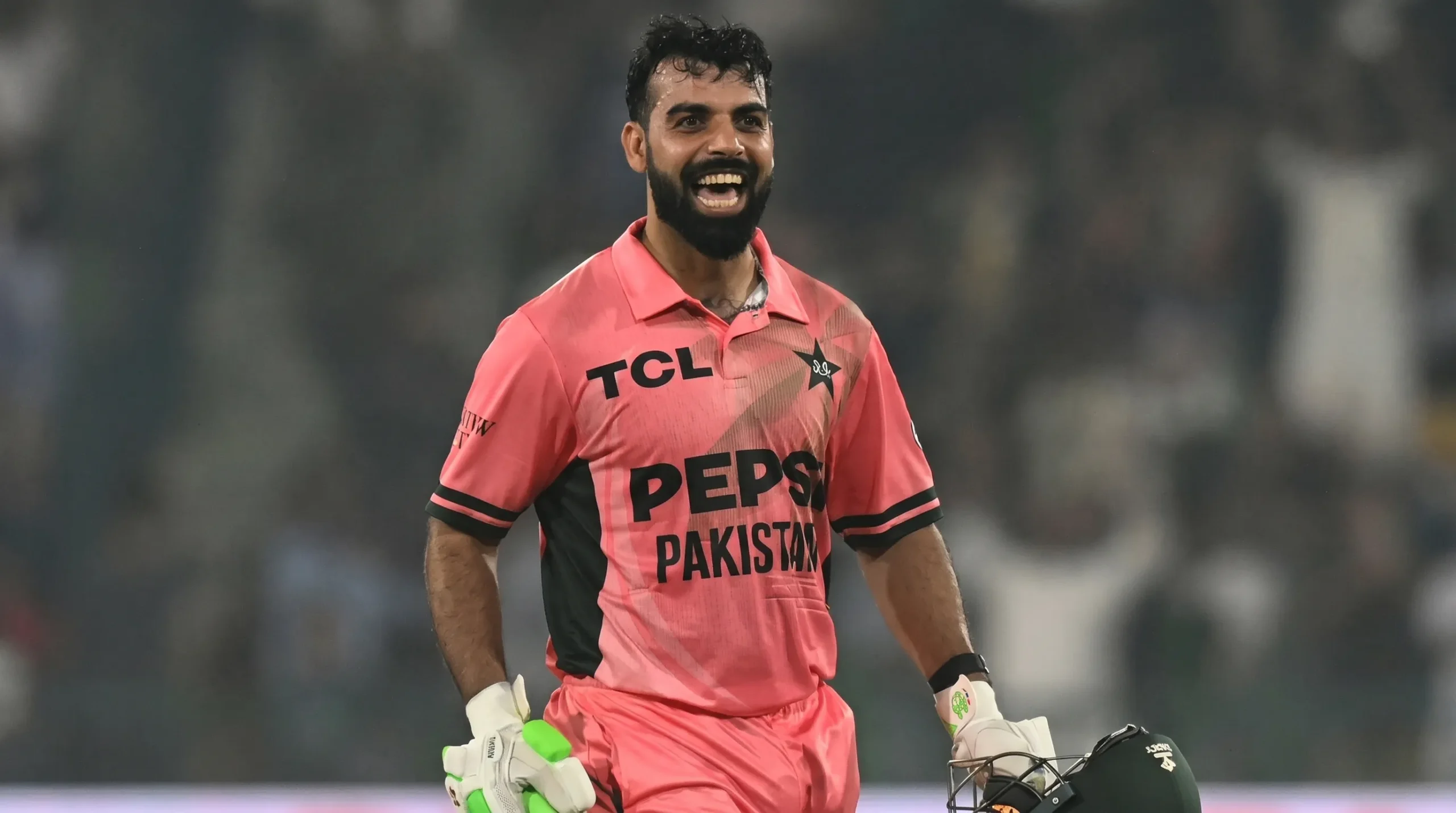
Beyond the historic partnership, Shadab’s innings established another individual milestone. His unbeaten 113 became the highest score by a number-eight batter in men’s ODI cricket, surpassing the previous benchmark of 100 not out shared by Ireland’s Simi Singh and Bangladesh’s Mehidy Hasan Miraz.
The victory also secured Pakistan’s place in the tri-series final, giving the team added momentum ahead of the tournament’s concluding stage. While Shadab’s century provided the headline moment, Haris’s contribution demonstrated the value of staying composed when the pressure is at its highest.
Pakistan’s match against England in Lahore produced a finish few cricket fans could have anticipated.
Pakistan’s match against England in Lahore produced a finish few cricket fans could have anticipated. Chasing 242 runs, Pakistan were reduced to 154 for nine, leaving Shadab Khan with only tailender Haris Rauf for company. With defeat seemingly imminent, the pair mounted an extraordinary comeback to secure a one-wicket victory and send Pakistan into the tri-series final.
Shadab remained unbeaten on 113 from 96 balls, recording his maiden ODI century with 13 fours and five sixes. Haris supported him with an unbeaten seven from 19 deliveries before striking the winning boundary. Their determination turned a difficult chase into a memorable victory and created a new milestone in men’s ODI cricket.
The partnership between Shadab and Haris produced the highest 10th-wicket stand in a successful men’s ODI run chase. Their unbeaten 89 runs surpassed the previous record of 64, established by West Indies batters Deryck Murray and Andy Roberts against Pakistan during the 1975 World Cup in Birmingham.
Shadab controlled the chase with attacking strokes and careful management of the strike, while Haris held his ground against England’s bowling attack. The finish became even more dramatic when Shadab was initially given out leg-before-wicket on 97. A successful review overturned the decision after an inside edge was detected, allowing him to continue and complete his century.
Beyond the historic partnership, Shadab’s innings established another individual milestone. His unbeaten 113 became the highest score by a number-eight batter in men’s ODI cricket, surpassing the previous benchmark of 100 not out shared by Ireland’s Simi Singh and Bangladesh’s Mehidy Hasan Miraz.
The victory also secured Pakistan’s place in the tri-series final, giving the team added momentum ahead of the tournament’s concluding stage. While Shadab’s century provided the headline moment, Haris’s contribution demonstrated the value of staying composed when the pressure is at its highest.



