Murad Ali Shah Explains His Position on Creating New Provinces

The question of creating additional provinces has once again brought Pakistan’s administrative structure into focus. Sindh Chief Minister Murad Ali Shah has indicated that his party would not oppose new provinces elsewhere if the people living in those regions support the idea.
However, he has drawn a clear distinction when it comes to Sindh, maintaining that the province should remain intact. His position reflects a broader disagreement over whether smaller administrative units could improve governance or whether changing existing boundaries could create further complications.


For Murad Ali Shah, the decision should not be made simply through political demands or proposals put forward by individual groups. He believes the people of a region must have a meaningful say in determining whether they want a separate provincial identity.
He has also brought attention to the constitutional process, stressing that any restructuring must go through the institutions authorised to make such decisions. The example of Punjab, where discussions about additional provinces have previously reached the provincial assembly, illustrates that the subject is not limited to Sindh.
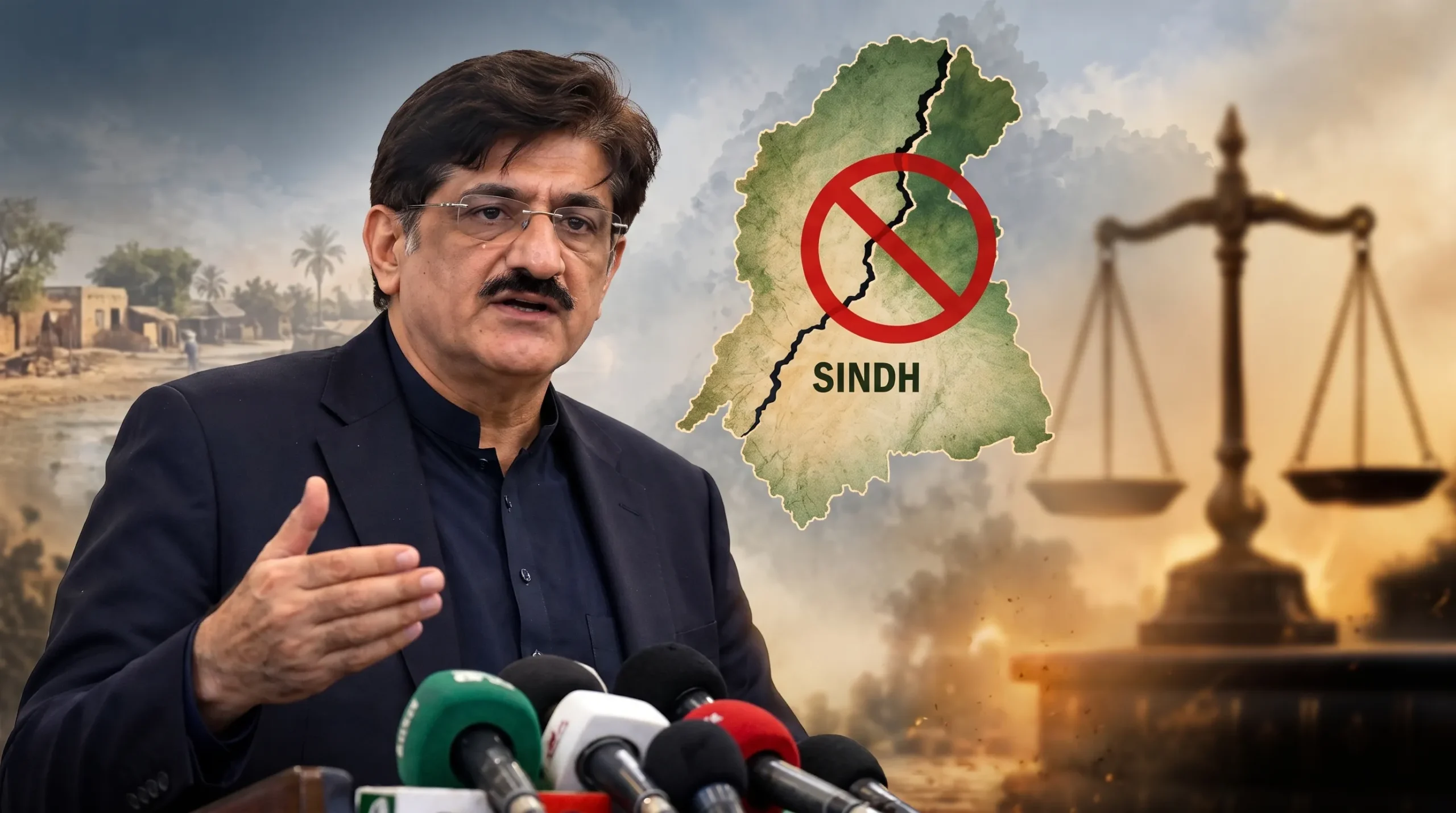
Beyond the discussion on provincial boundaries, Murad Ali Shah also highlighted Sindh's concerns over the distribution of water among provinces. He maintained that the province continues to face water shortages and wants its entitlements under the 1991 Water Apportionment Accord respected.
The matter has been raised at the Council of Common Interests, the constitutional forum responsible for addressing important issues between the federation and provinces.
The question of creating additional provinces has once again brought Pakistan’s administrative structure into focus.
The question of creating additional provinces has once again brought Pakistan’s administrative structure into focus. Sindh Chief Minister Murad Ali Shah has indicated that his party would not oppose new provinces elsewhere if the people living in those regions support the idea.
However, he has drawn a clear distinction when it comes to Sindh, maintaining that the province should remain intact. His position reflects a broader disagreement over whether smaller administrative units could improve governance or whether changing existing boundaries could create further complications.
For Murad Ali Shah, the decision should not be made simply through political demands or proposals put forward by individual groups. He believes the people of a region must have a meaningful say in determining whether they want a separate provincial identity.
He has also brought attention to the constitutional process, stressing that any restructuring must go through the institutions authorised to make such decisions. The example of Punjab, where discussions about additional provinces have previously reached the provincial assembly, illustrates that the subject is not limited to Sindh.
Beyond the discussion on provincial boundaries, Murad Ali Shah also highlighted Sindh's concerns over the distribution of water among provinces. He maintained that the province continues to face water shortages and wants its entitlements under the 1991 Water Apportionment Accord respected.
The matter has been raised at the Council of Common Interests, the constitutional forum responsible for addressing important issues between the federation and provinces.