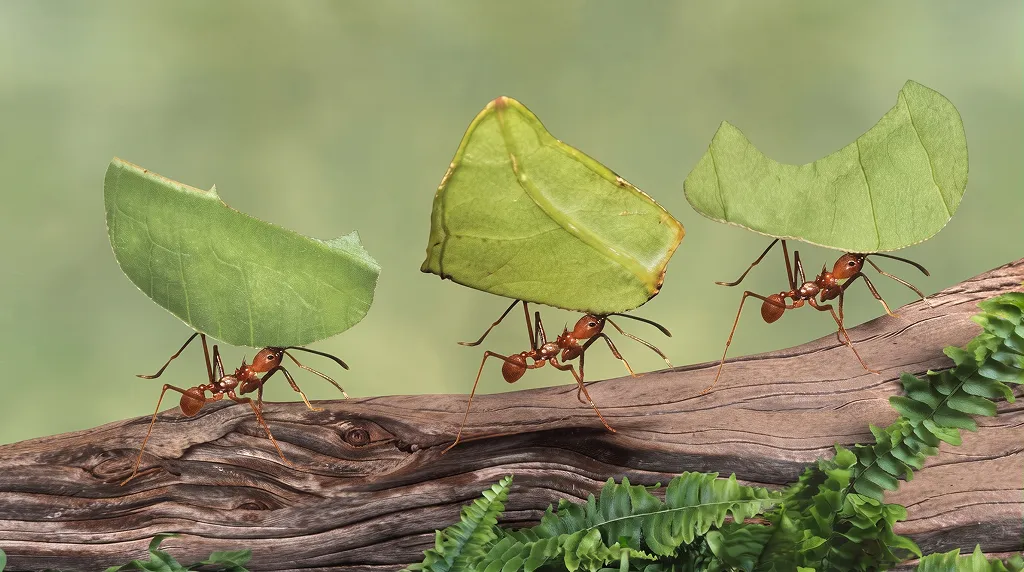
Ant colonies can create elaborate underground systems of tunnels, chambers, nurseries and waste areas, even though there is no architect ant directing the construction.
Scientists studying Lasius niger found that individual ants can follow simple building responses that collectively produce complex nest structures. Computer models based entirely on experimentally observed ant behaviour were able to reproduce patterns seen in real nests. One important mechanism is called stigmergy.


One of the most striking examples comes from Atta vollenweideri, a leaf-cutting ant found in South America. These ants construct underground nests containing fungus-growing chambers, waste chambers and ventilation tunnels. Scientists have reproduced parts of this architecture in laboratory experiments to understand how the colonies regulate their underground environment.
In one study, researchers worked with a laboratory colony containing approximately 60–70 litres of fungus garden distributed across 16–19 chambers.
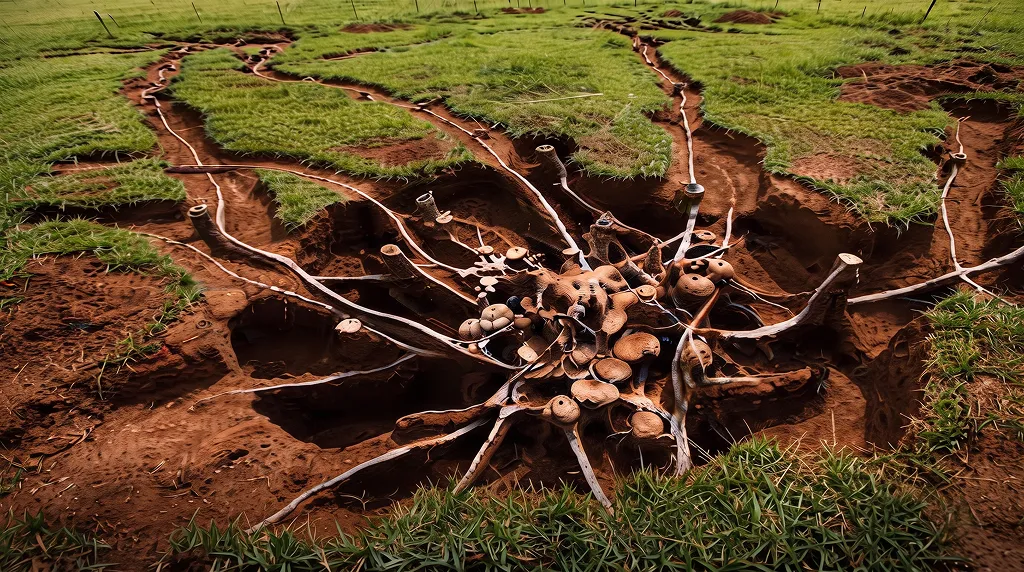
The ventilation system of Atta vollenweideri provides one of the clearest examples of collective construction. Workers build small structures called ventilation turrets above underground openings. Researchers tested whether conditions inside the nest influenced what the ants built.
The results were striking. Under normal atmospheric conditions, the experimental turrets typically had about one opening.
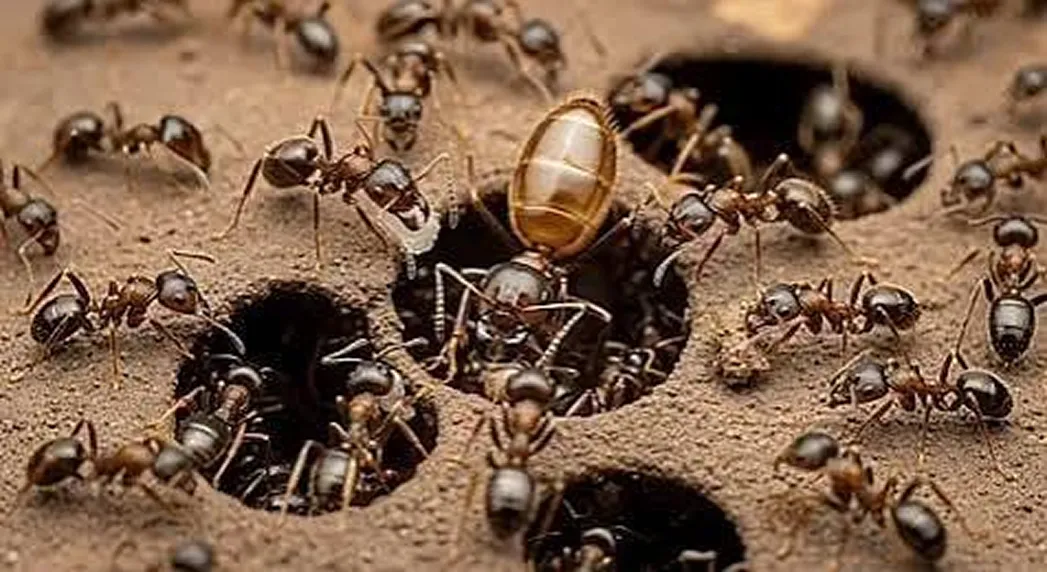
The same principle helps explain how an apparently complicated ant colony can function without a central commander. Workers respond to local information such as the presence of building material, existing structures and conditions around them.
Their actions then alter the environment, creating new signals for other workers. In the Atta vollenweideri experiments, researchers measured turret construction after only 24 hours under different environmental conditions.
Ant colonies can create elaborate underground systems of tunnels, chambers, nurseries and waste areas, even though there is no architect ant directing the construction.
Ant colonies can create elaborate underground systems of tunnels, chambers, nurseries and waste areas, even though there is no architect ant directing the construction.
Scientists studying Lasius niger found that individual ants can follow simple building responses that collectively produce complex nest structures. Computer models based entirely on experimentally observed ant behaviour were able to reproduce patterns seen in real nests. One important mechanism is called stigmergy.
One of the most striking examples comes from Atta vollenweideri, a leaf-cutting ant found in South America. These ants construct underground nests containing fungus-growing chambers, waste chambers and ventilation tunnels. Scientists have reproduced parts of this architecture in laboratory experiments to understand how the colonies regulate their underground environment.
In one study, researchers worked with a laboratory colony containing approximately 60–70 litres of fungus garden distributed across 16–19 chambers.
The ventilation system of Atta vollenweideri provides one of the clearest examples of collective construction. Workers build small structures called ventilation turrets above underground openings. Researchers tested whether conditions inside the nest influenced what the ants built.
The results were striking. Under normal atmospheric conditions, the experimental turrets typically had about one opening.
The same principle helps explain how an apparently complicated ant colony can function without a central commander. Workers respond to local information such as the presence of building material, existing structures and conditions around them.
Their actions then alter the environment, creating new signals for other workers. In the Atta vollenweideri experiments, researchers measured turret construction after only 24 hours under different environmental conditions.



