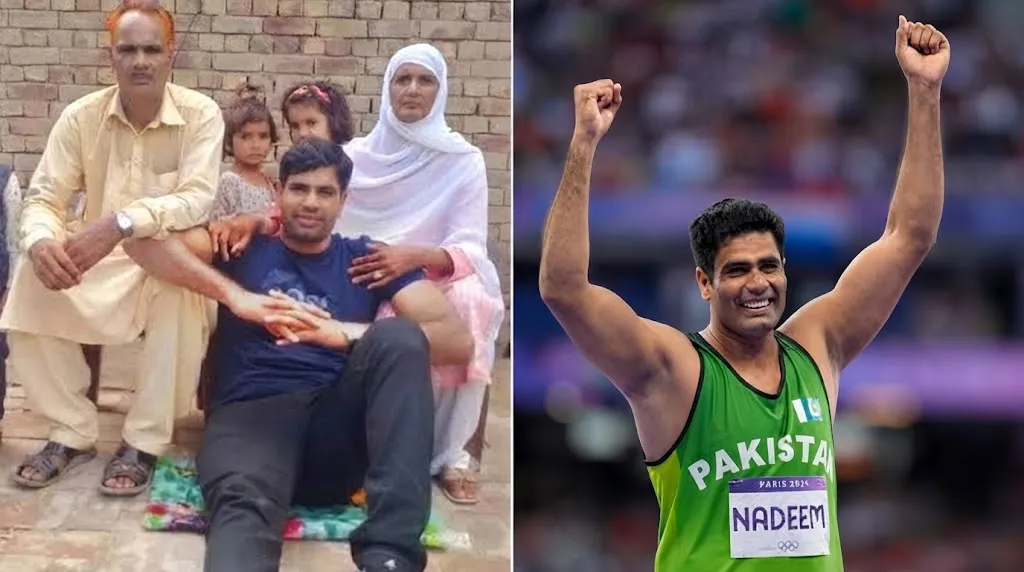
Long before the Olympic spotlight, Arshad Nadeem was a young athlete from Mian Channu, a city in Punjab where world class sporting facilities were far from his reality. He came from a modest family and began developing his athletic abilities with limited resources.
His journey into javelin throwing was not built around expensive equipment or elite training centres.
Reports have described him training in fields and using makeshift equipment during his early years. Yet the lack of facilities did not stop him from pursuing the sport he had discovered a passion for.

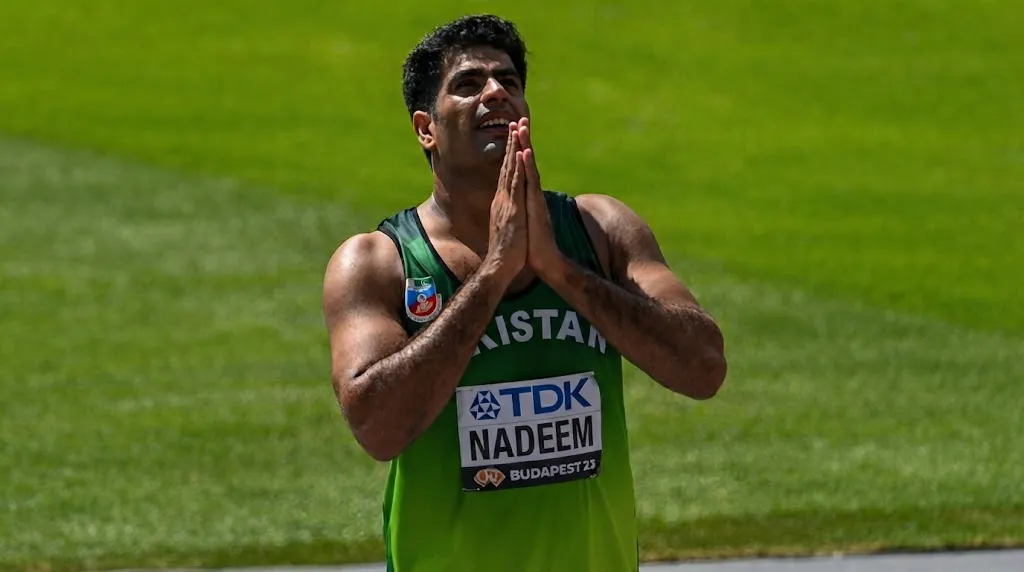
Nadeem’s rise was gradual. He competed nationally before beginning to make his presence felt internationally, steadily improving his distances and gaining experience against some of the world’s best throwers.
At the Tokyo 2020 Olympics, he became the first Pakistani track and field athlete to qualify directly for the Games under the modern entry standards and reached the javelin final, eventually finishing fifth.
Even without a medal, his performance established him as a serious international athlete.
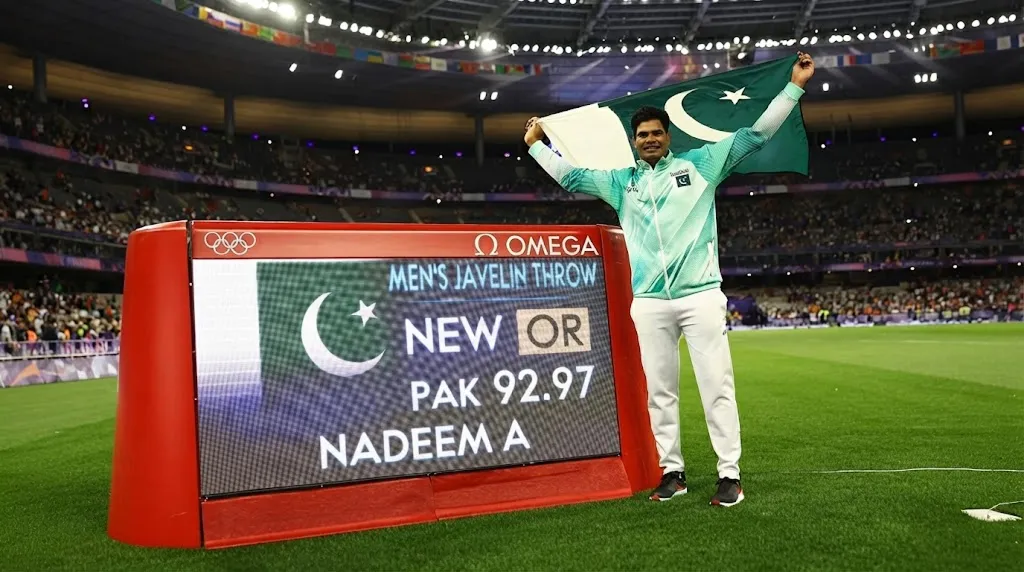
On August 8, 2024, Arshad Nadeem stepped into the Stade de France for the men’s javelin final at the Paris Olympics.
His second throw travelled an extraordinary 92.97 metres, breaking the Olympic record and putting him firmly at the top of the competition.
The throw secured Olympic gold, making Nadeem Pakistan’s first individual Olympic gold medallist and the country’s first Olympic medallist in athletics. It also ended a 40 year wait for Pakistan’s next Olympic gold medal.
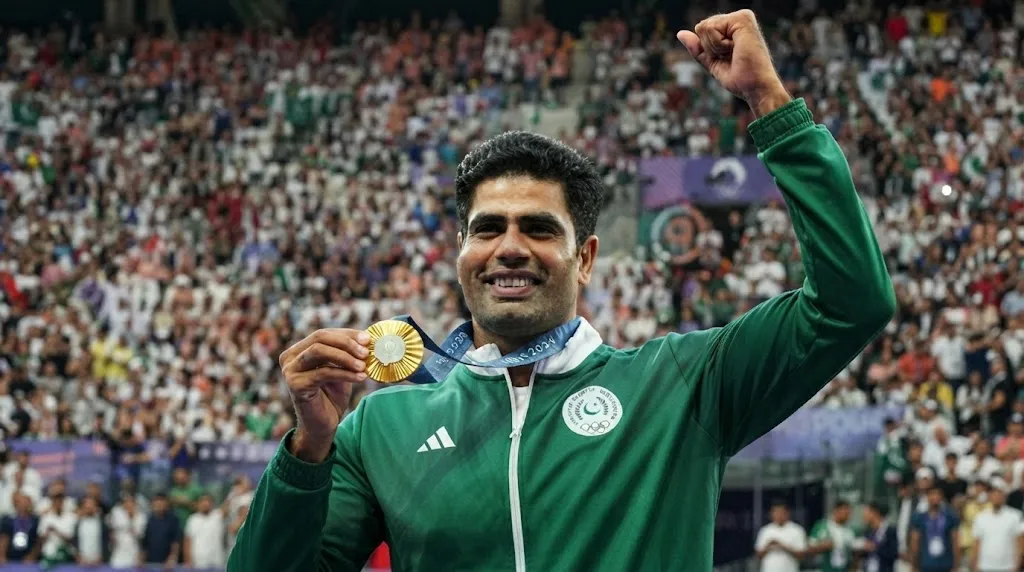
Nadeem returned home to a hero’s welcome, with celebrations reaching his hometown of Mian Channu. His achievement resonated far beyond athletics because it represented what perseverance can accomplish when circumstances are not ideal.
His story has also renewed conversations about the importance of investing in Pakistani athletes, training facilities and sporting infrastructure.
Before Paris, his journey had already demonstrated how far determination could take an athlete even when resources were limited.
Today, Arshad Nadeem stands as an inspiration for young Pakistanis who may have talent but lack access to elite opportunities.
Long before the Olympic spotlight, Arshad Nadeem was a young athlete from Mian Channu, a city in Punjab where world class sporting facilities were far from his reality.
Long before the Olympic spotlight, Arshad Nadeem was a young athlete from Mian Channu, a city in Punjab where world class sporting facilities were far from his reality. He came from a modest family and began developing his athletic abilities with limited resources.
His journey into javelin throwing was not built around expensive equipment or elite training centres.
Reports have described him training in fields and using makeshift equipment during his early years. Yet the lack of facilities did not stop him from pursuing the sport he had discovered a passion for.
Nadeem’s rise was gradual. He competed nationally before beginning to make his presence felt internationally, steadily improving his distances and gaining experience against some of the world’s best throwers.
At the Tokyo 2020 Olympics, he became the first Pakistani track and field athlete to qualify directly for the Games under the modern entry standards and reached the javelin final, eventually finishing fifth.
Even without a medal, his performance established him as a serious international athlete.
On August 8, 2024, Arshad Nadeem stepped into the Stade de France for the men’s javelin final at the Paris Olympics.
His second throw travelled an extraordinary 92.97 metres, breaking the Olympic record and putting him firmly at the top of the competition.
The throw secured Olympic gold, making Nadeem Pakistan’s first individual Olympic gold medallist and the country’s first Olympic medallist in athletics. It also ended a 40 year wait for Pakistan’s next Olympic gold medal.
Nadeem returned home to a hero’s welcome, with celebrations reaching his hometown of Mian Channu. His achievement resonated far beyond athletics because it represented what perseverance can accomplish when circumstances are not ideal.
His story has also renewed conversations about the importance of investing in Pakistani athletes, training facilities and sporting infrastructure.
Before Paris, his journey had already demonstrated how far determination could take an athlete even when resources were limited.
Today, Arshad Nadeem stands as an inspiration for young Pakistanis who may have talent but lack access to elite opportunities.



