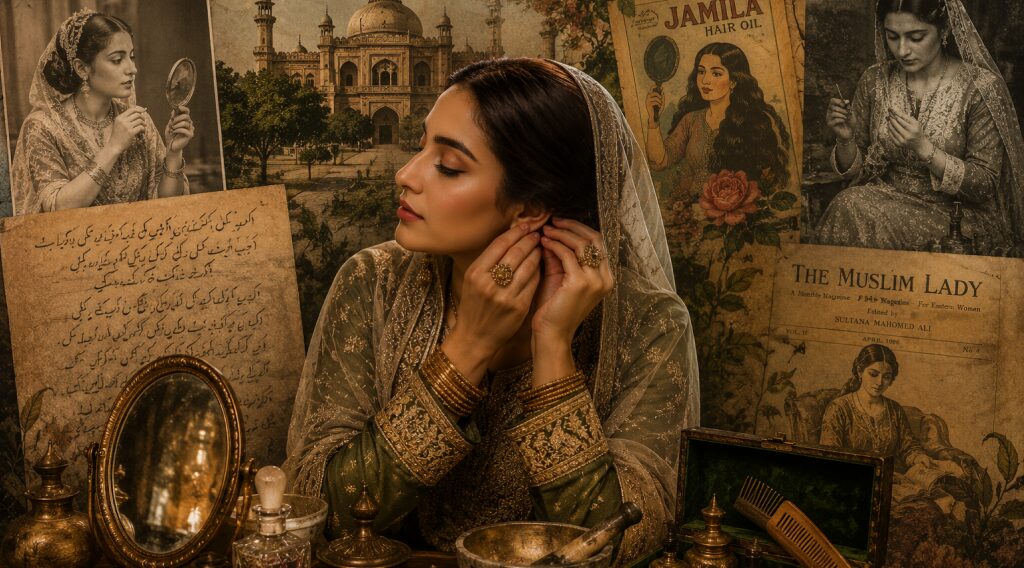
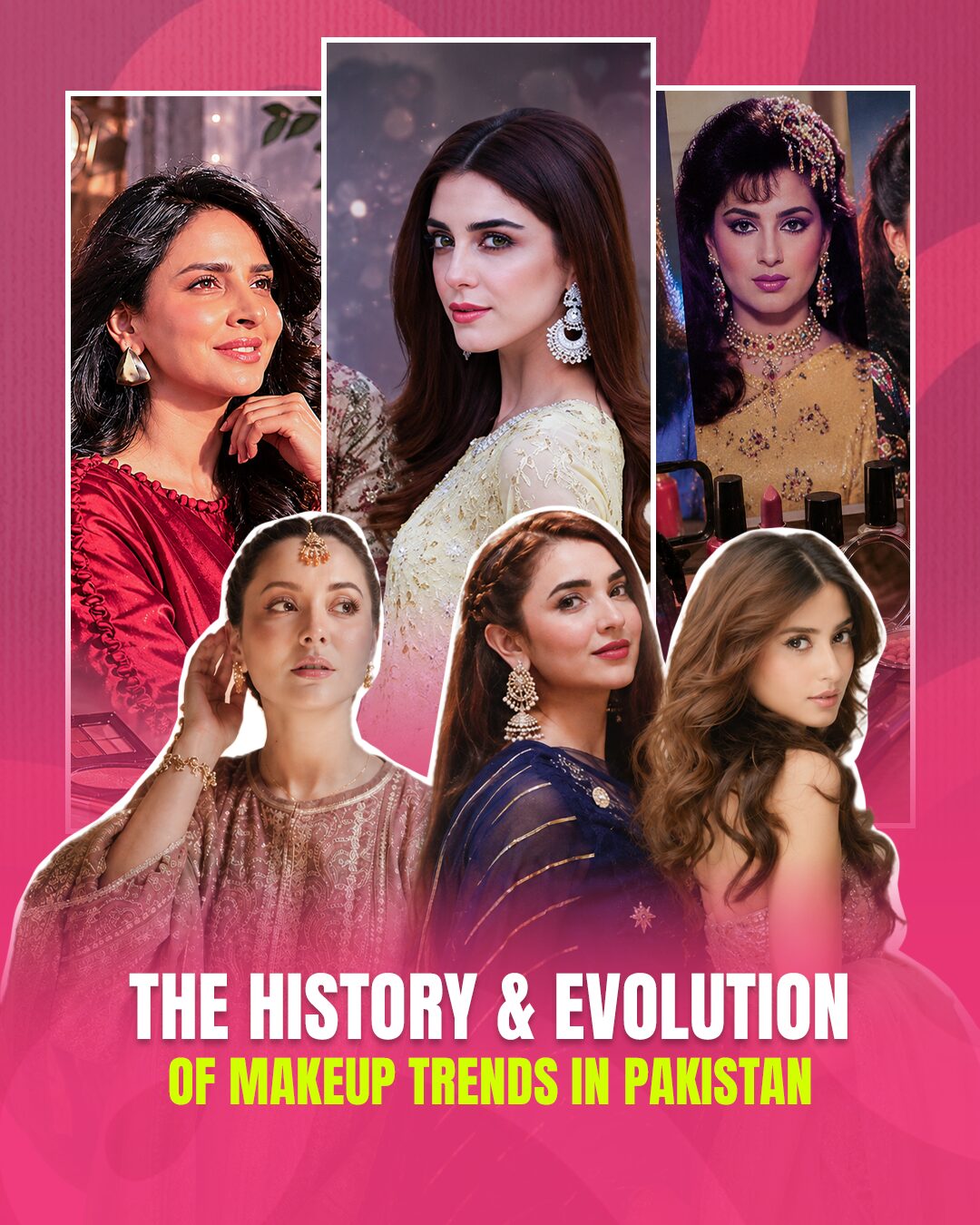
In early Pakistan, makeup trends were deeply influenced by cultural traditions, modesty, and classic South Asian beauty standards.
Women preferred natural looks with light kajal, simple lip tints, and traditional skincare remedies using natural ingredients. Celebrities like Noor Jehan became early style icons, representing elegance with minimal yet graceful makeup styles.
During this era, makeup was not widely commercialized, and beauty practices were mostly home-based. Bridal looks focused on bold kajal, red lipstick, and traditional jewelry.
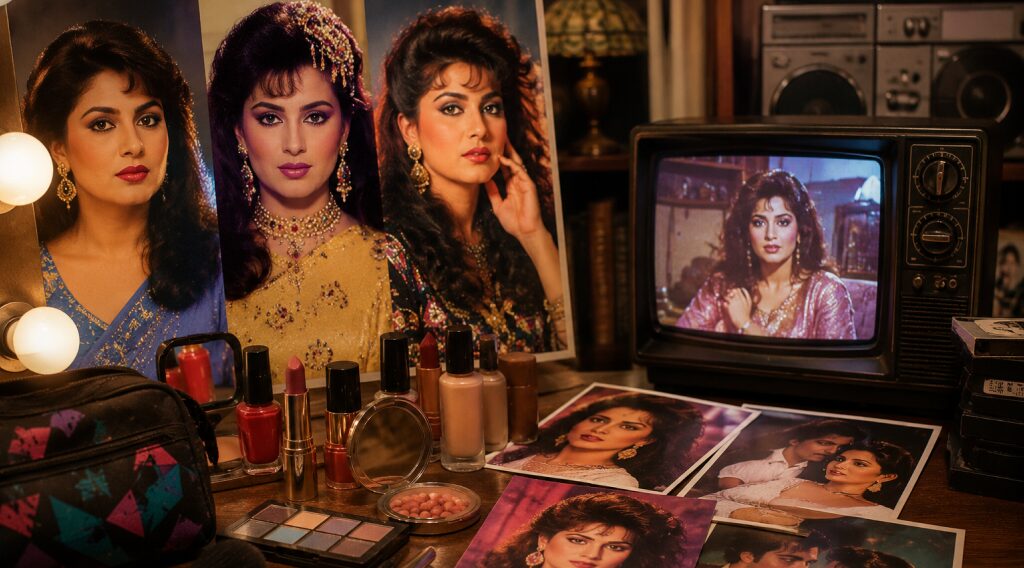
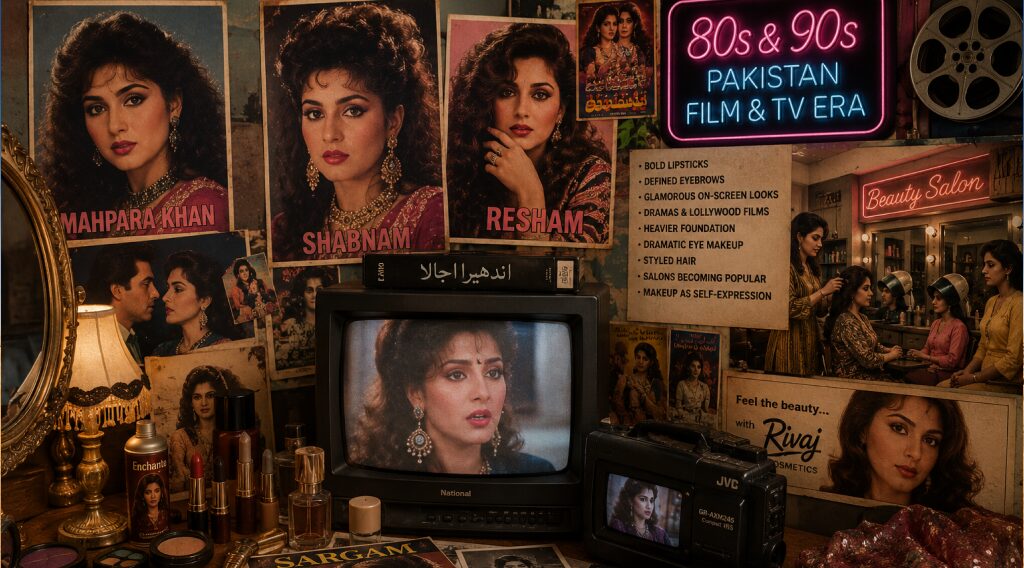
The 1980s and 1990s marked a shift in Pakistan’s makeup culture due to television and film influence.
Actresses like Mahpara Khan, Shabnam, and later Resham inspired bold lipstick shades, defined eyebrows, and glamorous on-screen looks.
Makeup became more visible and expressive, especially in dramas and Lollywood films. Heavier foundation, dramatic eye makeup, and styled hair became popular among women who followed celebrity trends.
Salons also started becoming more common in urban areas.This era established makeup as a form of self-expression.
In the early 2000s, Pakistan saw a rapid rise in professional salon culture and modern makeup techniques. Celebrity makeup artists like Babar Zaheer began influencing bridal and fashion trends across the country.
Actresses such as Mehwish Hayat, Ayesha Omar, and Sana Fakhar became known for glamorous looks featuring contoured faces, glossy lips, and smoky eyes.
Bridal makeup also became more elaborate, with airbrushing techniques and international product usage gaining popularity.
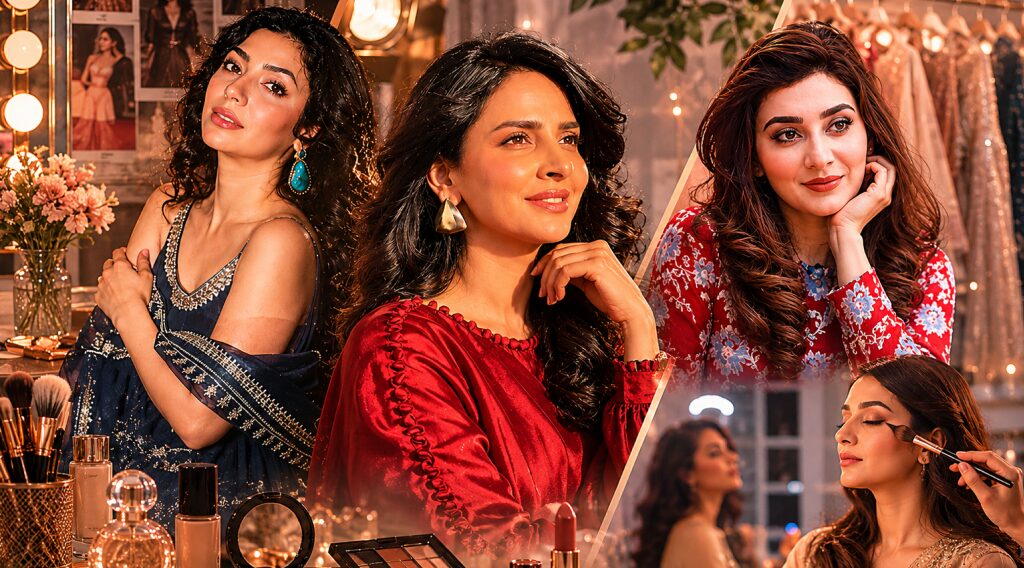
The 2010s brought a revolution in Pakistan’s makeup trends with the rise of social media platforms like Instagram and YouTube.
Celebrities such as Mahira Khan, Saba Qamar, and Ayesha Khan set major beauty standards with their red-carpet looks.
Makeup became more refined, focusing on glowing skin, soft contouring, nude lips, and natural glam styles. Influencers and makeup artists like Nabila and Sara Salon also played a huge role in shaping modern beauty trends.
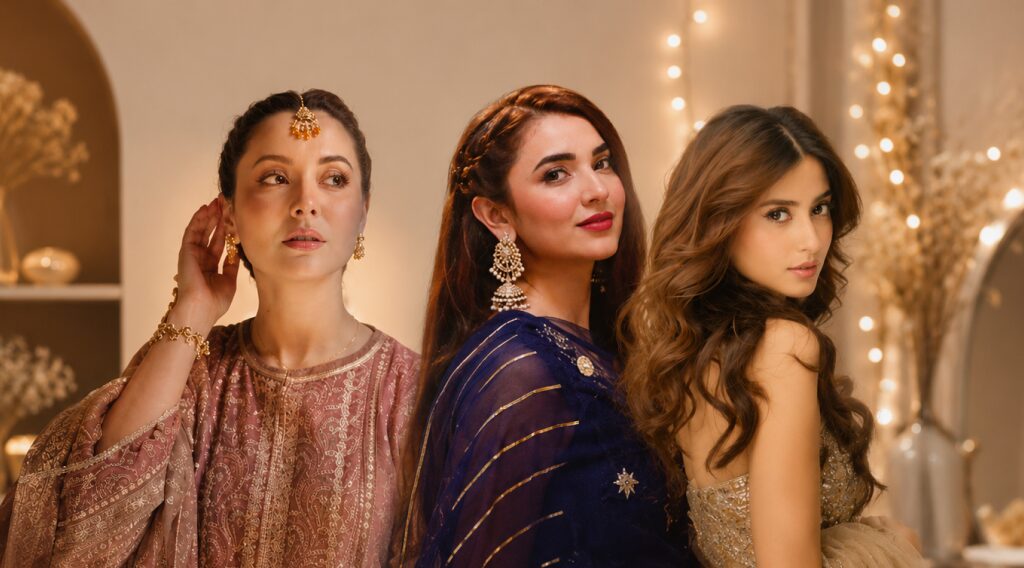
In the 2020s, Pakistani makeup trends have shifted toward minimalism, skincare-based beauty, and global fusion styles.
Celebrities like Hania Aamir, Yumna Zaidi, and Sajal Aly often showcase fresh, natural looks with soft glam finishes.
Social media influencers and beauty creators have also popularized dewy skin, light foundations, and subtle eye makeup. International trends such as Korean glass skin and soft matte aesthetics are widely adopted.
This era reflects a balance between natural beauty and modern sophistication, where individuality and skin health are prioritized.
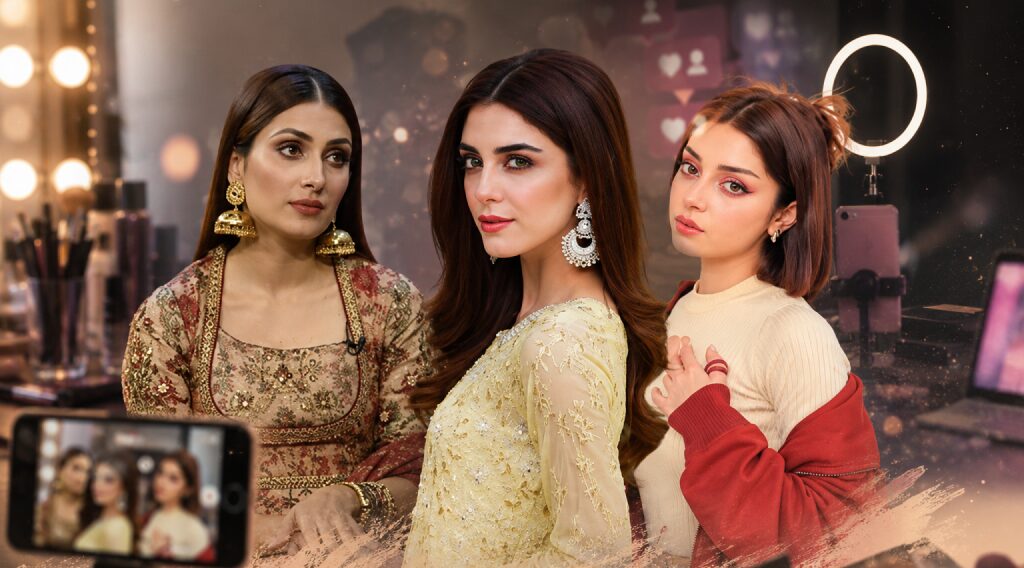
The future of makeup in Pakistan is expected to focus on inclusivity, skincare integration, and sustainable beauty products.
Brands and makeup artists are increasingly promoting diverse skin tones and natural beauty standards.
Celebrity influence continues to play a strong role, with stars like Maya Ali, Ayeza Khan, and Alizeh Shah shaping everyday beauty trends.
Digital platforms are further expanding access to tutorials and global inspiration. Overall, Pakistan’s beauty industry is moving toward a more personalized and conscious approach, where makeup enhances individualit