Across Pakistan, a new generation of students is actively engaging with science, technology, engineering, and mathematics (STEM).
From coding small applications to building robotics projects, their potential is becoming increasingly visible.
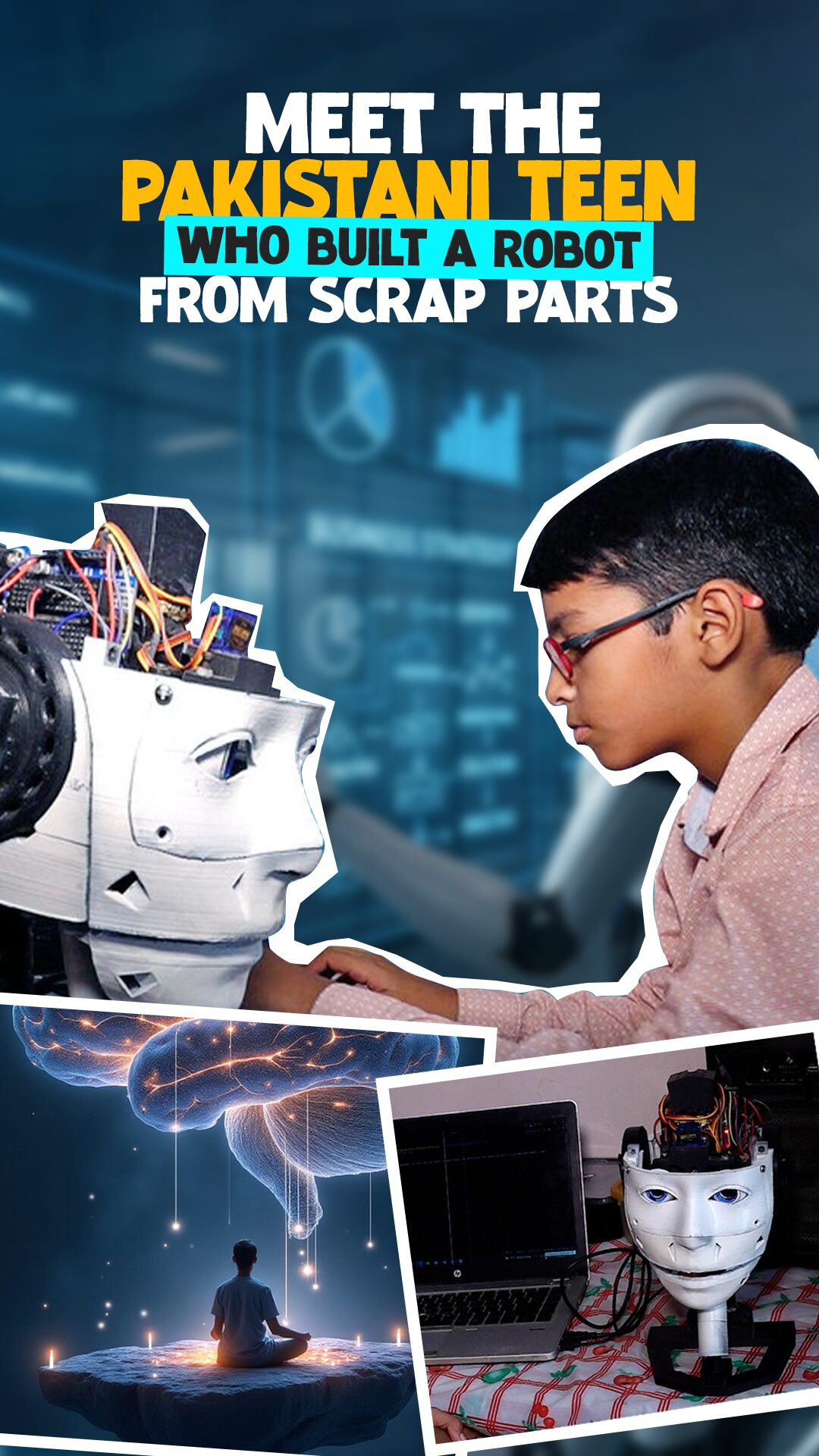
One remarkable example is an 11-year-old student from Karachi whose early achievements in robotics and AI reflect how fast young talent is growing in the country’s tech landscape.
Muhammad Hasnain developed a strong curiosity for technology at a very young age, particularly in understanding how machines function and respond to instruc

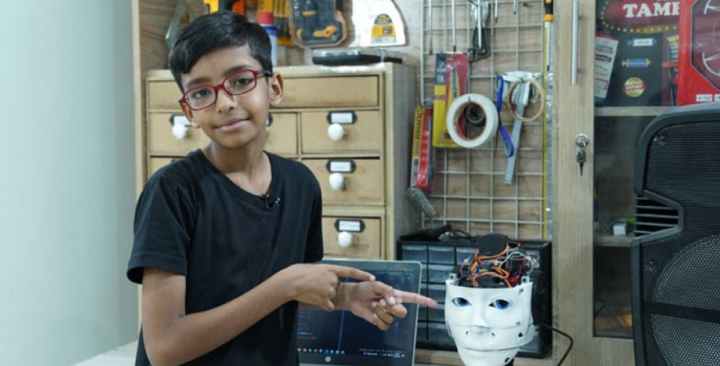
This curiosity led him to join the Imam Hussain Institute in Karachi, where he spent two years learning programming, electronics, and basic engineering concepts.
This structured learning experience gave him the technical foundation and confidence to begin building real-world projects.
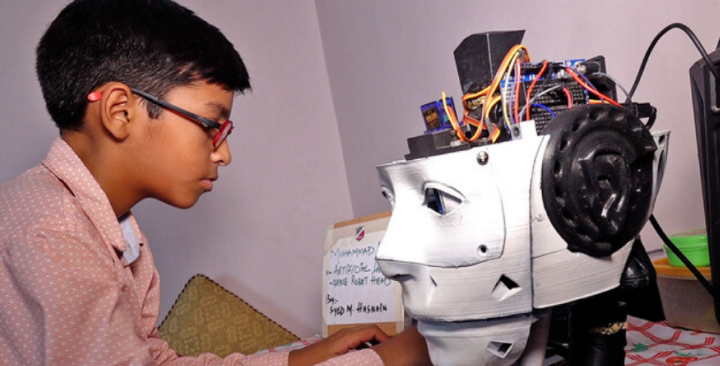
His most impressive creation is a voice-activated AI robot named “Muhammad Ali.”
Designed to respond to spoken commands, the robot can perform multiple interactive tasks such as answering questions, opening websites, and assisting with simple daily activities.
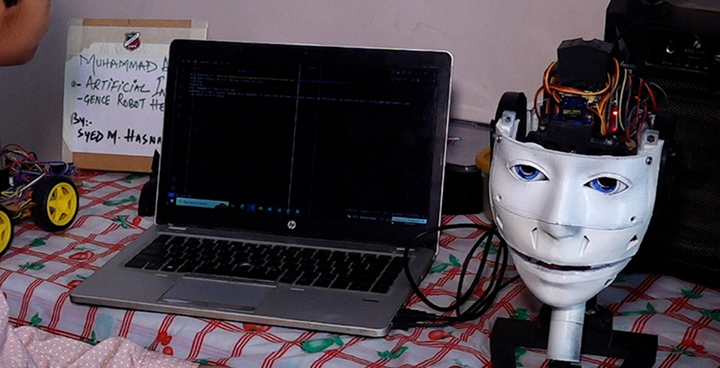
The robot operates through a combination of hardware components and software systems connected to a laptop running AI-based programs.
It processes voice input, converts speech into digital commands, and responds instantly through programmed outputs.
A mechanical face with moving eyes and mouth adds a human-like interaction, making the experience more engaging and realistic for users.
With guidance from his instructor, Hasnain independently developed most of the robot’s structure, programming, and design.
His innovative work has gained appreciation in educational and tech communities, highlighting his creativity and problem-solving abilities.
This recognition has further motivated him to continue exploring robotics and artificial intelligence as a long-term passion.
Before developing his AI robot, Hasnain worked on several foundational projects that helped him gradually build technical expertise.
These included a Bluetooth-controlled car and a virtual reality (VR) game.

Each project strengthened his understanding of coding logic, circuit design, and system integration, preparing him for more advanced innovation in robotics and AI development.
Stories like Hasnain’s highlight the immense untapped potential of Pakistan’s youth in science and technology.
With proper access to mentorship, modern labs, digital tools, and STEM education, many more young innovators could emerge across the country.
These early achievements show what is possible when curiosity meets opportunity.
Meet Muhammad Hasnain, an 11-year-old robotics enthusiast from Karachi
Across Pakistan, a new generation of students is actively engaging with science, technology, engineering, and mathematics (STEM).
From coding small applications to building robotics projects, their potential is becoming increasingly visible.
One remarkable example is an 11-year-old student from Karachi whose early achievements in robotics and AI reflect how fast young talent is growing in the country’s tech landscape.
Muhammad Hasnain developed a strong curiosity for technology at a very young age, particularly in understanding how machines function and respond to instruc
This curiosity led him to join the Imam Hussain Institute in Karachi, where he spent two years learning programming, electronics, and basic engineering concepts.
This structured learning experience gave him the technical foundation and confidence to begin building real-world projects.
His most impressive creation is a voice-activated AI robot named “Muhammad Ali.”
Designed to respond to spoken commands, the robot can perform multiple interactive tasks such as answering questions, opening websites, and assisting with simple daily activities.
The robot operates through a combination of hardware components and software systems connected to a laptop running AI-based programs.
It processes voice input, converts speech into digital commands, and responds instantly through programmed outputs.
A mechanical face with moving eyes and mouth adds a human-like interaction, making the experience more engaging and realistic for users.
With guidance from his instructor, Hasnain independently developed most of the robot’s structure, programming, and design.
His innovative work has gained appreciation in educational and tech communities, highlighting his creativity and problem-solving abilities.
This recognition has further motivated him to continue exploring robotics and artificial intelligence as a long-term passion.
Before developing his AI robot, Hasnain worked on several foundational projects that helped him gradually build technical expertise.
These included a Bluetooth-controlled car and a virtual reality (VR) game.
Each project strengthened his understanding of coding logic, circuit design, and system integration, preparing him for more advanced innovation in robotics and AI development.
Stories like Hasnain’s highlight the immense untapped potential of Pakistan’s youth in science and technology.
With proper access to mentorship, modern labs, digital tools, and STEM education, many more young innovators could emerge across the country.
These early achievements show what is possible when curiosity meets opportunity.