Karachi, Pakistan’s largest city with a population exceeding 20 million, faces a significant education access gap.
According to multiple education assessments in Pakistan, millions of children nationwide remain out of school, with urban slums being particularly affected due to poverty, informal housing, and lack of documentation.
In many low-income neighborhoods, children are pushed into labour at an early age to support household income.
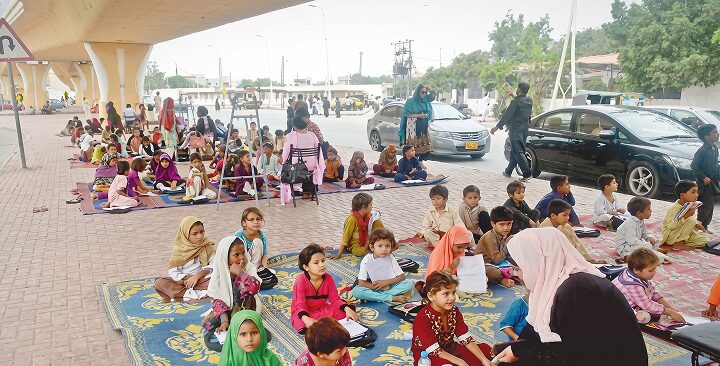
The Footpath School operates as a non-formal education setup where basic teaching materials such as whiteboards, plastic chairs, mats, a

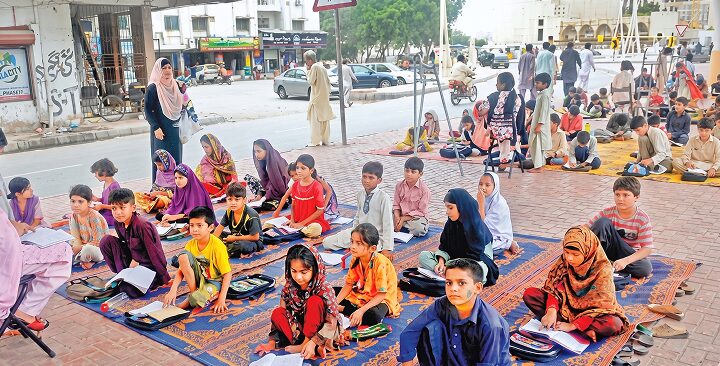
Unlike formal schools, there are no buildings, uniforms, or fixed enrollment systems.
Instead, children are welcomed freely, making it one of the most accessible forms of education for street-involved and low-income families in the area.
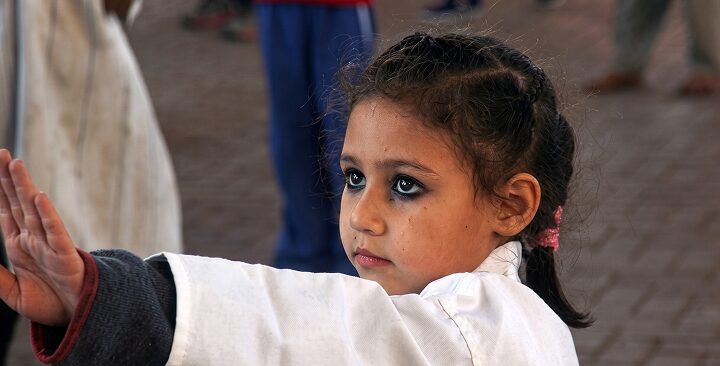
Each day, children gather in small groups for lessons that focus on foundational literacy and numeracy.
They are taught basic Urdu reading, English alphabets, simple arithmetic, and general awareness skills. Volunteer teachers often young educators or social workers use low-resource teaching methods such as storytelling, oral repetition.
For many children attending the Footpath School, education represents their first structured daily routine.
Some children who previously worked in informal street labor or accompanied families in begging activities begin to spend part of their day in learning sessions instead.
Even basic exposure to education helps improve confidence, communication skills, and long-term aspirations.
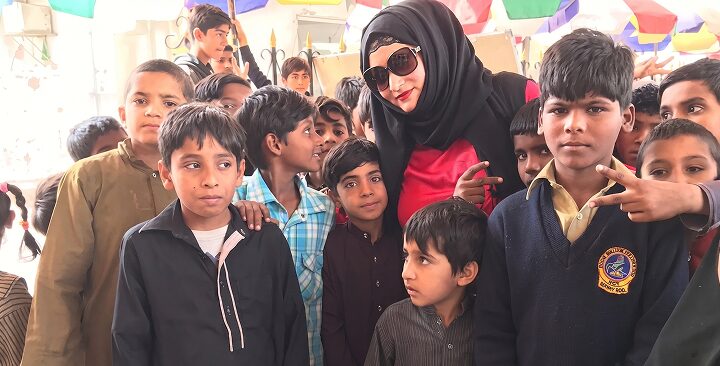
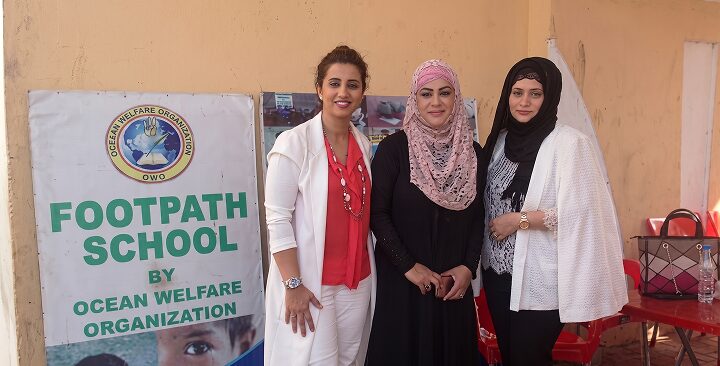
The Footpath School near Abdullah Shah Ghazi Shrine operates primarily through volunteer effort. Teachers, social activists, and local supporters contribute time, books, and learning materials.
There is no formal government funding structure, so sustainability depends on community participation and occasional donations from individuals and charitable groups who support informal education initiatives in Karachi.
This footpath classroom reflects a wider issue in Pakistan: millions of children remain out of school despite the existence of public education systems.
According to national and international education reports, barriers such as poverty, migration, and urban inequality continue to limit access.
Initiatives like this do not replace formal schooling but serve as immediate, localized responses to a persistent national challenge.
Karachi, Pakistan’s largest city with a population exceeding 20 million, faces a significant education access gap.
According to multiple education assessments in Pakistan, millions of children nationwide remain out of school, with urban slums being particularly affected due to poverty, informal housing, and lack of documentation.
In many low-income neighborhoods, children are pushed into labour at an early age to support household income.
The Footpath School operates as a non-formal education setup where basic teaching materials such as whiteboards, plastic chairs, mats, a
Unlike formal schools, there are no buildings, uniforms, or fixed enrollment systems.
Instead, children are welcomed freely, making it one of the most accessible forms of education for street-involved and low-income families in the area.
Each day, children gather in small groups for lessons that focus on foundational literacy and numeracy.
They are taught basic Urdu reading, English alphabets, simple arithmetic, and general awareness skills. Volunteer teachers often young educators or social workers use low-resource teaching methods such as storytelling, oral repetition.
For many children attending the Footpath School, education represents their first structured daily routine.
Some children who previously worked in informal street labor or accompanied families in begging activities begin to spend part of their day in learning sessions instead.
Even basic exposure to education helps improve confidence, communication skills, and long-term aspirations.
The Footpath School near Abdullah Shah Ghazi Shrine operates primarily through volunteer effort. Teachers, social activists, and local supporters contribute time, books, and learning materials.
There is no formal government funding structure, so sustainability depends on community participation and occasional donations from individuals and charitable groups who support informal education initiatives in Karachi.
This footpath classroom reflects a wider issue in Pakistan: millions of children remain out of school despite the existence of public education systems.
According to national and international education reports, barriers such as poverty, migration, and urban inequality continue to limit access.
Initiatives like this do not replace formal schooling but serve as immediate, localized responses to a persistent national challenge.