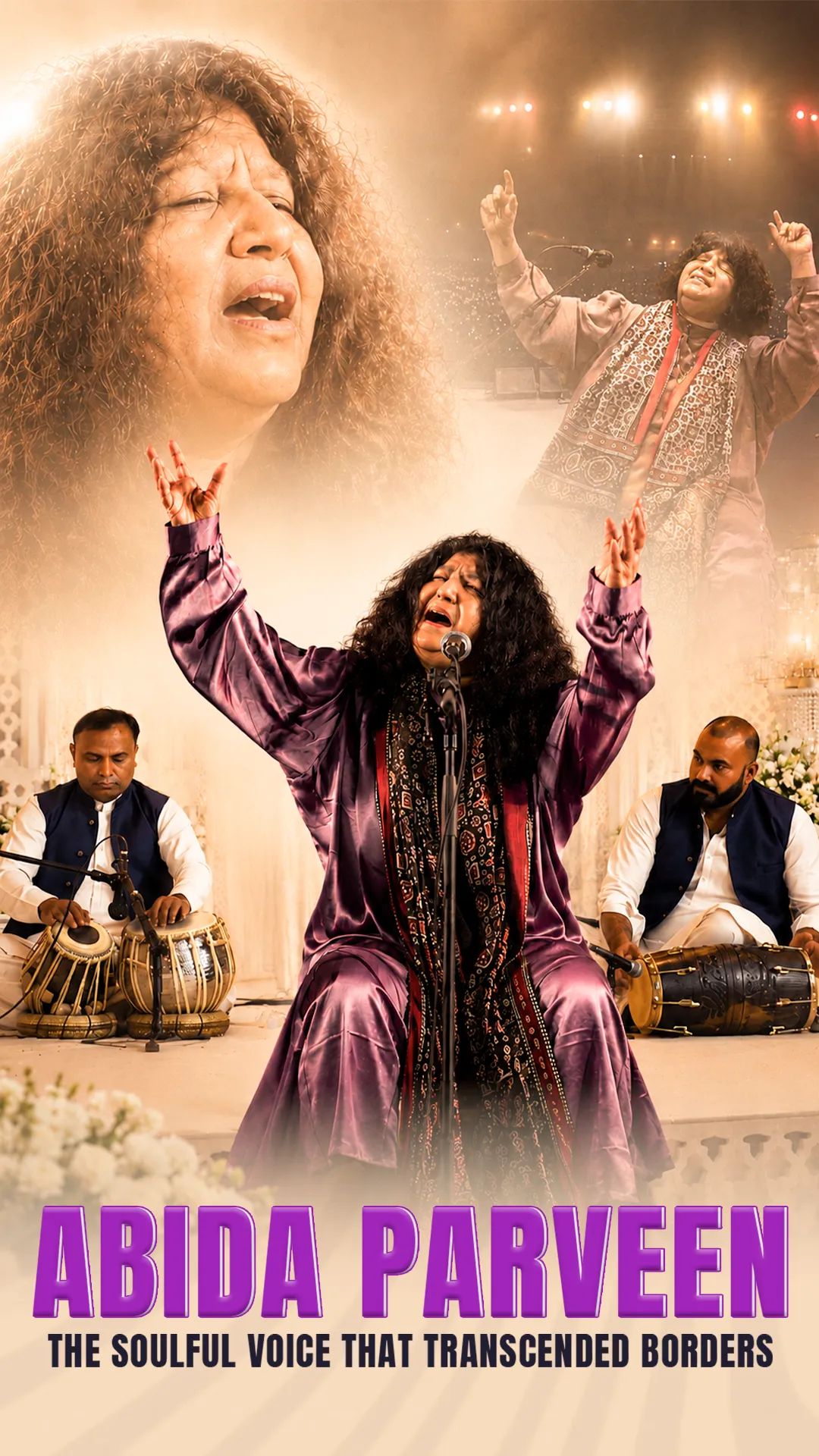
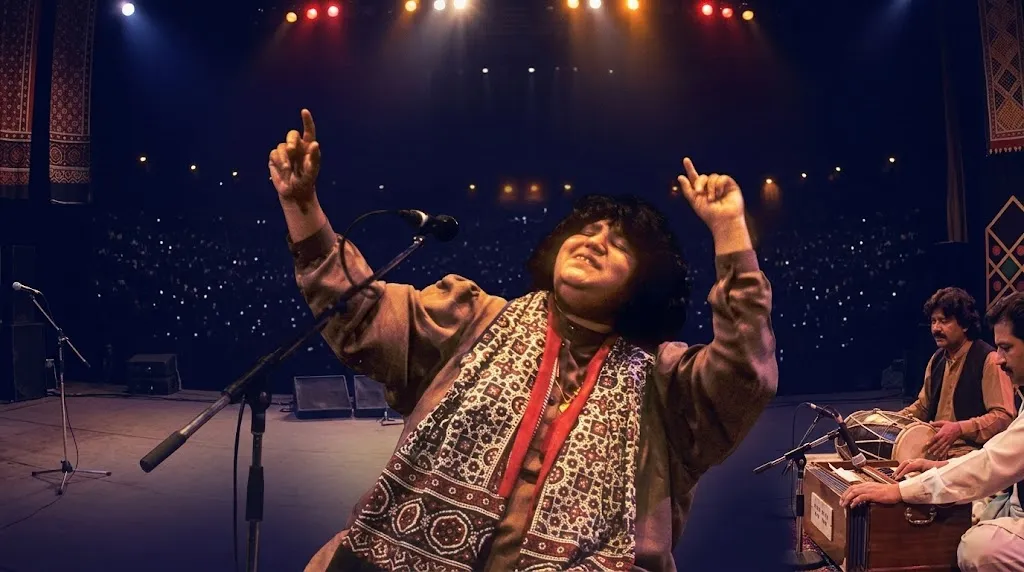
Born in Larkana, Sindh, Abida Parveen inherited her love for music from her father, Ustad Ghulam Haider, who recognized her extraordinary talent at an early age.
Under his guidance, she received classical training and developed a deep connection with Sufi poetry and spiritual music.
At a time when qawwali and Sufi singing were largely dominated by men, Abida Parveen broke barriers and carved out a unique identity with her powerful voice and mesmerizing performances. Her ability to convey emotion through music quickly set her apart from her contemporaries.

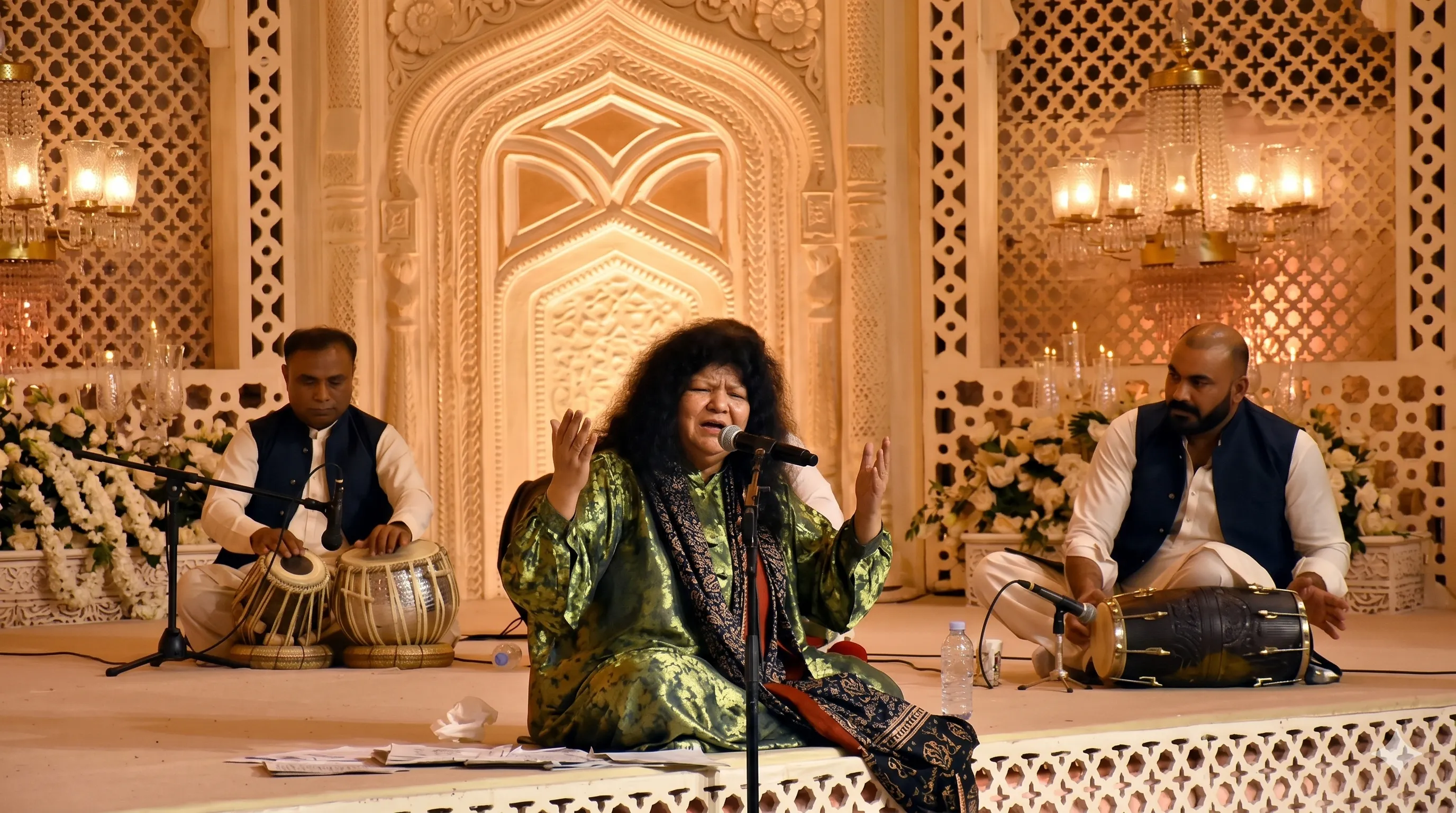
Over the decades, Abida Parveen became one of the most celebrated exponents of Sufi music, earning admiration from audiences across Asia, Europe, North America, and the Middle East.
Her renditions of the poetry of Bulleh Shah, Shah Abdul Latif Bhittai, Rumi, and Amir Khusrau have introduced millions to the beauty of spiritual music.
Songs such as Tere Ishq Nachaya, Yaar Ko Humne, and Chaap Tilak have become timeless classics, while her performances on Coke Studio brought her music to a younger generation.
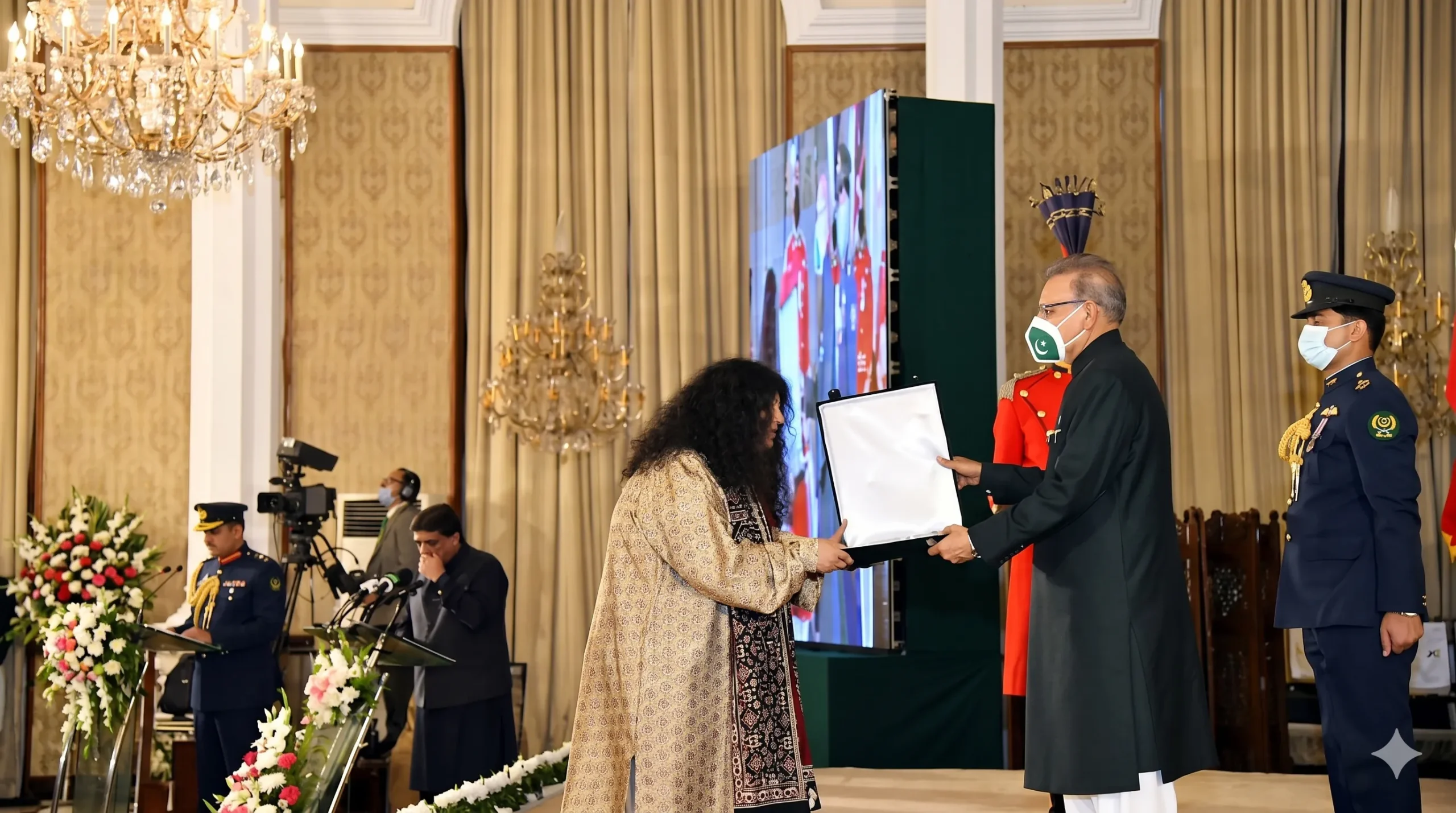
Abida Parveen's extraordinary contributions to music have been recognized through numerous national and international honors. The Government of Pakistan has awarded her the Pride of Performance, Sitara-i-Imtiaz, and Hilal-i-Imtiaz in recognition of her unparalleled services to the arts.
Beyond her performances, she has also played a vital role in mentoring young talent and serving as a judge on musical platforms.
Her influence extends far beyond Pakistan, earning her acclaim from critics, musicians, and audiences around the world.
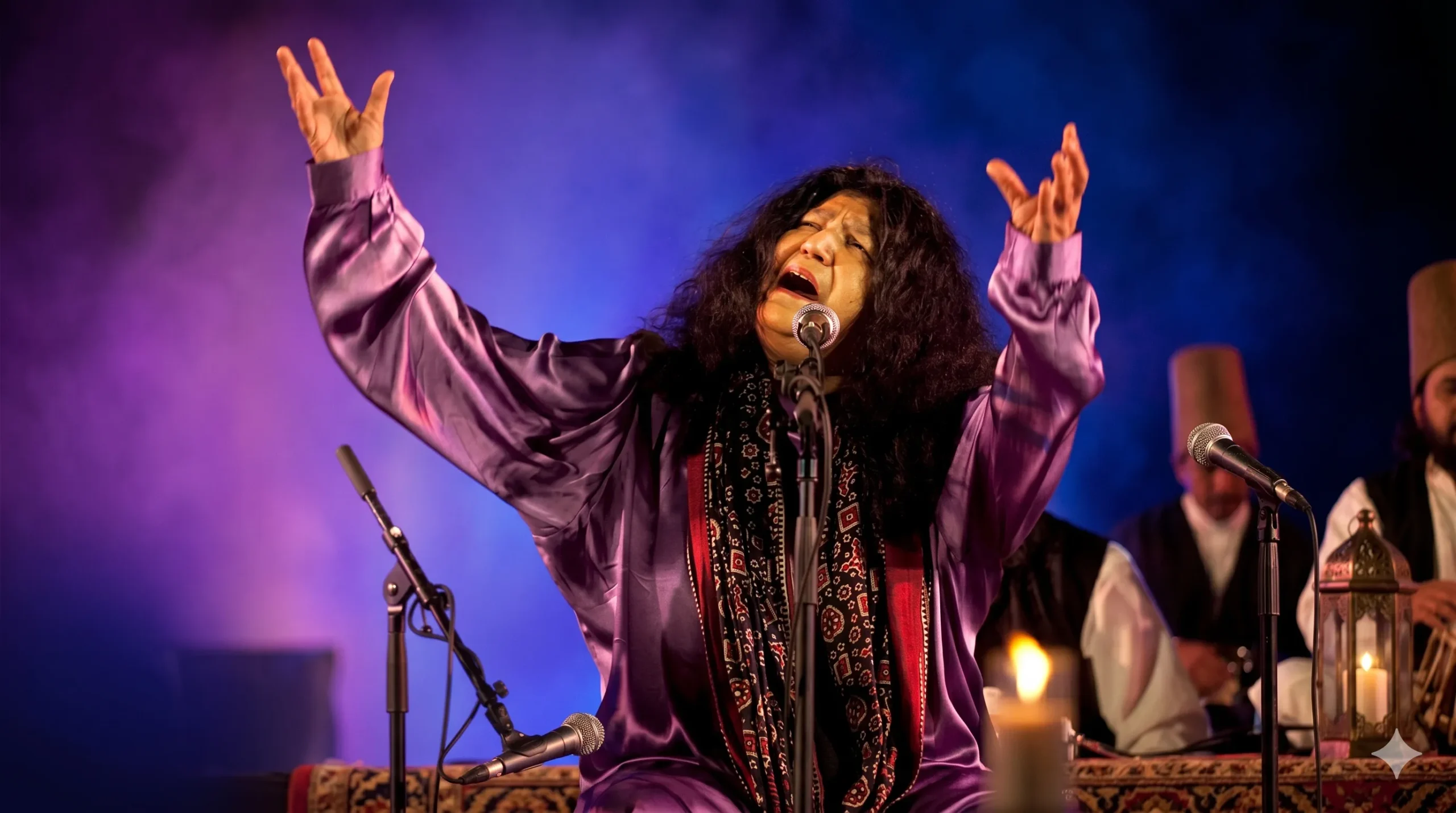
More than just a singer, Abida Parveen has become a symbol of spirituality, artistic excellence, and Pakistan's rich cultural heritage.
Her music transcends language, religion, and geography, touching hearts with messages of love, devotion, and unity.
Generations of artists and music lovers continue to draw inspiration from her unmatched vocal style and profound interpretations of Sufi poetry.
Through her work, she has preserved centuries-old traditions while introducing them to modern audiences.
Born in Larkana, Sindh, Abida Parveen inherited her love for music from her father, Ustad Ghulam Haider, who recognized her extraordinary talent at an early age.
Born in Larkana, Sindh, Abida Parveen inherited her love for music from her father, Ustad Ghulam Haider, who recognized her extraordinary talent at an early age.
Under his guidance, she received classical training and developed a deep connection with Sufi poetry and spiritual music.
At a time when qawwali and Sufi singing were largely dominated by men, Abida Parveen broke barriers and carved out a unique identity with her powerful voice and mesmerizing performances. Her ability to convey emotion through music quickly set her apart from her contemporaries.
Over the decades, Abida Parveen became one of the most celebrated exponents of Sufi music, earning admiration from audiences across Asia, Europe, North America, and the Middle East.
Her renditions of the poetry of Bulleh Shah, Shah Abdul Latif Bhittai, Rumi, and Amir Khusrau have introduced millions to the beauty of spiritual music.
Songs such as Tere Ishq Nachaya, Yaar Ko Humne, and Chaap Tilak have become timeless classics, while her performances on Coke Studio brought her music to a younger generation.
Abida Parveen's extraordinary contributions to music have been recognized through numerous national and international honors. The Government of Pakistan has awarded her the Pride of Performance, Sitara-i-Imtiaz, and Hilal-i-Imtiaz in recognition of her unparalleled services to the arts.
Beyond her performances, she has also played a vital role in mentoring young talent and serving as a judge on musical platforms.
Her influence extends far beyond Pakistan, earning her acclaim from critics, musicians, and audiences around the world.
More than just a singer, Abida Parveen has become a symbol of spirituality, artistic excellence, and Pakistan's rich cultural heritage.
Her music transcends language, religion, and geography, touching hearts with messages of love, devotion, and unity.
Generations of artists and music lovers continue to draw inspiration from her unmatched vocal style and profound interpretations of Sufi poetry.
Through her work, she has preserved centuries-old traditions while introducing them to modern audiences.



