Abdul Sattar Edhi: The Man Who Made Humanity His Mission
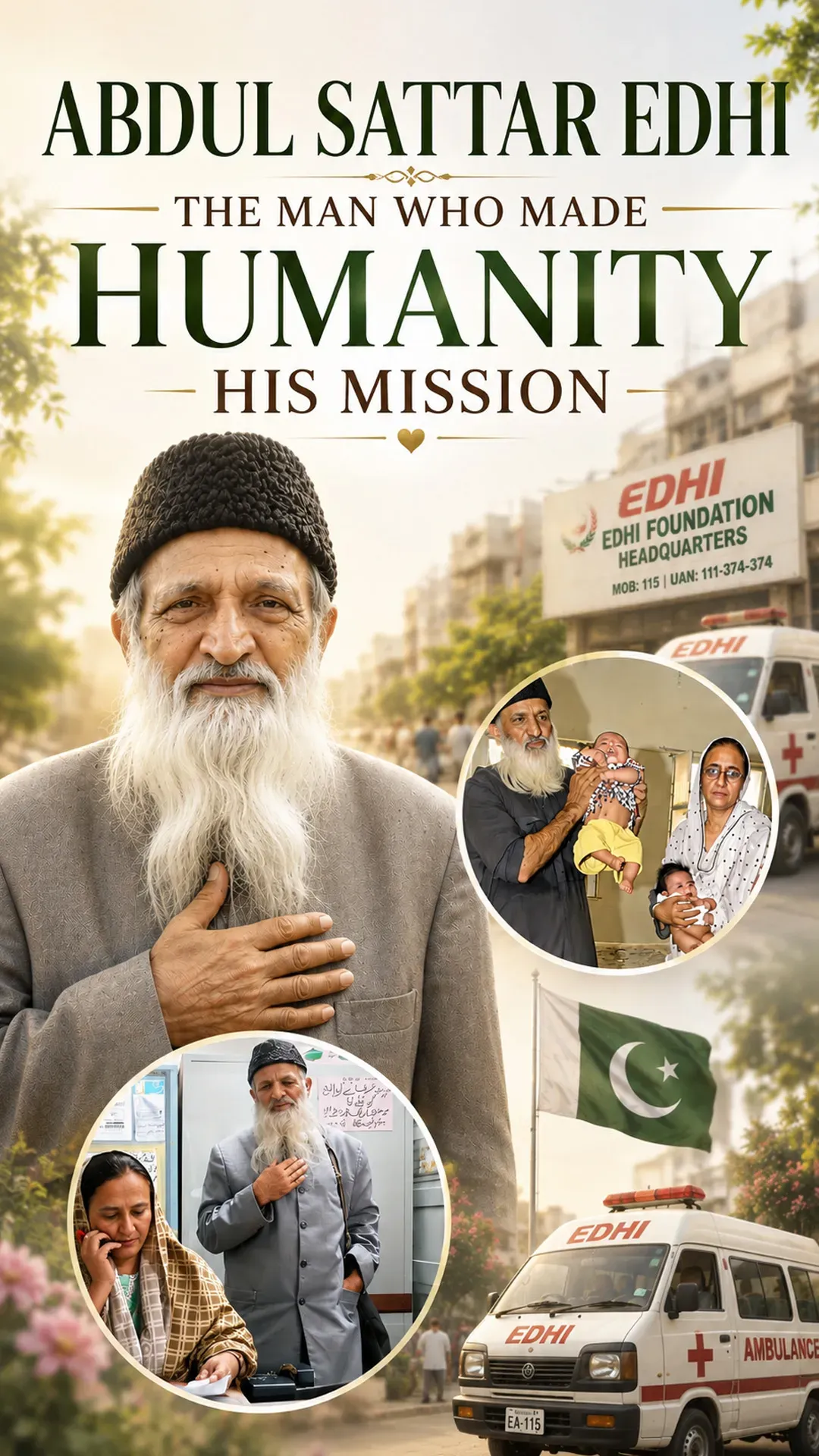
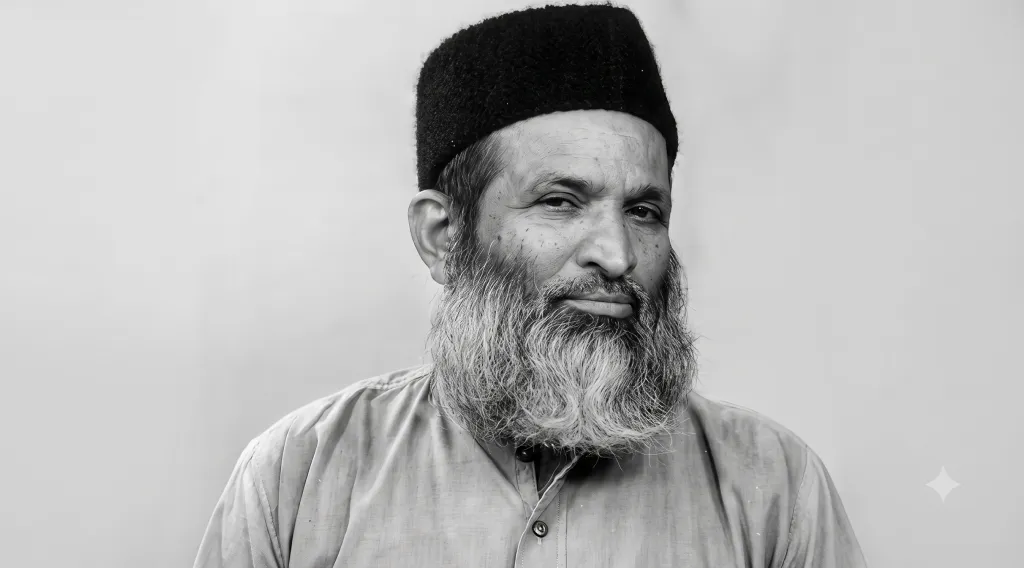
Abdul Sattar Edhi began his humanitarian journey in 1951 by establishing a small free dispensary in Karachi after moving to Pakistan following Partition. With limited resources but an extraordinary sense of compassion, he dedicated himself to serving those who had nowhere else to turn.
What started as a single room offering basic medical assistance gradually expanded into one of the world's most respected charitable organizations. Every donation, no matter how small, was carefully used to help those in need.
His belief was simple yet powerful: every human life deserves dignity, care, and compassion, regardless of wealth, religion, or social background.

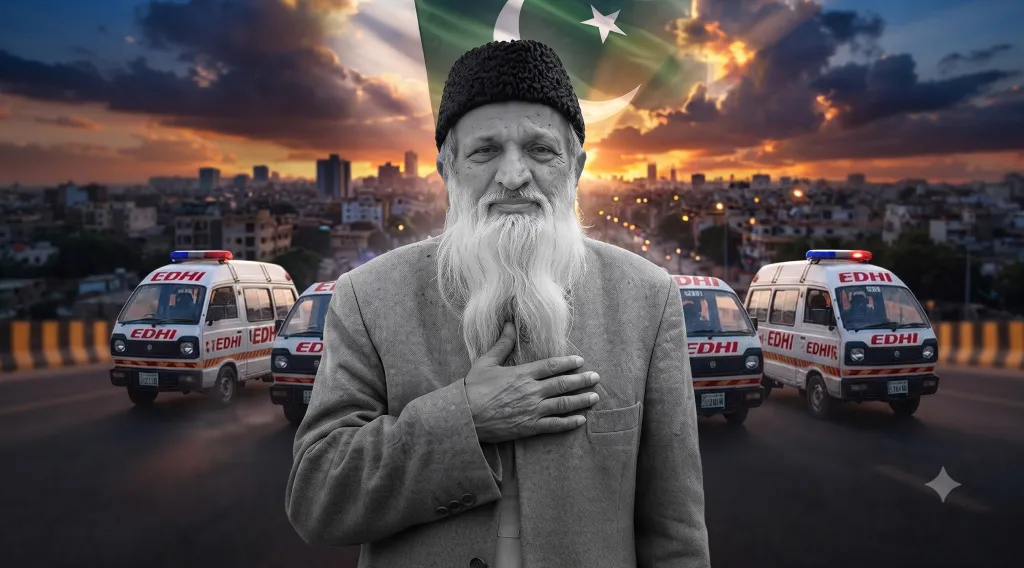
Over the following decades, Abdul Sattar Edhi transformed his small initiative into the Edhi Foundation, one of Pakistan's largest welfare organizations.
The foundation now operates hundreds of welfare centers across Pakistan, providing healthcare, shelter, education, orphan care, rehabilitation services, and disaster relief.
One of its most remarkable achievements is operating one of the world's largest volunteer ambulance networks, with well over 1,800 ambulances serving cities, towns, and remote communities across the country.
Today, the Edhi Foundation continues to assist millions of Pakistanis every year, carrying forward the humanitarian vision established by its founder.
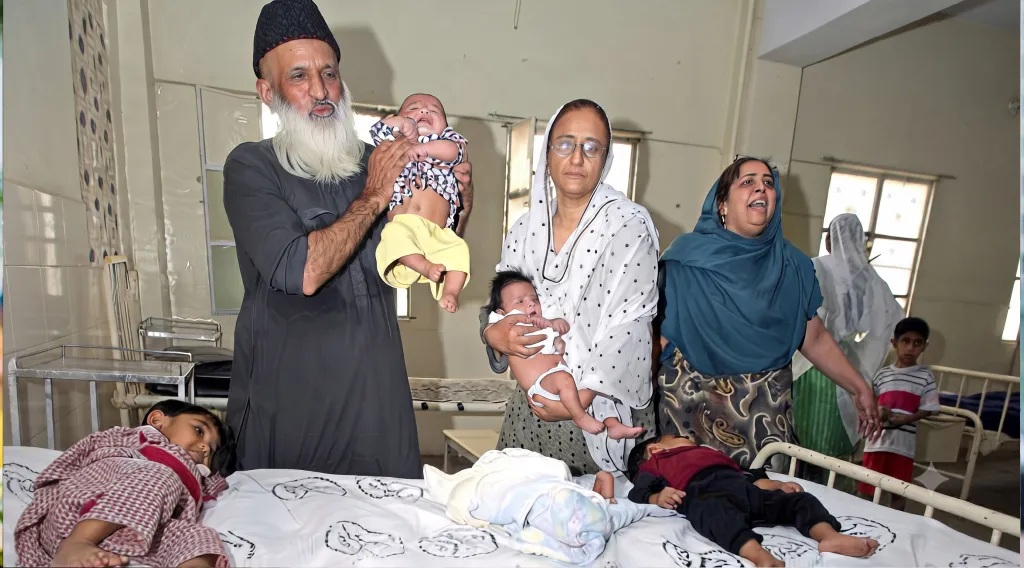
Among Abdul Sattar Edhi's most compassionate initiatives was the introduction of Jhoola or baby cradle programs outside Edhi centers. These cradles allowed parents unable to care for newborns to leave them safely instead of abandoning them in dangerous circumstances.
Each cradle carried a message encouraging families not to take a child's life but to entrust the baby to Edhi's care. The foundation then arranged medical treatment, shelter, and, where possible, adoption through legal procedures.
Over the decades, the initiative has helped save more than 20,000 abandoned infants, making it one of Pakistan's most impactful child welfare programs.
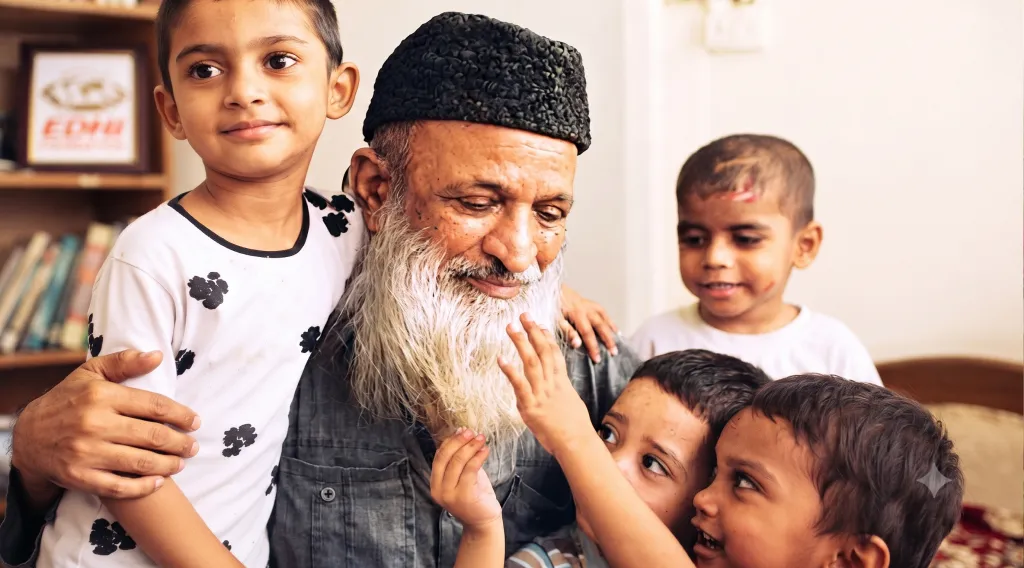
Despite overseeing a charitable organization supported by millions of rupees in donations, Abdul Sattar Edhi chose to live an exceptionally modest life. He owned only a few personal belongings, wore simple clothes, and slept in a small room beside his office rather than seeking comfort or luxury.
He believed donated money belonged entirely to the people it was meant to serve. Every decision reflected transparency, accountability, and personal sacrifice.
His lifestyle became as inspiring as his humanitarian work, proving that true leadership is measured not by wealth but by selfless service and unwavering integrity.
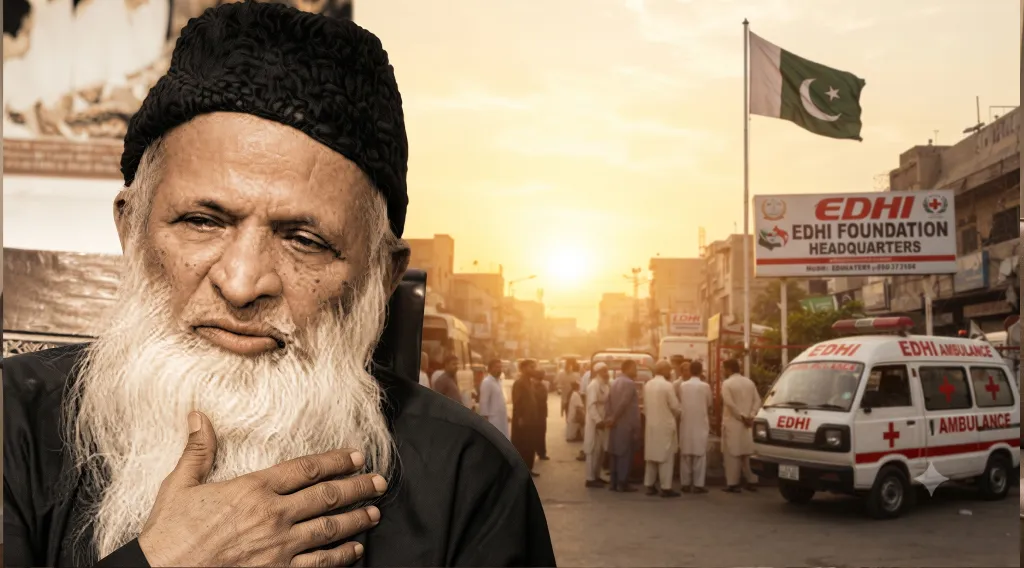
Abdul Sattar Edhi was widely respected for helping people without asking about their religion, ethnicity, nationality, or social status. Whether responding to natural disasters, road accidents, medical emergencies, or humanitarian crises, his foundation provided assistance solely based on need.
His famous belief, No religion is higher than humanity, became the guiding principle of the Edhi Foundation and inspired generations of volunteers across Pakistan and beyond.
This commitment to equality earned him international recognition and made him one of the most admired humanitarian figures in the country's history.
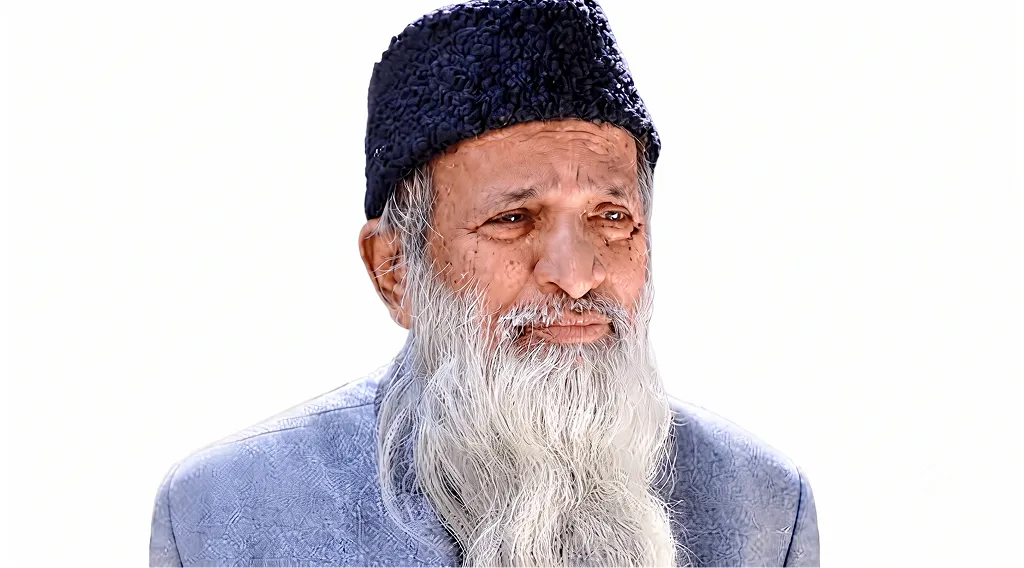
Abdul Sattar Edhi passed away on 8 July 2016, but his mission continues through the Edhi Foundation under the leadership of his family and thousands of dedicated volunteers.
The organization remains one of Pakistan's most trusted charitable institutions, providing emergency services, healthcare, shelters, orphan care, and humanitarian assistance nationwide.
His lifelong service earned numerous national and international honors, including the Ramon Magsaysay Award for Public Service (1986), the UNESCO-Madanjeet Singh Prize (2009), and Pakistan's Nishan-e-Imtiaz.
Abdul Sattar Edhi began his humanitarian journey in 1951 by establishing a small free dispensary in Karachi after moving to Pakistan following Partition.
Abdul Sattar Edhi began his humanitarian journey in 1951 by establishing a small free dispensary in Karachi after moving to Pakistan following Partition. With limited resources but an extraordinary sense of compassion, he dedicated himself to serving those who had nowhere else to turn.
What started as a single room offering basic medical assistance gradually expanded into one of the world's most respected charitable organizations. Every donation, no matter how small, was carefully used to help those in need.
His belief was simple yet powerful: every human life deserves dignity, care, and compassion, regardless of wealth, religion, or social background.
Over the following decades, Abdul Sattar Edhi transformed his small initiative into the Edhi Foundation, one of Pakistan's largest welfare organizations.
The foundation now operates hundreds of welfare centers across Pakistan, providing healthcare, shelter, education, orphan care, rehabilitation services, and disaster relief.
One of its most remarkable achievements is operating one of the world's largest volunteer ambulance networks, with well over 1,800 ambulances serving cities, towns, and remote communities across the country.
Today, the Edhi Foundation continues to assist millions of Pakistanis every year, carrying forward the humanitarian vision established by its founder.
Among Abdul Sattar Edhi's most compassionate initiatives was the introduction of Jhoola or baby cradle programs outside Edhi centers. These cradles allowed parents unable to care for newborns to leave them safely instead of abandoning them in dangerous circumstances.
Each cradle carried a message encouraging families not to take a child's life but to entrust the baby to Edhi's care. The foundation then arranged medical treatment, shelter, and, where possible, adoption through legal procedures.
Over the decades, the initiative has helped save more than 20,000 abandoned infants, making it one of Pakistan's most impactful child welfare programs.
Despite overseeing a charitable organization supported by millions of rupees in donations, Abdul Sattar Edhi chose to live an exceptionally modest life. He owned only a few personal belongings, wore simple clothes, and slept in a small room beside his office rather than seeking comfort or luxury.
He believed donated money belonged entirely to the people it was meant to serve. Every decision reflected transparency, accountability, and personal sacrifice.
His lifestyle became as inspiring as his humanitarian work, proving that true leadership is measured not by wealth but by selfless service and unwavering integrity.
Abdul Sattar Edhi was widely respected for helping people without asking about their religion, ethnicity, nationality, or social status. Whether responding to natural disasters, road accidents, medical emergencies, or humanitarian crises, his foundation provided assistance solely based on need.
His famous belief, No religion is higher than humanity, became the guiding principle of the Edhi Foundation and inspired generations of volunteers across Pakistan and beyond.
This commitment to equality earned him international recognition and made him one of the most admired humanitarian figures in the country's history.
Abdul Sattar Edhi passed away on 8 July 2016, but his mission continues through the Edhi Foundation under the leadership of his family and thousands of dedicated volunteers.
The organization remains one of Pakistan's most trusted charitable institutions, providing emergency services, healthcare, shelters, orphan care, and humanitarian assistance nationwide.
His lifelong service earned numerous national and international honors, including the Ramon Magsaysay Award for Public Service (1986), the UNESCO-Madanjeet Singh Prize (2009), and Pakistan's Nishan-e-Imtiaz.



