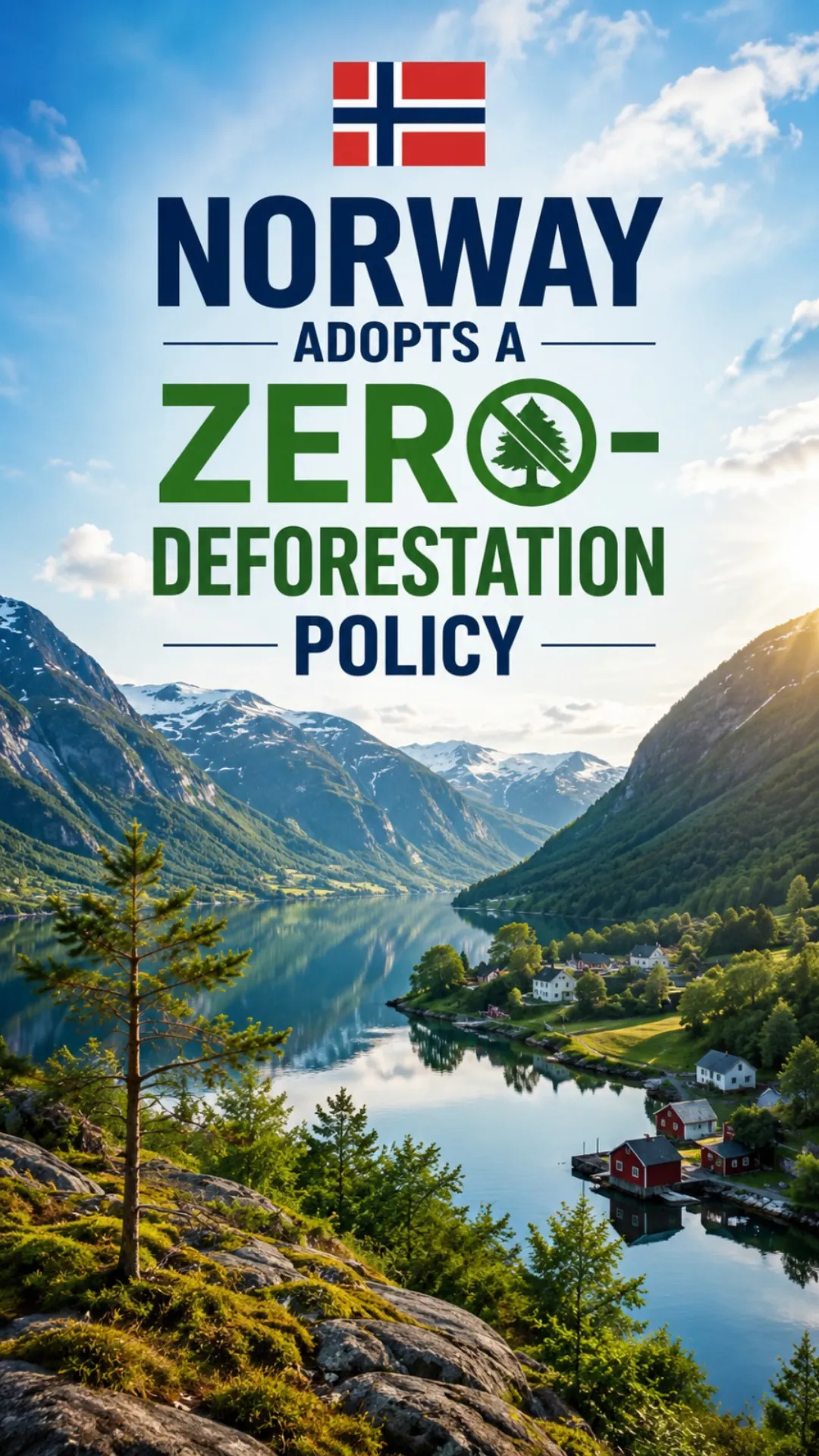
In 2016, Norway became the first country in the world to adopt a zero-deforestation policy for public procurement, committing the government to stop purchasing products linked to forest destruction. The landmark decision positioned Norway as a global leader in sustainable governance and responsible consumption.
The policy focuses on ensuring that government contracts support environmentally responsible supply chains. By integrating sustainability into public spending, Norway took an important step toward protecting forests while encouraging businesses to adopt greener production practices.

Under the policy, Norwegian public authorities stopped awarding contracts for products such as palm oil, soy, beef, and timber that contribute to deforestation, particularly in tropical forests. The move encourages suppliers to prove their products are sourced responsibly.
The initiative aims to reduce pressure on vulnerable ecosystems, preserve biodiversity, and promote sustainable land use. It also sends a strong market signal that environmental responsibility is becoming an important factor in government procurement decisions
Environmental organizations around the world welcomed Norway’s decision, describing it as a significant milestone in the fight against global deforestation. Many experts viewed the policy as an example that other governments could follow to make public spending more environmentally responsible.
Beyond procurement reforms, Norway has long invested in rainforest conservation projects in countries including Brazil, Guyana, and Indonesia. These efforts reflect the country's broader commitment to protecting forests and supporting global climate action.
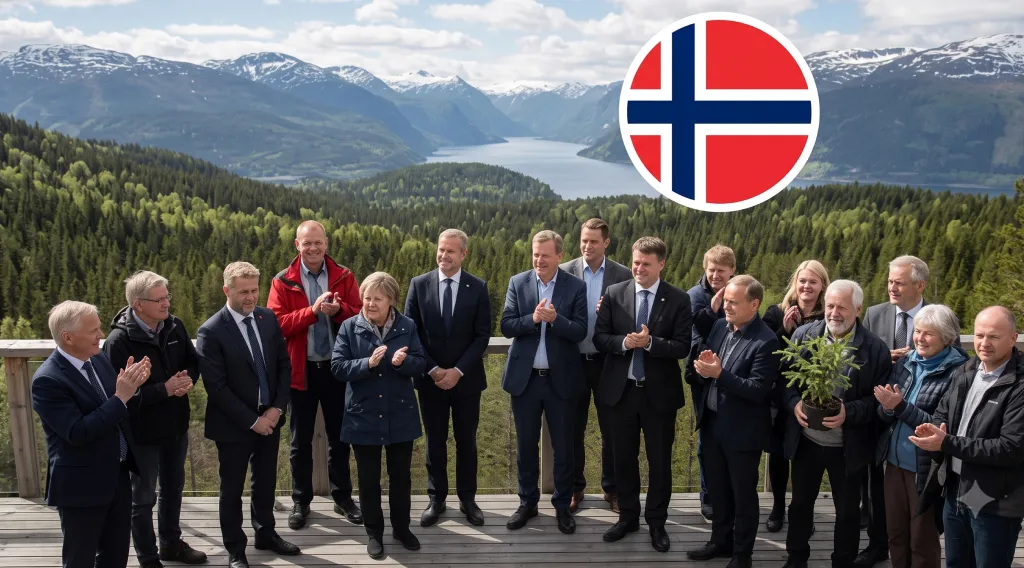
While the policy does not ban all deforestation within Norway or across every industry, it established a pioneering framework for ensuring that public funds do not support products linked to forest destruction.
It remains one of the world's most influential examples of sustainable government purchasing.
Norway continues to strengthen its environmental commitments by aligning with parts of the European Union’s regulations on deforestation-linked products.
The initiative demonstrates how policy decisions can encourage more sustainable business practices while helping protect forests for future generations.
In 2016, Norway became the first country in the world to adopt a zero-deforestation policy for public procurement, committing the government to stop purchasing products linked to forest destruction.
In 2016, Norway became the first country in the world to adopt a zero-deforestation policy for public procurement, committing the government to stop purchasing products linked to forest destruction. The landmark decision positioned Norway as a global leader in sustainable governance and responsible consumption.
The policy focuses on ensuring that government contracts support environmentally responsible supply chains. By integrating sustainability into public spending, Norway took an important step toward protecting forests while encouraging businesses to adopt greener production practices.
Under the policy, Norwegian public authorities stopped awarding contracts for products such as palm oil, soy, beef, and timber that contribute to deforestation, particularly in tropical forests. The move encourages suppliers to prove their products are sourced responsibly.
The initiative aims to reduce pressure on vulnerable ecosystems, preserve biodiversity, and promote sustainable land use. It also sends a strong market signal that environmental responsibility is becoming an important factor in government procurement decisions
Environmental organizations around the world welcomed Norway’s decision, describing it as a significant milestone in the fight against global deforestation. Many experts viewed the policy as an example that other governments could follow to make public spending more environmentally responsible.
Beyond procurement reforms, Norway has long invested in rainforest conservation projects in countries including Brazil, Guyana, and Indonesia. These efforts reflect the country's broader commitment to protecting forests and supporting global climate action.
While the policy does not ban all deforestation within Norway or across every industry, it established a pioneering framework for ensuring that public funds do not support products linked to forest destruction.
It remains one of the world's most influential examples of sustainable government purchasing.
Norway continues to strengthen its environmental commitments by aligning with parts of the European Union’s regulations on deforestation-linked products.
The initiative demonstrates how policy decisions can encourage more sustainable business practices while helping protect forests for future generations.



