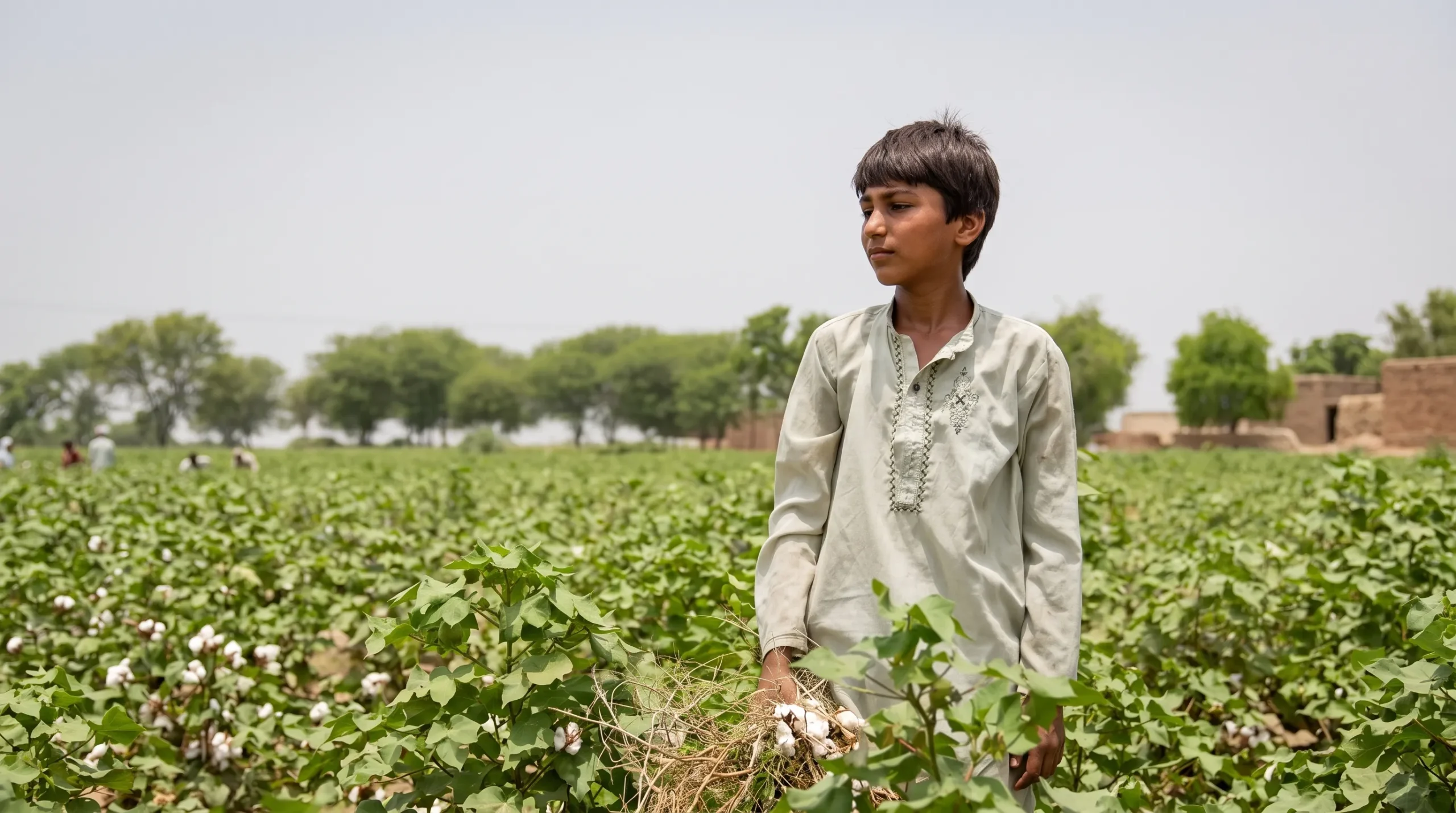
Every morning in Sardar Wala village in Lodhran, Punjab, seven-year-old Muhammad Wasim watched other children leave for school with their books and bags. While they headed towards classrooms, he went to the fields with his mother and aunt to pull weeds and help the family earn a living.
Wasim’s father worked as a rickshaw driver, and the family struggled to make ends meet. The cost of school supplies was difficult to manage, leaving Wasim without the opportunity to study. At an age when children should be discovering the world through books and lessons, he spent his days doing work that helped his household survive.

That opportunity came when a teacher named Uzma and other educators reached out to Wasim’s family and encouraged them to consider schooling for him. Their efforts helped connect him with a Foundational Literacy and Numeracy Summer Camp at Government Girls’ Community Model Primary School in his village.
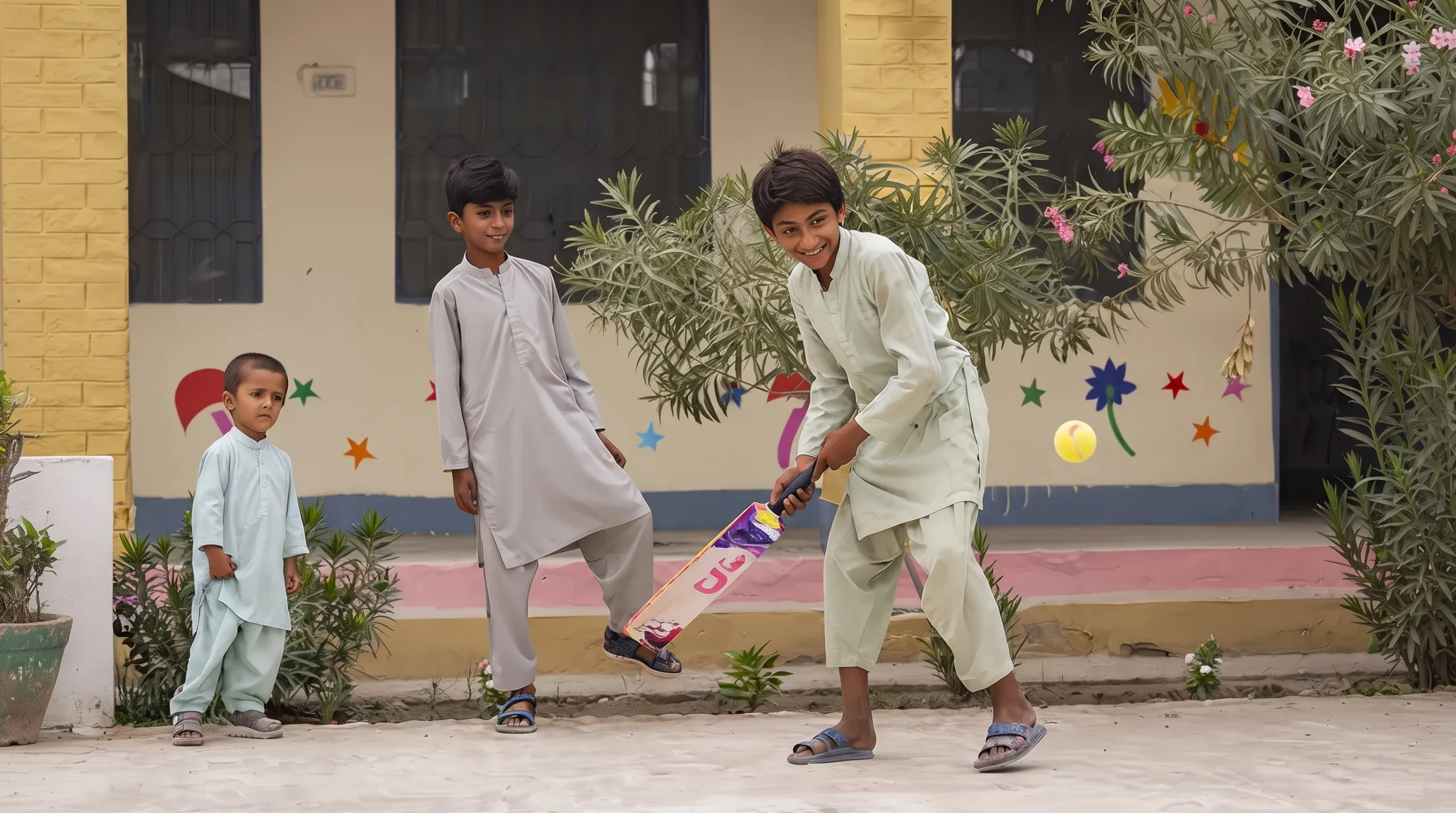
Supported by Punjab’s School Education Department, the Global Partnership for Education and UNICEF, the programme gave Wasim access to learning materials, including books and colourful pencils. He began studying Urdu, English and mathematics, while also making friends and gaining confidence in the classroom.
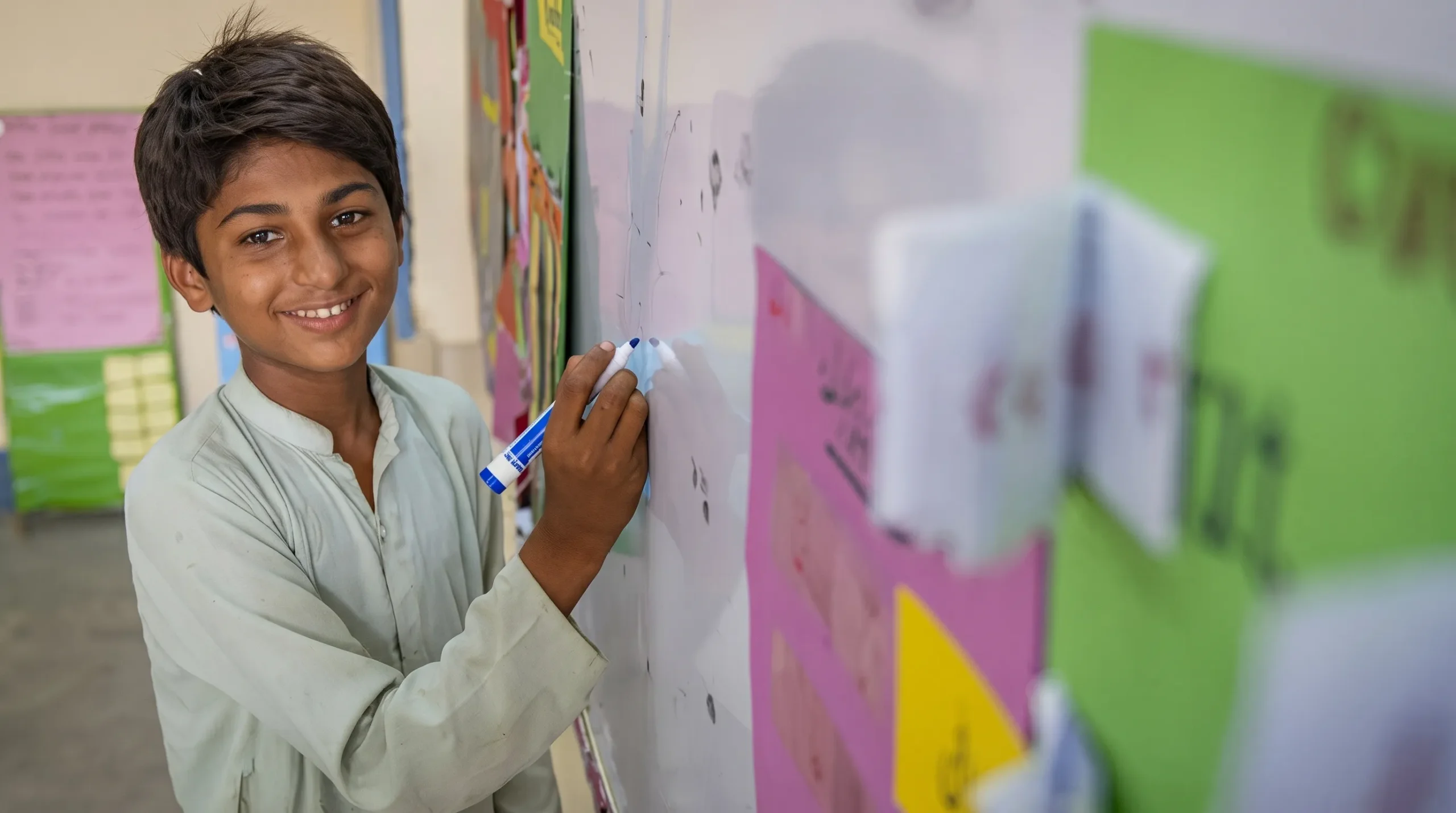
For Wasim, getting an education did more than teach him how to read, write and count. It gave him the chance to imagine a different future. The boy who once watched other children carry their schoolbags now had books of his own and a place in the classroom.
His dream is to become a teacher so that he can help other children go to school, too. It is a powerful ambition from a child who knows what it feels like to want an opportunity that seems beyond reach.
Wasim’s story reflects a wider challenge in Pakistan, where poverty and the cost of education continue to keep children out of classrooms.
Every morning in Sardar Wala village in Lodhran, Punjab, seven-year-old Muhammad Wasim watched other children leave for school with their books and bags.
Every morning in Sardar Wala village in Lodhran, Punjab, seven-year-old Muhammad Wasim watched other children leave for school with their books and bags. While they headed towards classrooms, he went to the fields with his mother and aunt to pull weeds and help the family earn a living.
Wasim’s father worked as a rickshaw driver, and the family struggled to make ends meet. The cost of school supplies was difficult to manage, leaving Wasim without the opportunity to study. At an age when children should be discovering the world through books and lessons, he spent his days doing work that helped his household survive.
That opportunity came when a teacher named Uzma and other educators reached out to Wasim’s family and encouraged them to consider schooling for him. Their efforts helped connect him with a Foundational Literacy and Numeracy Summer Camp at Government Girls’ Community Model Primary School in his village.
Supported by Punjab’s School Education Department, the Global Partnership for Education and UNICEF, the programme gave Wasim access to learning materials, including books and colourful pencils. He began studying Urdu, English and mathematics, while also making friends and gaining confidence in the classroom.
For Wasim, getting an education did more than teach him how to read, write and count. It gave him the chance to imagine a different future. The boy who once watched other children carry their schoolbags now had books of his own and a place in the classroom.
His dream is to become a teacher so that he can help other children go to school, too. It is a powerful ambition from a child who knows what it feels like to want an opportunity that seems beyond reach.
Wasim’s story reflects a wider challenge in Pakistan, where poverty and the cost of education continue to keep children out of classrooms.



