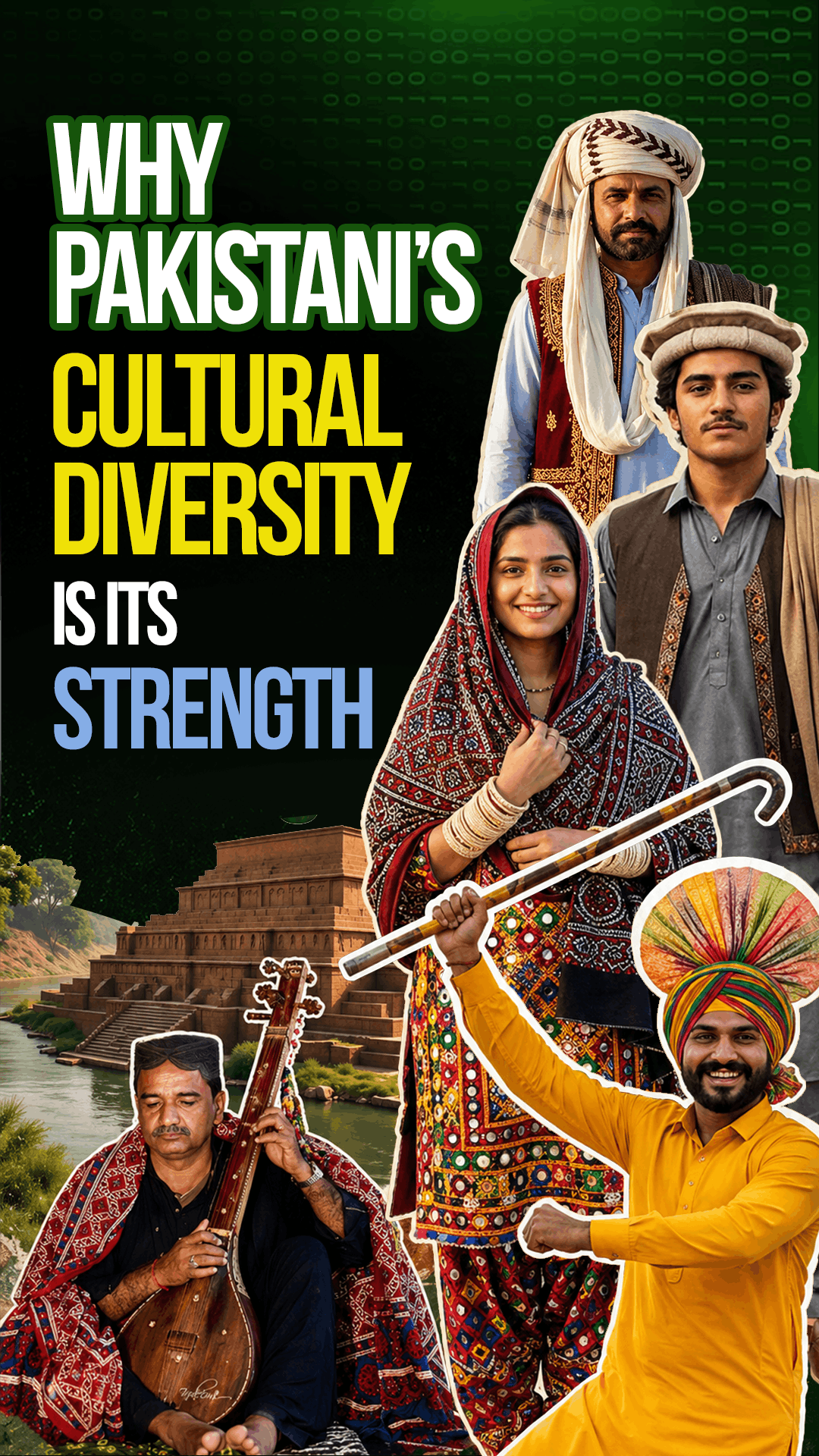
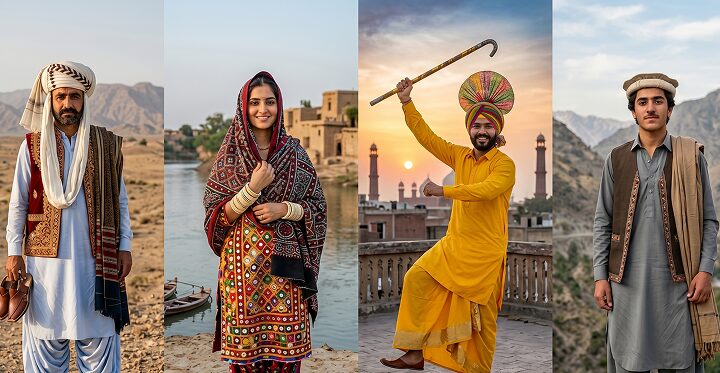
Pakistan’s identity is shaped by a rich mix of regions, languages, and traditions. From the mountains of Gilgit-Baltistan to the plains of Punjab, the deserts of Sindh, and the valleys of Khyber Pakhtunkhwa, each region contributes unique customs, lifestyles, and heritage.
Together, these regions form a diverse cultural landscape that defines the nation.Pakistan’s cultural diversity has developed over thousands of years through migration, trade, and historical civilizations.

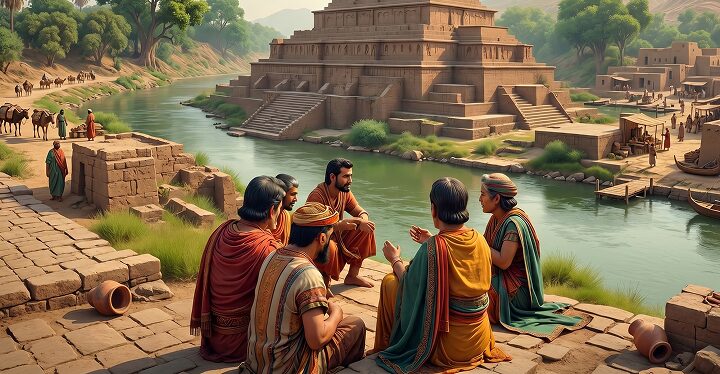
Influences from the Indus Valley, Persian traditions, Central Asian routes, and the Mughal era have all shaped local cultures. This long history has created a layered and deeply interconnected national identity.
Pakistan is home to multiple languages including Punjabi, Sindhi, Pashto, Balochi, and Urdu. Each language carries its own poetry, folklore, and storytelling traditions.
Alongside this, regional music, handicrafts, clothing styles, and festivals continue to preserve cultural identity and keep traditions alive across generations.
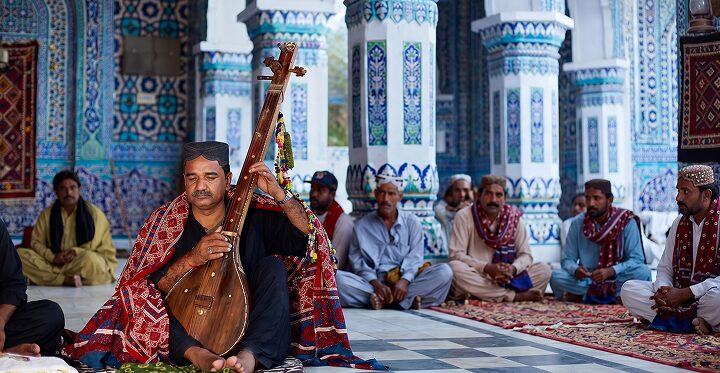
Alongside this, regional music, handicrafts, clothing styles, and festivals continue to preserve cultural identity and keep traditions alive across generations.
Cultural diversity strengthens society by encouraging creativity, resilience, and innovation.
Different communities bring unique perspectives and problem-solving approaches, helping build stronger social connections. This variety of thought and expression enriches education, arts, business, and everyday life.
In a world often driven by uniform global trends, Pakistan’s cultural diversity stands as a unique strength.
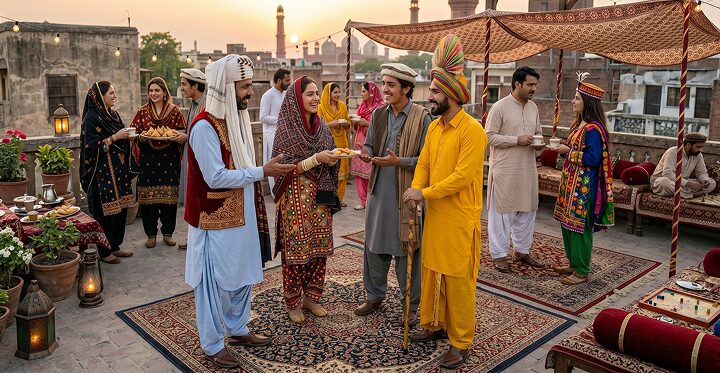
It preserves authenticity, inspires creativity, and promotes pluralism. Rather than losing identity, Pakistan’s diversity helps it remain culturally rich and globally distinctive.
This diversity enriches art, cuisine, and festivals, making Pakistan more vibrant, resilient, and culturally unique
Pakistan’s identity is shaped by a rich mix of regions, languages, and traditions. From the mountains of Gilgit-Baltistan to the plains of Punjab, the deserts of Sindh, and the valleys of Khyber Pakhtunkhwa, each region contributes unique customs, lifestyles, and heritage.
Together, these regions form a diverse cultural landscape that defines the nation.Pakistan’s cultural diversity has developed over thousands of years through migration, trade, and historical civilizations.
Influences from the Indus Valley, Persian traditions, Central Asian routes, and the Mughal era have all shaped local cultures. This long history has created a layered and deeply interconnected national identity.
Pakistan is home to multiple languages including Punjabi, Sindhi, Pashto, Balochi, and Urdu. Each language carries its own poetry, folklore, and storytelling traditions.
Alongside this, regional music, handicrafts, clothing styles, and festivals continue to preserve cultural identity and keep traditions alive across generations.
Alongside this, regional music, handicrafts, clothing styles, and festivals continue to preserve cultural identity and keep traditions alive across generations.
Cultural diversity strengthens society by encouraging creativity, resilience, and innovation.
Different communities bring unique perspectives and problem-solving approaches, helping build stronger social connections. This variety of thought and expression enriches education, arts, business, and everyday life.
In a world often driven by uniform global trends, Pakistan’s cultural diversity stands as a unique strength.
It preserves authenticity, inspires creativity, and promotes pluralism. Rather than losing identity, Pakistan’s diversity helps it remain culturally rich and globally distinctive.