
Pakistan has highlighted the Turkish made KORKUT 35mm air defense system as part of its evolving response to modern aerial threats.
The system was featured in a Pakistan Air Force Defence Day presentation, putting renewed attention on the country’s growing military cooperation with Türkiye. Rather than relying on a single type of defense platform, Pakistan appears to be building a network in which different systems can address different threats.
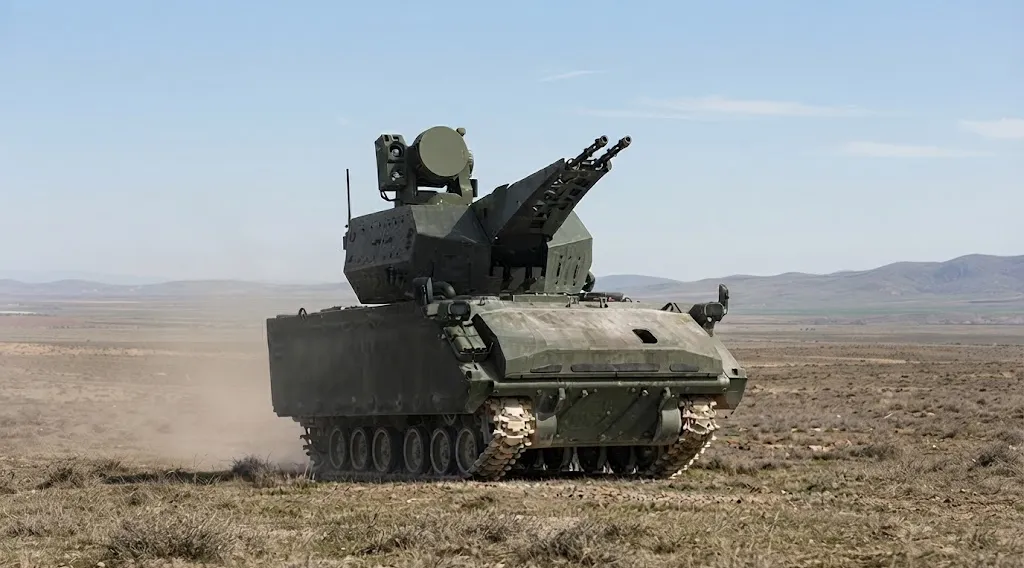
KORKUT is particularly suited to close range air defense, combining detection and tracking technology with rapid fire 35mm ammunition.

Modern battlefields increasingly involve small drones, low flying aircraft and cruise missiles, making short range air defense an important part of protecting military and strategic assets.
KORKUT is built around a radar and electro optical tracking setup that helps identify and follow incoming targets. Its programmable ATOM ammunition is designed to improve the system’s ability to engage aerial objects at close distances.
During the Defence Day showcase, KORKUT appeared alongside the Chinese HQ 17AE missile system and Türkiye’s ŞAHİN counter drone platform.

The public appearance of KORKUT signals Pakistan’s continued investment in technologies designed to deal with changing aerial threats. Its Turkish origin also highlights the increasingly close defense relationship between Islamabad and Ankara.
Pakistan has not revealed how many KORKUT units it possesses, where they are stationed or the precise status of their deployment. Those details remain undisclosed, making it difficult to assess the system’s operational scale within the country.
What is clear is the broader direction: Pakistan is adding different air defense capabilities that can work together against threats ranging from drones to other low altitude targets.
Pakistan has highlighted the Turkish made KORKUT 35mm air defense system as part of its evolving response to modern aerial threats.
Pakistan has highlighted the Turkish made KORKUT 35mm air defense system as part of its evolving response to modern aerial threats.
The system was featured in a Pakistan Air Force Defence Day presentation, putting renewed attention on the country’s growing military cooperation with Türkiye. Rather than relying on a single type of defense platform, Pakistan appears to be building a network in which different systems can address different threats.
KORKUT is particularly suited to close range air defense, combining detection and tracking technology with rapid fire 35mm ammunition.
Modern battlefields increasingly involve small drones, low flying aircraft and cruise missiles, making short range air defense an important part of protecting military and strategic assets.
KORKUT is built around a radar and electro optical tracking setup that helps identify and follow incoming targets. Its programmable ATOM ammunition is designed to improve the system’s ability to engage aerial objects at close distances.
During the Defence Day showcase, KORKUT appeared alongside the Chinese HQ 17AE missile system and Türkiye’s ŞAHİN counter drone platform.
The public appearance of KORKUT signals Pakistan’s continued investment in technologies designed to deal with changing aerial threats. Its Turkish origin also highlights the increasingly close defense relationship between Islamabad and Ankara.
Pakistan has not revealed how many KORKUT units it possesses, where they are stationed or the precise status of their deployment. Those details remain undisclosed, making it difficult to assess the system’s operational scale within the country.
What is clear is the broader direction: Pakistan is adding different air defense capabilities that can work together against threats ranging from drones to other low altitude targets.



