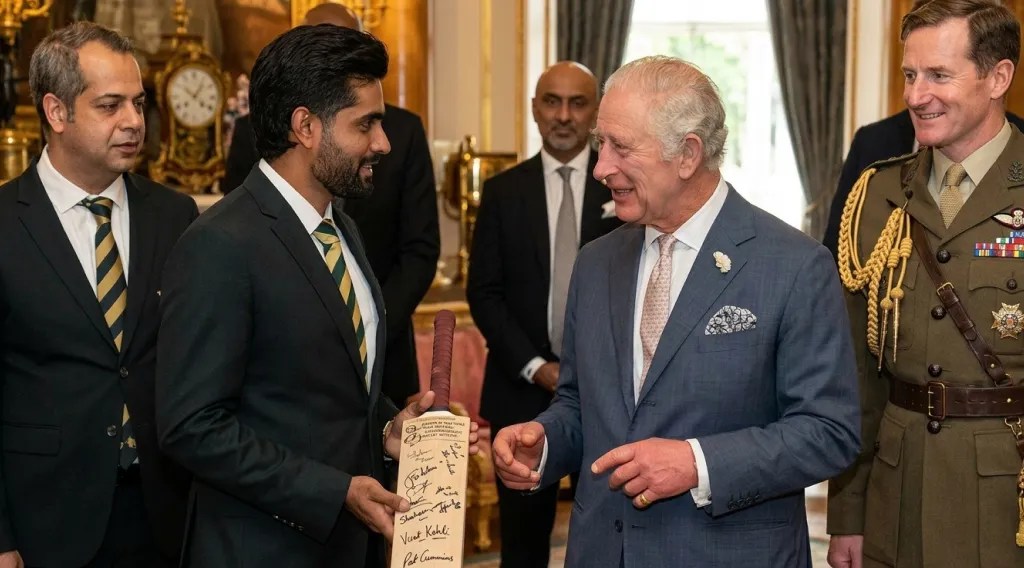
Pakistan cricket captain and star batter Babar Azam presented King Charles with a specially signed cricket bat featuring the signatures of Pakistan team players.
The gift carried more meaning than its sporting value. It represented the team’s identity and offered a thoughtful gesture of goodwill from Pakistan’s cricketing community to the British monarch.
Cricket has long been one of the strongest cultural links between Pakistan and the United Kingdom. The presentation brought that shared sporting connection into the spotlight, creating a memorable moment beyond the cricket field.

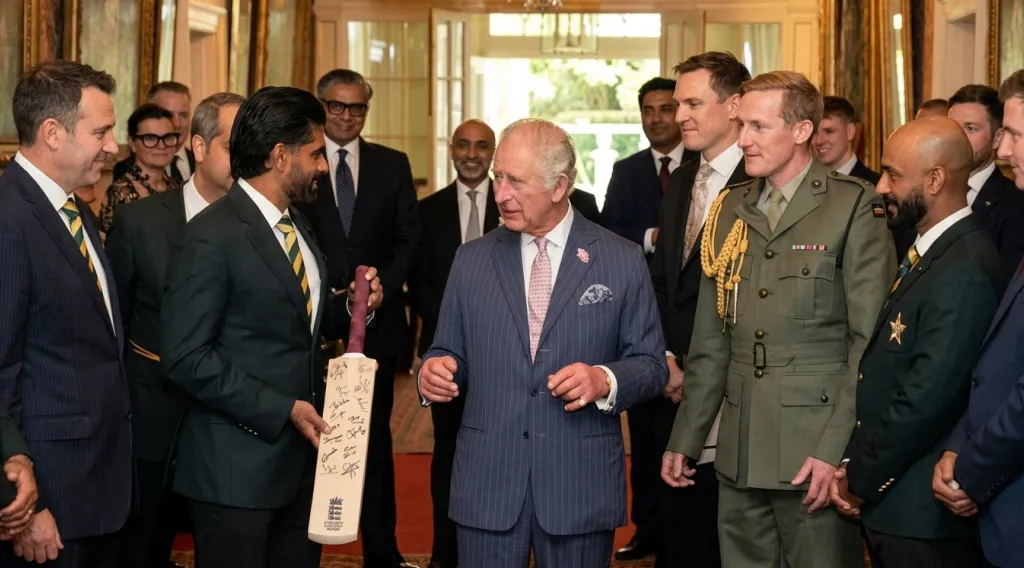
Babar Azam is among Pakistan’s most recognised contemporary cricketers, having represented the country across all three international formats and built a major following around the world.
His role in presenting the bat gave the gesture a distinctly Pakistani sporting identity. As one of the country’s leading cricket figures, Babar became the face of a wider team and its supporters.
The signed bat also offered a personal element to the occasion. Rather than being an ordinary souvenir, it carried the names and signatures of players who represent Pakistan on the international stage.
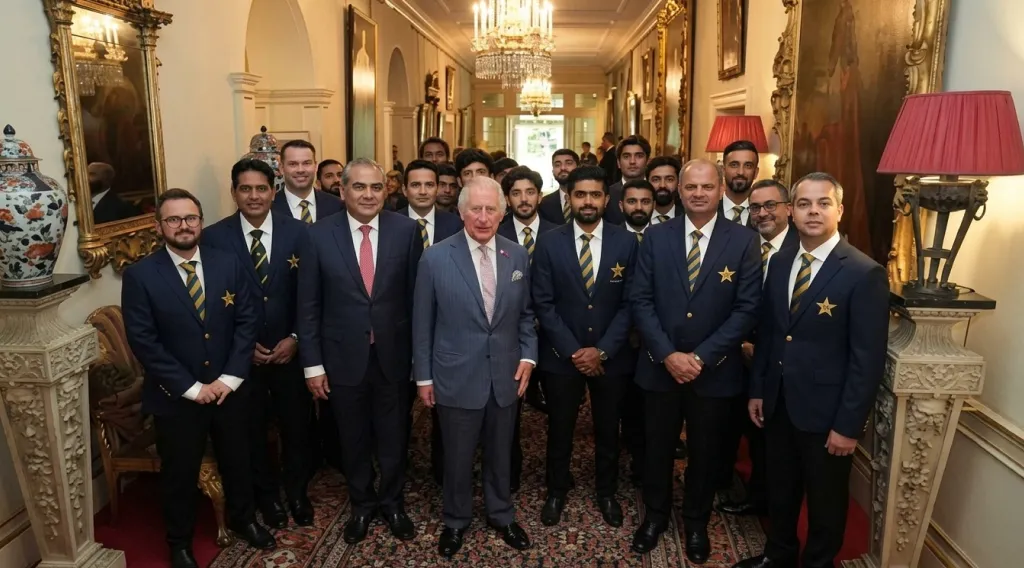
The exchange highlighted how sport can create connections that extend well beyond competition. Cricket is deeply woven into Pakistan’s national culture and also holds a long standing place within Britain’s sporting heritage.
A simple cricket bat became a symbol of that shared history, carrying the spirit of Pakistan’s team while being presented to a member of the British royal family.
For cricket fans, the moment offered more than a ceremonial gift. It reflected the sport’s ability to create goodwill, celebrate shared traditions and bring people from different backgrounds together through a game enjoyed across generations.
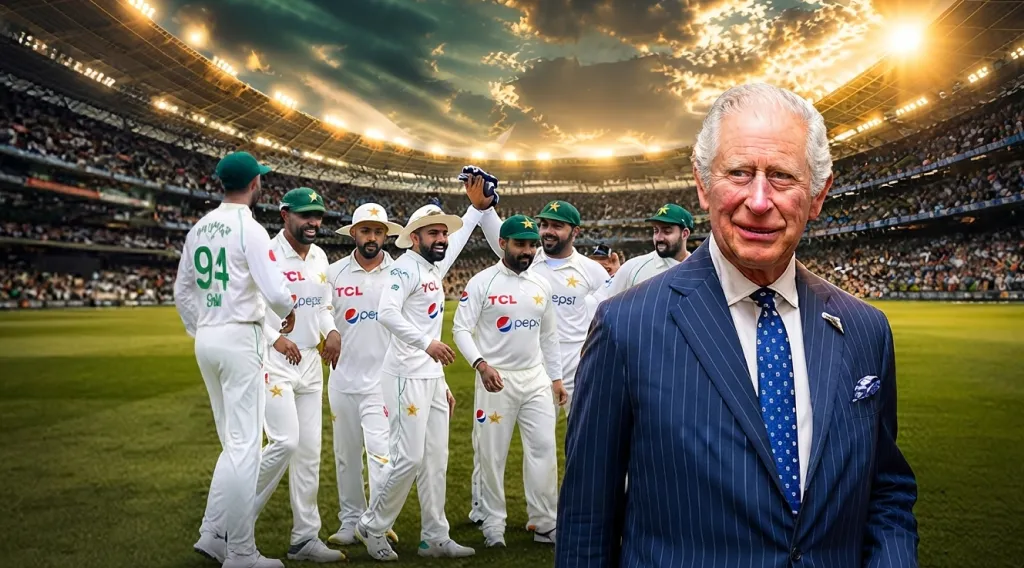
The presentation is expected to resonate strongly with cricket followers, particularly because it brought together two figures associated with institutions that have a longstanding connection to the sport.
For Pakistan, Babar’s gesture placed the national cricket team at the centre of a notable international occasion. For fans, the signed bat represents a unique piece of sporting memorabilia carrying the identity of an entire squad.
Moments like this demonstrate that cricket’s influence extends far beyond runs, wickets and trophies.
Pakistan cricket captain and star batter Babar Azam presented King Charles with a specially signed cricket bat featuring the signatures of Pakistan team players.
Pakistan cricket captain and star batter Babar Azam presented King Charles with a specially signed cricket bat featuring the signatures of Pakistan team players.
The gift carried more meaning than its sporting value. It represented the team’s identity and offered a thoughtful gesture of goodwill from Pakistan’s cricketing community to the British monarch.
Cricket has long been one of the strongest cultural links between Pakistan and the United Kingdom. The presentation brought that shared sporting connection into the spotlight, creating a memorable moment beyond the cricket field.
Babar Azam is among Pakistan’s most recognised contemporary cricketers, having represented the country across all three international formats and built a major following around the world.
His role in presenting the bat gave the gesture a distinctly Pakistani sporting identity. As one of the country’s leading cricket figures, Babar became the face of a wider team and its supporters.
The signed bat also offered a personal element to the occasion. Rather than being an ordinary souvenir, it carried the names and signatures of players who represent Pakistan on the international stage.
The exchange highlighted how sport can create connections that extend well beyond competition. Cricket is deeply woven into Pakistan’s national culture and also holds a long standing place within Britain’s sporting heritage.
A simple cricket bat became a symbol of that shared history, carrying the spirit of Pakistan’s team while being presented to a member of the British royal family.
For cricket fans, the moment offered more than a ceremonial gift. It reflected the sport’s ability to create goodwill, celebrate shared traditions and bring people from different backgrounds together through a game enjoyed across generations.
The presentation is expected to resonate strongly with cricket followers, particularly because it brought together two figures associated with institutions that have a longstanding connection to the sport.
For Pakistan, Babar’s gesture placed the national cricket team at the centre of a notable international occasion. For fans, the signed bat represents a unique piece of sporting memorabilia carrying the identity of an entire squad.
Moments like this demonstrate that cricket’s influence extends far beyond runs, wickets and trophies.



