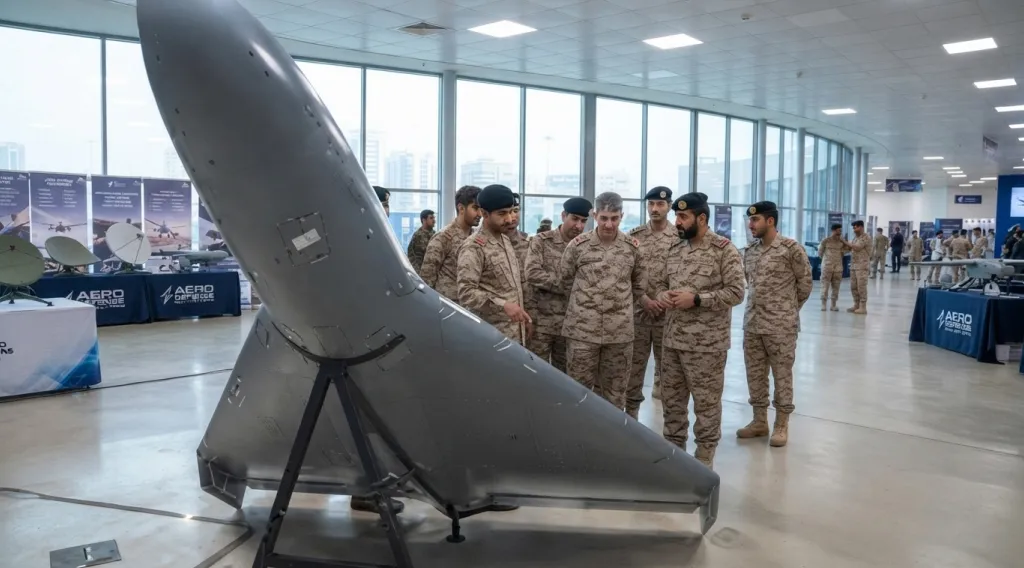
Pakistan has unveiled two new long range loitering drones, the D 248 and S 369, adding to its growing portfolio of domestically developed unmanned systems.
The platforms were developed by Heavy Industries Taxila (HIT) and presented at the 2026 Indus Robotics and Autonomous Systems Expo.
The unveiling highlights Pakistan’s expanding focus on indigenous drone technology at a time when unmanned systems are becoming increasingly important in modern defence and aerospace development.

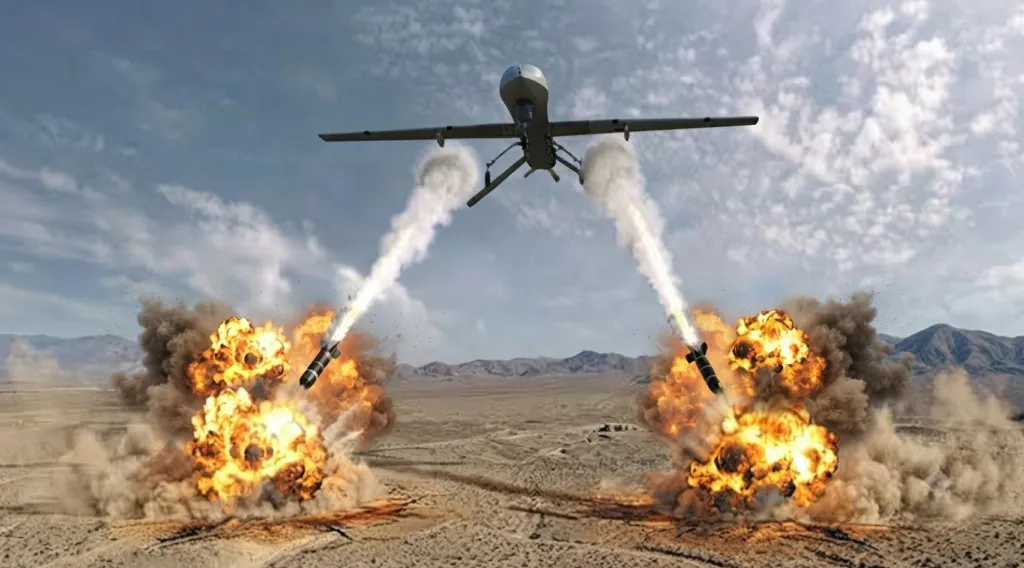
The D 248 is the longer range platform of the two, with a reported reach of between 2,200 and 3,000 kilometres. It is designed for extended airborne operations and can reportedly remain in the air for up to 14 hours.
The drone has a reported payload capacity of 30 to 50 kilograms and can reach a maximum speed of around 225 kilometres per hour, combining long endurance with substantial payload capability.
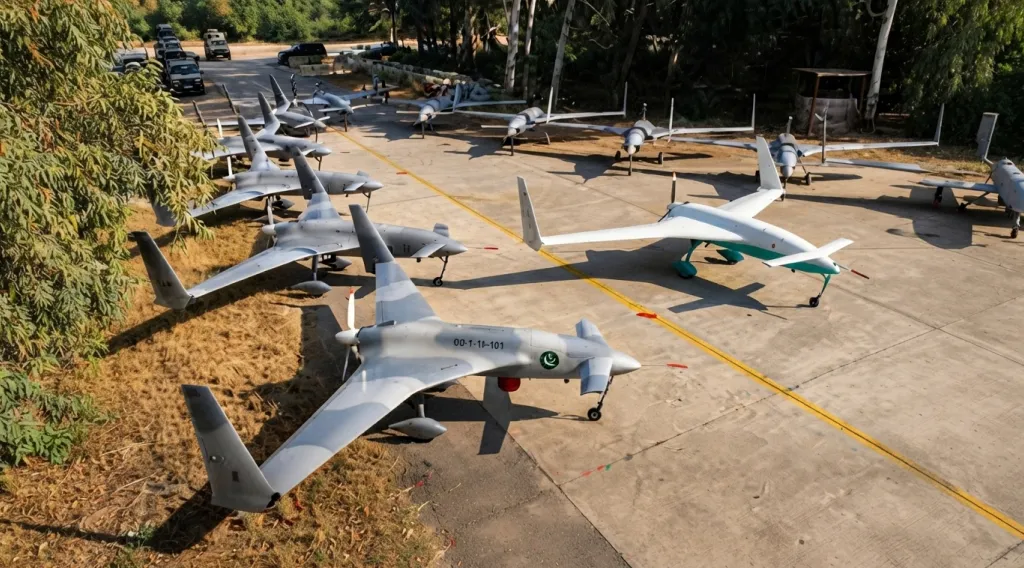
The S 369 was introduced alongside the D 248 as another long range loitering munition developed by Heavy Industries Taxila. Its reported operational range stands between 1,500 and 2,000 kilometres.
The platform can reportedly carry a payload of up to 50 kilograms, giving it a significant carrying capacity while maintaining an extended operational range. Its specifications complement those of the longer range D 248.

The D 248 and S 369 are described as loitering munitions, a category of unmanned systems capable of remaining airborne while seeking a designated target before an engagement.
Their design reflects the evolving role of autonomous aerial technology. The unveiling comes as Pakistan increasingly prioritises indigenous development in drones, robotics and autonomous systems.
Domestic production can also support the development of specialised technologies and technical expertise.
Pakistan has unveiled two new long range loitering drones, the D 248 and S 369, adding to its growing portfolio of domestically developed unmanned systems.
Pakistan has unveiled two new long range loitering drones, the D 248 and S 369, adding to its growing portfolio of domestically developed unmanned systems.
The platforms were developed by Heavy Industries Taxila (HIT) and presented at the 2026 Indus Robotics and Autonomous Systems Expo.
The unveiling highlights Pakistan’s expanding focus on indigenous drone technology at a time when unmanned systems are becoming increasingly important in modern defence and aerospace development.
The D 248 is the longer range platform of the two, with a reported reach of between 2,200 and 3,000 kilometres. It is designed for extended airborne operations and can reportedly remain in the air for up to 14 hours.
The drone has a reported payload capacity of 30 to 50 kilograms and can reach a maximum speed of around 225 kilometres per hour, combining long endurance with substantial payload capability.
The S 369 was introduced alongside the D 248 as another long range loitering munition developed by Heavy Industries Taxila. Its reported operational range stands between 1,500 and 2,000 kilometres.
The platform can reportedly carry a payload of up to 50 kilograms, giving it a significant carrying capacity while maintaining an extended operational range. Its specifications complement those of the longer range D 248.
The D 248 and S 369 are described as loitering munitions, a category of unmanned systems capable of remaining airborne while seeking a designated target before an engagement.
Their design reflects the evolving role of autonomous aerial technology. The unveiling comes as Pakistan increasingly prioritises indigenous development in drones, robotics and autonomous systems.
Domestic production can also support the development of specialised technologies and technical expertise.



