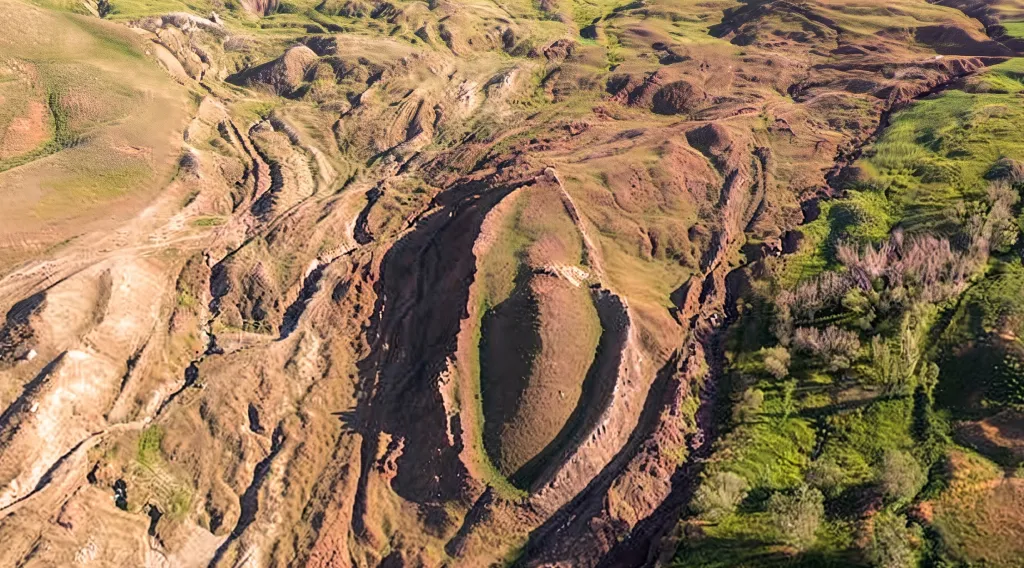
A Turkish American researcher has made a striking claim that could reignite one of history’s most enduring mysteries. Dr. Khusro Bakhtiar says radar surveys beneath Turkey’s Durupinar formation may have detected a structure resembling a boat.
The site has attracted attention for decades because of its unusual shape and its association by some researchers and religious communities with the story of Prophet Noah’s Ark.
Bakhtiar’s team reportedly used radar technology they call Bakhtiar Radar to examine what lies beneath the surface.

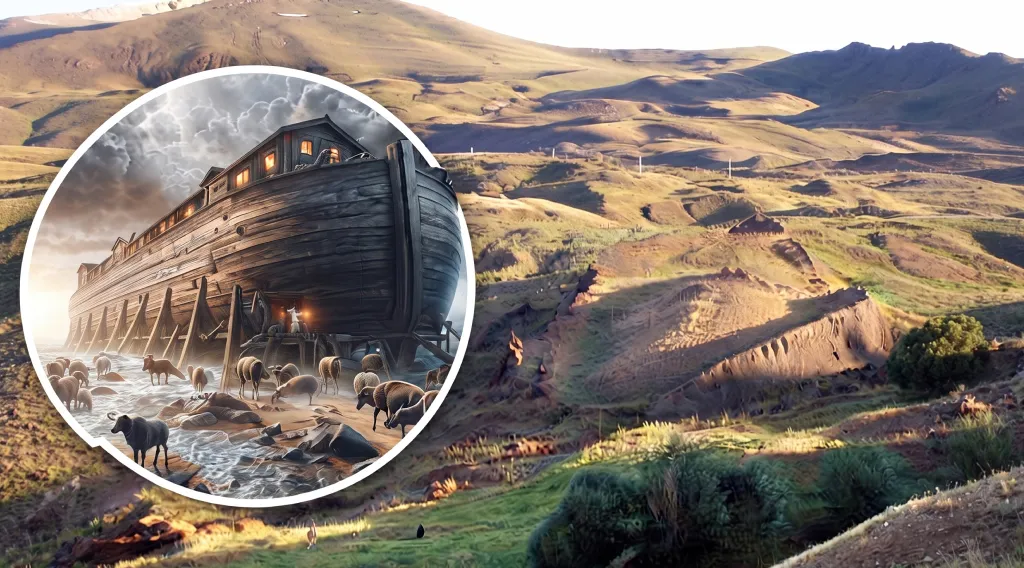
The Durupinar formation is located in eastern Turkey and has long been at the centre of discussions surrounding the possible location of Noah’s Ark.
Its distinctive boat like appearance has fueled speculation, but geological research has offered a very different explanation. Scientists have previously suggested that the formation is a natural feature created through geological processes, including erosion.
The latest radar claims have therefore reopened an old debate rather than settling it. While the images may appear intriguing, they cannot by themselves prove that the feature is artificial or establish a connection to the Ark described in religious traditions.
The discovery claim remains unverified, and no independent scientific confirmation has established that the radar readings represent an ancient vessel.
Researchers would need to determine whether the suspected features are genuinely man made, establish their age and identify physical materials that could provide reliable evidence of their origin.
Bakhtiar’s team is reportedly preparing for further investigation, including additional scanning, excavation and scientific analysis. These steps could provide a clearer picture of what is actually beneath the formation.
If future investigations uncover a genuine ancient structure, the finding could become highly significant.
But establishing that it is connected specifically to Prophet Noah’s Ark would require extraordinary evidence and rigorous independent verification.
The Durupinar formation has inspired theories for generations, yet scientific consensus has not established it as the Ark’s location. For now, the latest research has added another chapter to the mystery.
A Turkish American researcher has made a striking claim that could reignite one of history’s most enduring mysteries.
A Turkish American researcher has made a striking claim that could reignite one of history’s most enduring mysteries. Dr. Khusro Bakhtiar says radar surveys beneath Turkey’s Durupinar formation may have detected a structure resembling a boat.
The site has attracted attention for decades because of its unusual shape and its association by some researchers and religious communities with the story of Prophet Noah’s Ark.
Bakhtiar’s team reportedly used radar technology they call Bakhtiar Radar to examine what lies beneath the surface.
The Durupinar formation is located in eastern Turkey and has long been at the centre of discussions surrounding the possible location of Noah’s Ark.
Its distinctive boat like appearance has fueled speculation, but geological research has offered a very different explanation. Scientists have previously suggested that the formation is a natural feature created through geological processes, including erosion.
The latest radar claims have therefore reopened an old debate rather than settling it. While the images may appear intriguing, they cannot by themselves prove that the feature is artificial or establish a connection to the Ark described in religious traditions.
The discovery claim remains unverified, and no independent scientific confirmation has established that the radar readings represent an ancient vessel.
Researchers would need to determine whether the suspected features are genuinely man made, establish their age and identify physical materials that could provide reliable evidence of their origin.
Bakhtiar’s team is reportedly preparing for further investigation, including additional scanning, excavation and scientific analysis. These steps could provide a clearer picture of what is actually beneath the formation.
If future investigations uncover a genuine ancient structure, the finding could become highly significant.
But establishing that it is connected specifically to Prophet Noah’s Ark would require extraordinary evidence and rigorous independent verification.
The Durupinar formation has inspired theories for generations, yet scientific consensus has not established it as the Ark’s location. For now, the latest research has added another chapter to the mystery.



