Pakistan’s First Lunar Rover Will Be Called Jinnah-1

Pakistan has officially named its first lunar rover Jinnah-1, marking another milestone in the country’s developing space programme. The name was selected through a nationwide competition that attracted around 4,000 entries from people across Pakistan.
Seven participants independently submitted the name Jinnah-1, leading authorities to hold a lucky draw to determine the final winner.
The draw was won by 17-year-old Tayyab Karim from Bahawalnagar, giving a young Pakistani a memorable connection to the country’s future lunar mission.

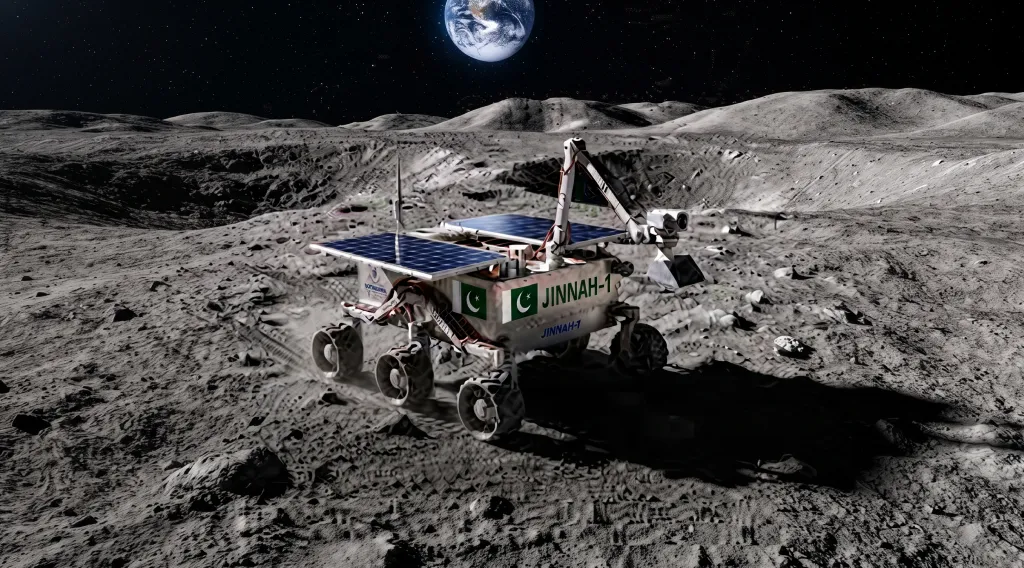
The rover is expected to travel to the Moon as part of China’s Chang’e-8 mission, currently scheduled for 2029.
The mission will place Pakistan’s space programme within a wider international effort focused on lunar exploration and scientific research.
Jinnah-1 is expected to operate on the lunar south pole, an area that has attracted significant international scientific interest because of its challenging environment and potential resources.

Jinnah-1 is expected to support scientific activities on the lunar surface, giving Pakistani researchers an opportunity to contribute to the study of the Moon.
The mission could provide valuable experience in areas such as space technology, lunar operations and scientific research while helping Pakistani institutions build expertise for future exploration projects.
Beyond the rover itself, the mission carries a wider significance for Pakistan’s growing space ambitions.

Perhaps one of the most meaningful aspects of the Jinnah-1 story is the role of young Pakistanis.
The nationwide naming competition attracted thousands of entries, while the final winning name was selected through a draw won by a 17-year-old from Bahawalnagar.
The project has the potential to inspire greater interest in science, technology, engineering and space exploration, particularly among students who may one day become the scientists and engineers behind Pakistan’s future missions.
Pakistan has officially named its first lunar rover Jinnah-1, marking another milestone in the country’s developing space programme.
Pakistan has officially named its first lunar rover Jinnah-1, marking another milestone in the country’s developing space programme. The name was selected through a nationwide competition that attracted around 4,000 entries from people across Pakistan.
Seven participants independently submitted the name Jinnah-1, leading authorities to hold a lucky draw to determine the final winner.
The draw was won by 17-year-old Tayyab Karim from Bahawalnagar, giving a young Pakistani a memorable connection to the country’s future lunar mission.
The rover is expected to travel to the Moon as part of China’s Chang’e-8 mission, currently scheduled for 2029.
The mission will place Pakistan’s space programme within a wider international effort focused on lunar exploration and scientific research.
Jinnah-1 is expected to operate on the lunar south pole, an area that has attracted significant international scientific interest because of its challenging environment and potential resources.
Jinnah-1 is expected to support scientific activities on the lunar surface, giving Pakistani researchers an opportunity to contribute to the study of the Moon.
The mission could provide valuable experience in areas such as space technology, lunar operations and scientific research while helping Pakistani institutions build expertise for future exploration projects.
Beyond the rover itself, the mission carries a wider significance for Pakistan’s growing space ambitions.
Perhaps one of the most meaningful aspects of the Jinnah-1 story is the role of young Pakistanis.
The nationwide naming competition attracted thousands of entries, while the final winning name was selected through a draw won by a 17-year-old from Bahawalnagar.
The project has the potential to inspire greater interest in science, technology, engineering and space exploration, particularly among students who may one day become the scientists and engineers behind Pakistan’s future missions.



