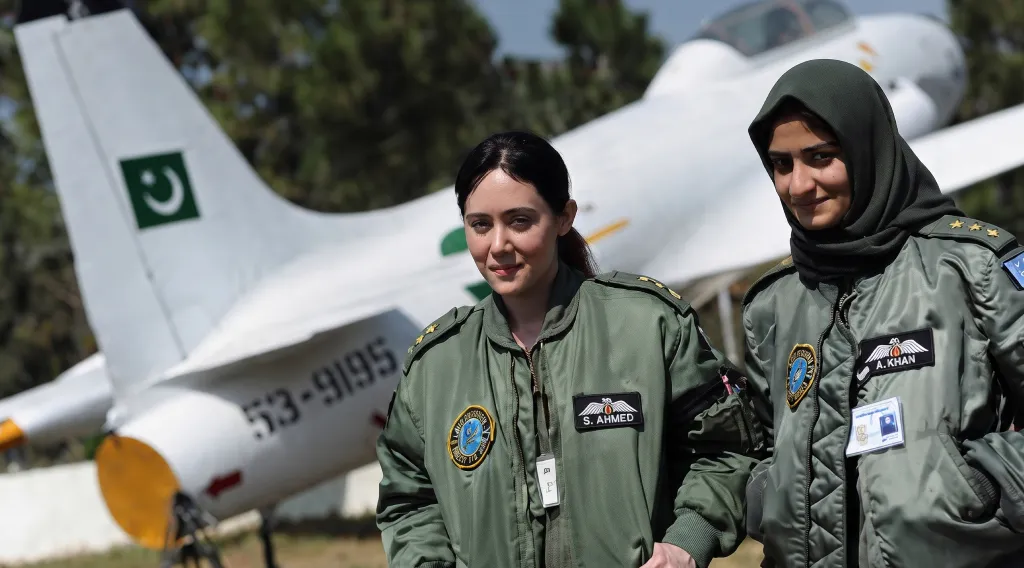
The journey of Pakistan's women fighter pilots began in 2003 when the Pakistan Air Force opened its General Duty Pilot branch to women, allowing female cadets to pursue careers as military aviators for the first time.
It marked a historic step toward greater inclusion in one of the country's most demanding professions. At PAF Academy Risalpur, female cadets underwent the same rigorous training as their male counterparts.
They studied aerodynamics, navigation, aviation theory, military tactics, survival techniques, and completed extensive flying exercises while maintaining strict physical and academic standards. Every challenge tested their resilience, discipline, and determination.

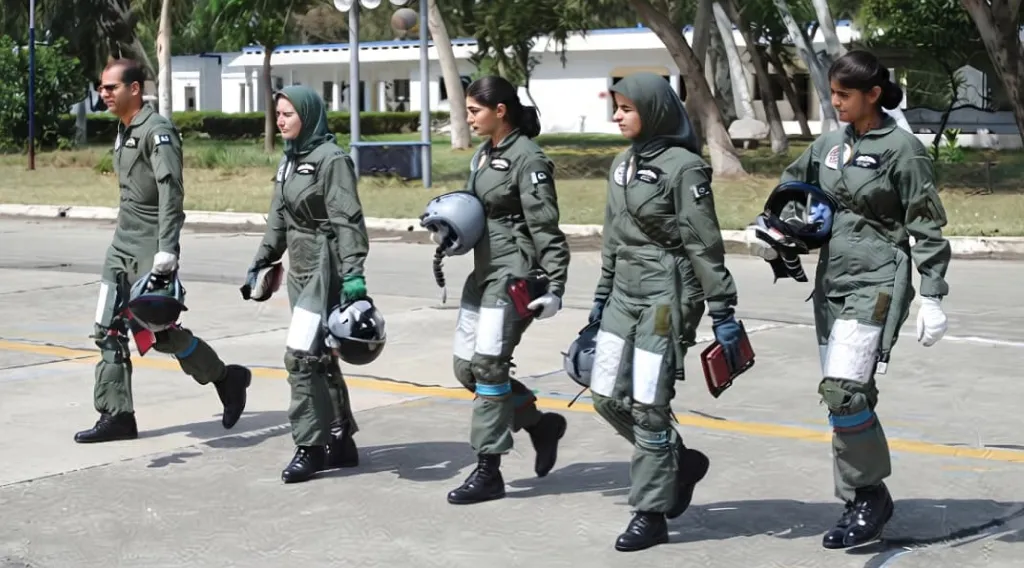
In March 2006, the Pakistan Air Force reached a historic milestone by commissioning its first four female fighter pilots: Flying Officers Nadia Gul, Mariam Khalil, Saira Batool, and Saba Khan.
After years of intensive military and flight training, they proudly earned their Flying Badges and became pioneers in Pakistan's aviation history.
Their achievement represented far more than personal success. It demonstrated that women could meet the same demanding operational standards required of every fighter pilot. Their graduation reflected the Pakistan Air Force's commitment to selecting pilots based on merit, capability, and professionalism.
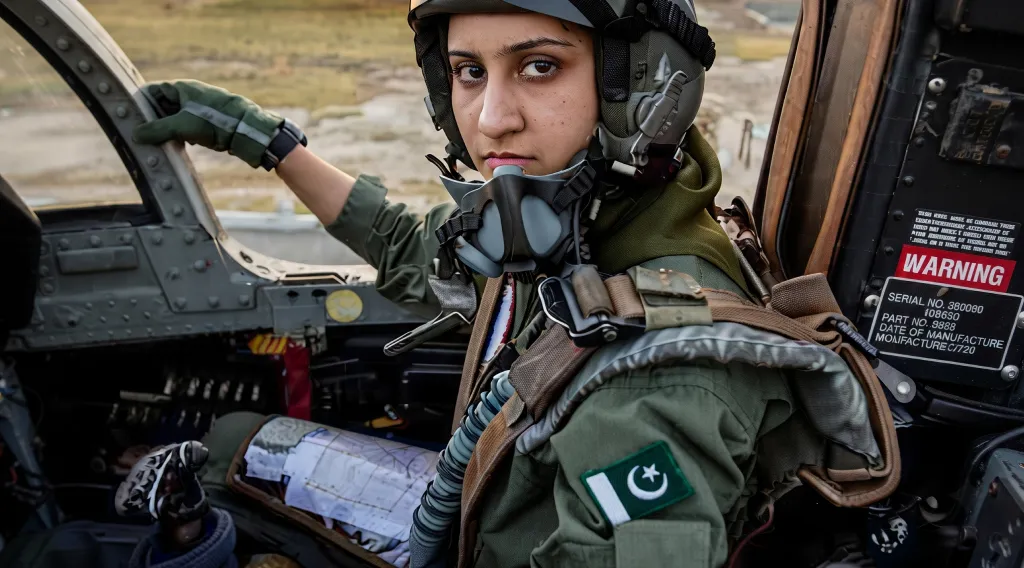
Becoming a fighter pilot does not end with graduation. After earning their wings, Pakistan Air Force pilots continue advanced operational training, mastering complex aircraft systems, formation flying, aerial combat, and mission planning before being declared combat ready.
Female pilots successfully completed this demanding journey alongside their fellow officers. Among these pioneers was Squadron Leader Ayesha Farooq, who became Pakistan's first woman to qualify as a combat ready fighter pilot.
Flying the Chengdu F-7PG, she earned recognition through years of discipline, technical expertise, and exceptional performance rather than special treatment.
The achievements of Pakistan's women fighter pilots have created a lasting legacy that extends far beyond military aviation.
Their success has inspired countless young girls to pursue careers in science, engineering, aviation, and public service while challenging traditional perceptions about women in uniform.
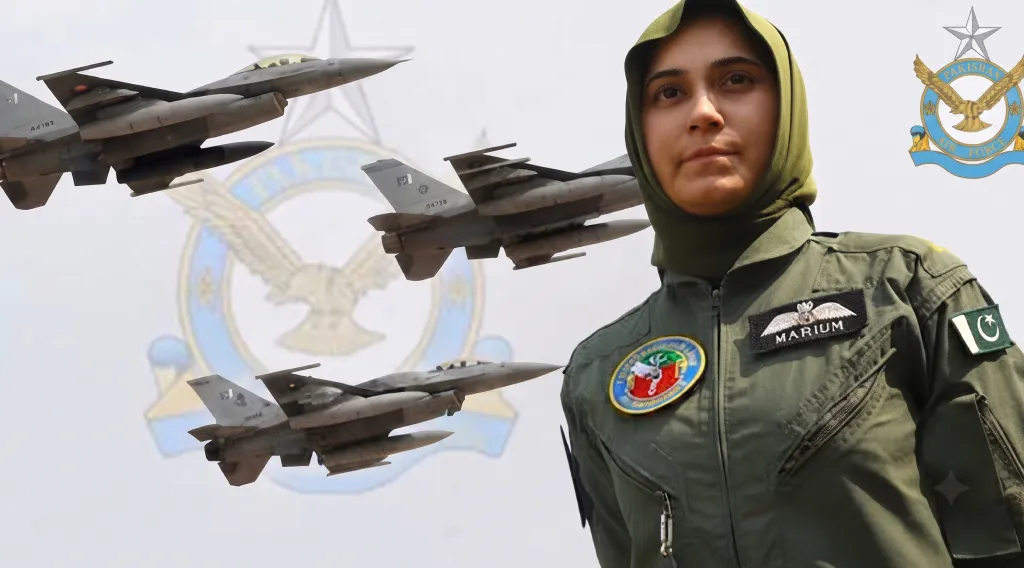
Their journey also honors pioneers such as Flying Officer Marium Mukhtiar, the first female pilot of the Pakistan Air Force to embrace martyrdom during a training mission in 2015. Her courage, professionalism, and devotion to duty earned her the Tamgha-e-Basalat and the admiration of the entire nation.
The journey of Pakistan’s women fighter pilots began in 2003 when the Pakistan Air Force opened its General Duty Pilot branch to women, allowing female cadets to pursue careers as military aviators for the first time.
The journey of Pakistan's women fighter pilots began in 2003 when the Pakistan Air Force opened its General Duty Pilot branch to women, allowing female cadets to pursue careers as military aviators for the first time.
It marked a historic step toward greater inclusion in one of the country's most demanding professions. At PAF Academy Risalpur, female cadets underwent the same rigorous training as their male counterparts.
They studied aerodynamics, navigation, aviation theory, military tactics, survival techniques, and completed extensive flying exercises while maintaining strict physical and academic standards. Every challenge tested their resilience, discipline, and determination.
In March 2006, the Pakistan Air Force reached a historic milestone by commissioning its first four female fighter pilots: Flying Officers Nadia Gul, Mariam Khalil, Saira Batool, and Saba Khan.
After years of intensive military and flight training, they proudly earned their Flying Badges and became pioneers in Pakistan's aviation history.
Their achievement represented far more than personal success. It demonstrated that women could meet the same demanding operational standards required of every fighter pilot. Their graduation reflected the Pakistan Air Force's commitment to selecting pilots based on merit, capability, and professionalism.
Becoming a fighter pilot does not end with graduation. After earning their wings, Pakistan Air Force pilots continue advanced operational training, mastering complex aircraft systems, formation flying, aerial combat, and mission planning before being declared combat ready.
Female pilots successfully completed this demanding journey alongside their fellow officers. Among these pioneers was Squadron Leader Ayesha Farooq, who became Pakistan's first woman to qualify as a combat ready fighter pilot.
Flying the Chengdu F-7PG, she earned recognition through years of discipline, technical expertise, and exceptional performance rather than special treatment.
The achievements of Pakistan's women fighter pilots have created a lasting legacy that extends far beyond military aviation.
Their success has inspired countless young girls to pursue careers in science, engineering, aviation, and public service while challenging traditional perceptions about women in uniform.
Their journey also honors pioneers such as Flying Officer Marium Mukhtiar, the first female pilot of the Pakistan Air Force to embrace martyrdom during a training mission in 2015. Her courage, professionalism, and devotion to duty earned her the Tamgha-e-Basalat and the admiration of the entire nation.



