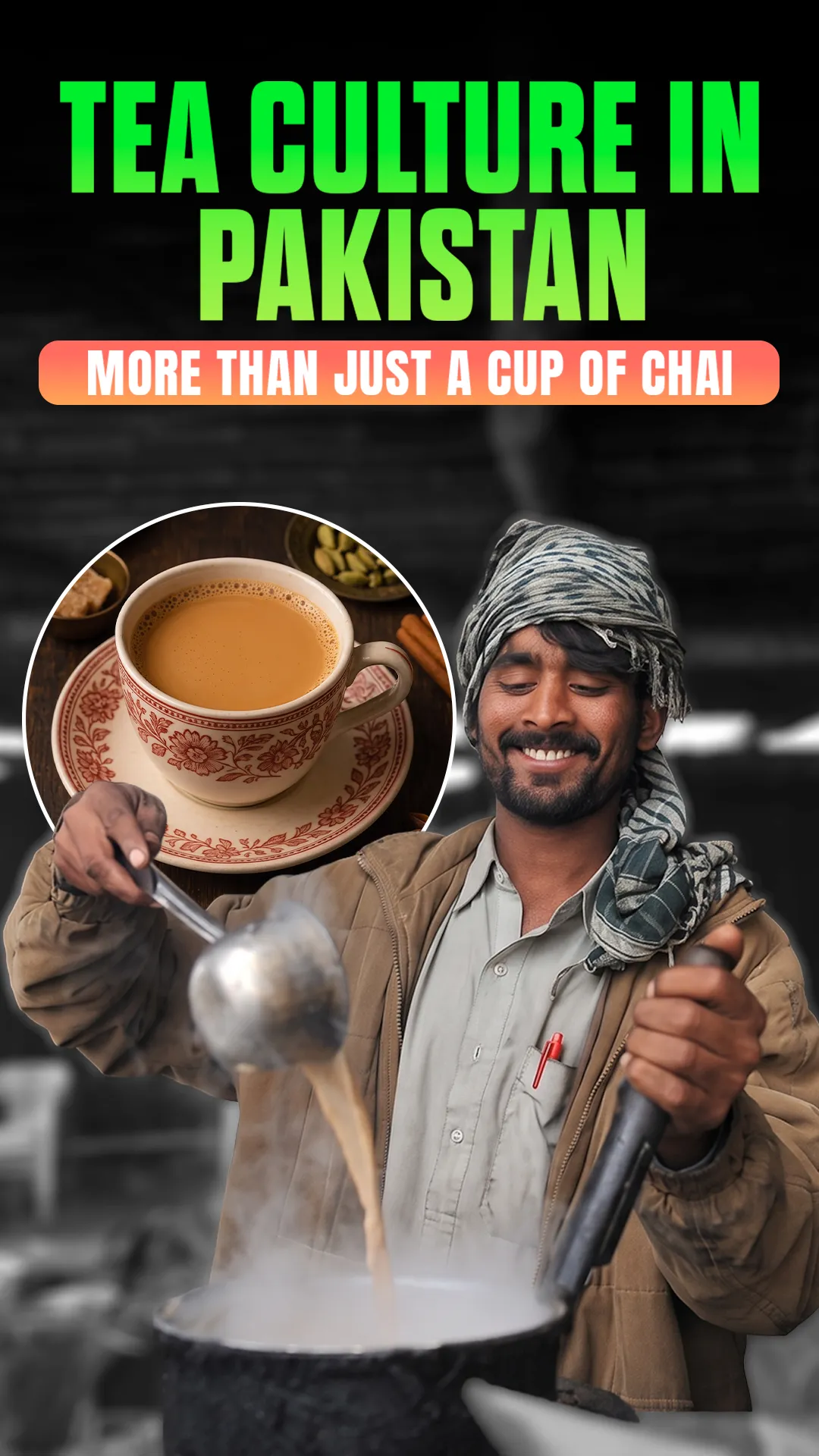

In Pakistan, tea-or chai-is far more than a beverage; it is a cherished tradition deeply woven into everyday life.
Whether it's the first cup in the morning, an afternoon break at work, or late-night conversations with family and friends, chai accompanies countless moments throughout the day.
Offering tea is one of the country's oldest expressions of hospitality. Guests are almost always welcomed with a freshly brewed cup, while celebrations, family gatherings, and even business meetings often revolve around chai.


Pakistan's love for tea is reflected in the incredible variety of chai enjoyed across the country. Doodh Patti, prepared with milk, tea leaves, and sugar, is a household favorite, while Karak Chai is known for its bold flavor and rich, creamy texture.
During winter, Kashmiri Chai, famous for its distinctive pink color and garnished with nuts, becomes a festive favorite at weddings and family gatherings.
Many households also add spices such as cardamom, cinnamon, ginger, cloves, or fennel to create aromatic blends that vary from region to region.

Few things bring Pakistanis together quite like a cup of chai. From roadside dhabas and neighborhood tea stalls to elegant cafés and living rooms, tea creates spaces where people gather to relax, exchange ideas, and build relationships.
Conversations about cricket, politics, business, education, and everyday life often unfold over steaming cups of tea.
Students prepare for exams over endless cups of chai, colleagues bond during office tea breaks, and friends spend hours catching up at local cafés.

While traditional chai remains at the heart of Pakistani culture, the country's café scene has introduced new ways to enjoy this timeless beverage.
Modern tea houses now offer creative variations including saffron chai, chocolate chai, herbal infusions, and premium loose-leaf teas alongside classic favorites.
Young entrepreneurs have embraced chai as a lifestyle experience, creating stylish cafés where people gather not only for tea but also for work, study, and socializing. This blend of tradition and innovation has allowed Pakistani tea culture to evolve.

Pakistan's rich tea culture has found admirers far beyond its borders, with chai becoming one of the world's most popular comfort beverages.
Inspired by South Asian traditions, international cafés and coffee chains now serve the Chai Latte; a modern take on traditional spiced tea that blends black tea with steamed milk and aromatic spices such as cardamom, cinnamon, ginger, and cloves.
The drink has become a staple on café menus across North America, Europe, Australia, and the Middle East, introducing millions to the flavors of the region.
In Pakistan, tea-or chai-is far more than a beverage; it is a cherished tradition deeply woven into everyday life.
In Pakistan, tea-or chai-is far more than a beverage; it is a cherished tradition deeply woven into everyday life.
Whether it's the first cup in the morning, an afternoon break at work, or late-night conversations with family and friends, chai accompanies countless moments throughout the day.
Offering tea is one of the country's oldest expressions of hospitality. Guests are almost always welcomed with a freshly brewed cup, while celebrations, family gatherings, and even business meetings often revolve around chai.
Pakistan's love for tea is reflected in the incredible variety of chai enjoyed across the country. Doodh Patti, prepared with milk, tea leaves, and sugar, is a household favorite, while Karak Chai is known for its bold flavor and rich, creamy texture.
During winter, Kashmiri Chai, famous for its distinctive pink color and garnished with nuts, becomes a festive favorite at weddings and family gatherings.
Many households also add spices such as cardamom, cinnamon, ginger, cloves, or fennel to create aromatic blends that vary from region to region.
Few things bring Pakistanis together quite like a cup of chai. From roadside dhabas and neighborhood tea stalls to elegant cafés and living rooms, tea creates spaces where people gather to relax, exchange ideas, and build relationships.
Conversations about cricket, politics, business, education, and everyday life often unfold over steaming cups of tea.
Students prepare for exams over endless cups of chai, colleagues bond during office tea breaks, and friends spend hours catching up at local cafés.
While traditional chai remains at the heart of Pakistani culture, the country's café scene has introduced new ways to enjoy this timeless beverage.
Modern tea houses now offer creative variations including saffron chai, chocolate chai, herbal infusions, and premium loose-leaf teas alongside classic favorites.
Young entrepreneurs have embraced chai as a lifestyle experience, creating stylish cafés where people gather not only for tea but also for work, study, and socializing. This blend of tradition and innovation has allowed Pakistani tea culture to evolve.
Pakistan's rich tea culture has found admirers far beyond its borders, with chai becoming one of the world's most popular comfort beverages.
Inspired by South Asian traditions, international cafés and coffee chains now serve the Chai Latte; a modern take on traditional spiced tea that blends black tea with steamed milk and aromatic spices such as cardamom, cinnamon, ginger, and cloves.
The drink has become a staple on café menus across North America, Europe, Australia, and the Middle East, introducing millions to the flavors of the region.