What Soldiers Eat in the Field: Pakistan Army Rations Explained
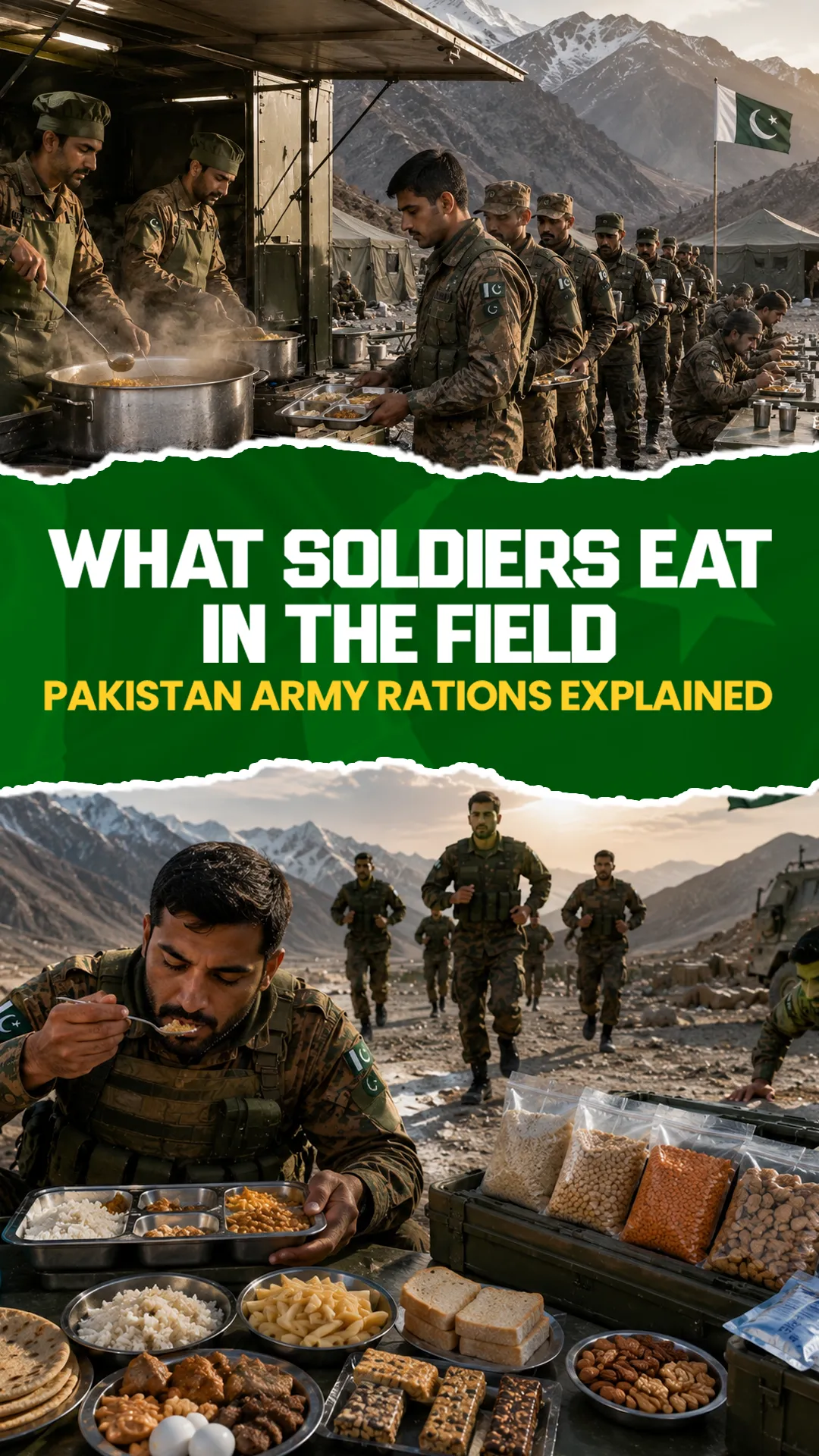
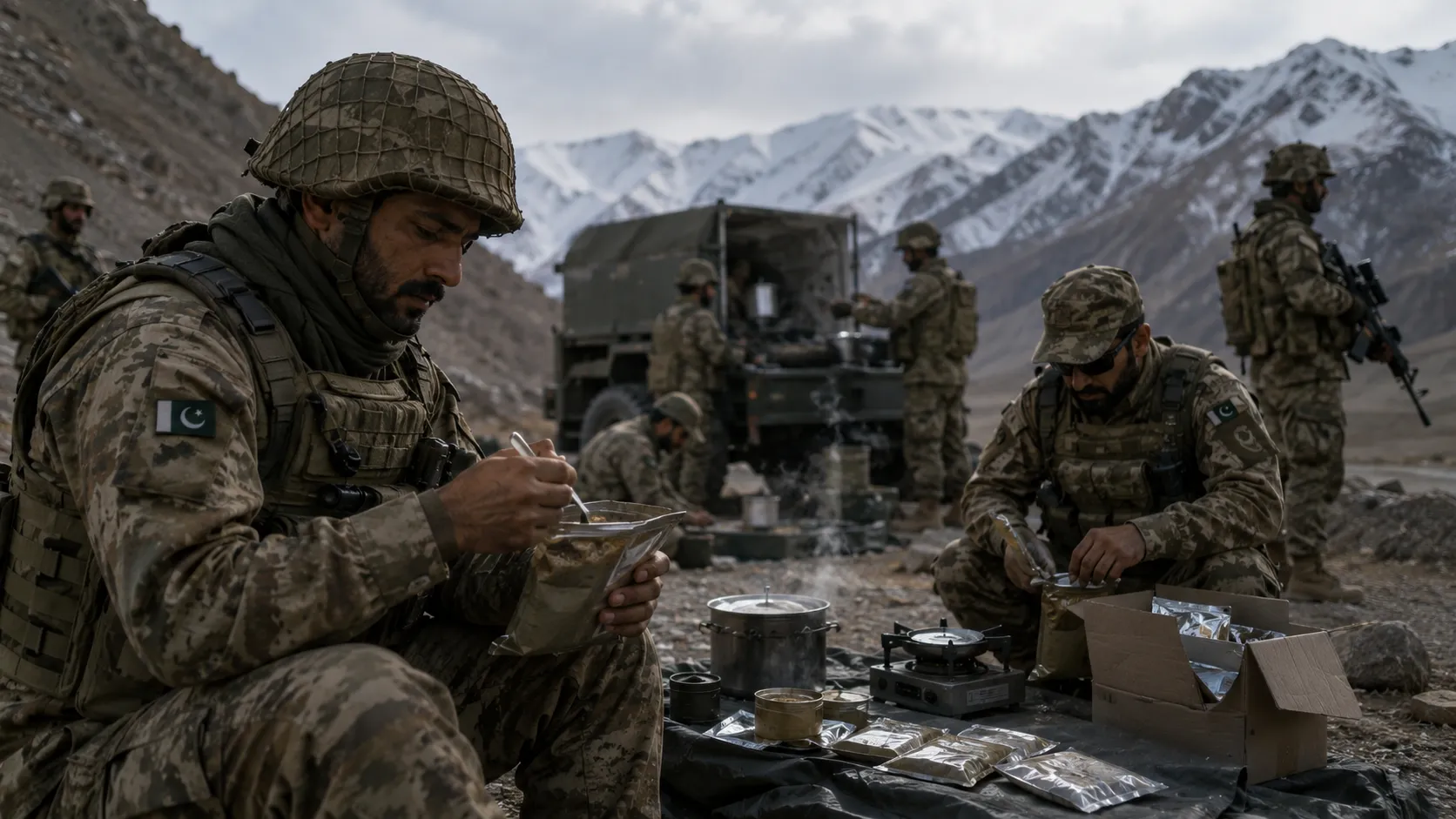
When Pakistan Army personnel are deployed in operational areas, whether in high mountains, deserts, or during counter-terrorism missions, access to regular kitchens is often limited.
In such conditions, food must be compact, durable, and easy to prepare without complex cooking setups. To meet these needs, soldiers rely on pre-packed operational rations designed to provide sufficient energy and nutrition during active duty.
These rations are planned to support endurance, physical strength, and mental alertness in demanding environments.

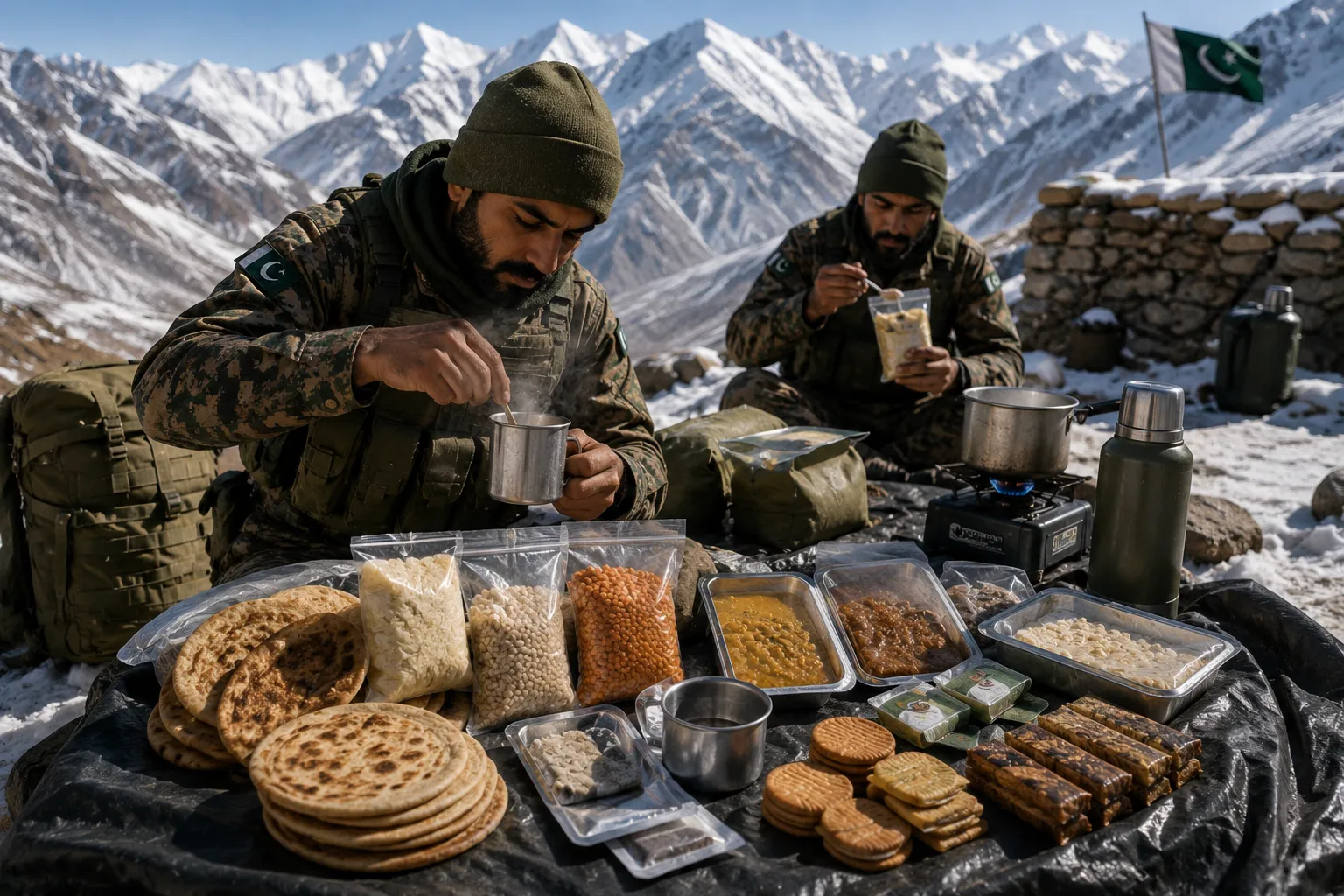
The Pakistan Army uses a structured ration system that includes both cooked meals and packaged food supplies.
In field postings, one of the most common arrangements is the Unit Run Mess (URM) system, where meals are prepared centrally and distributed to troops.
Typical field meals often include staple Pakistani foods such as roti (flatbread), rice, daal (lentils), vegetables, and meat dishes like chicken or beef curry when available. These meals are designed to be filling and high in carbohydrates and protein to sustain energy levels.
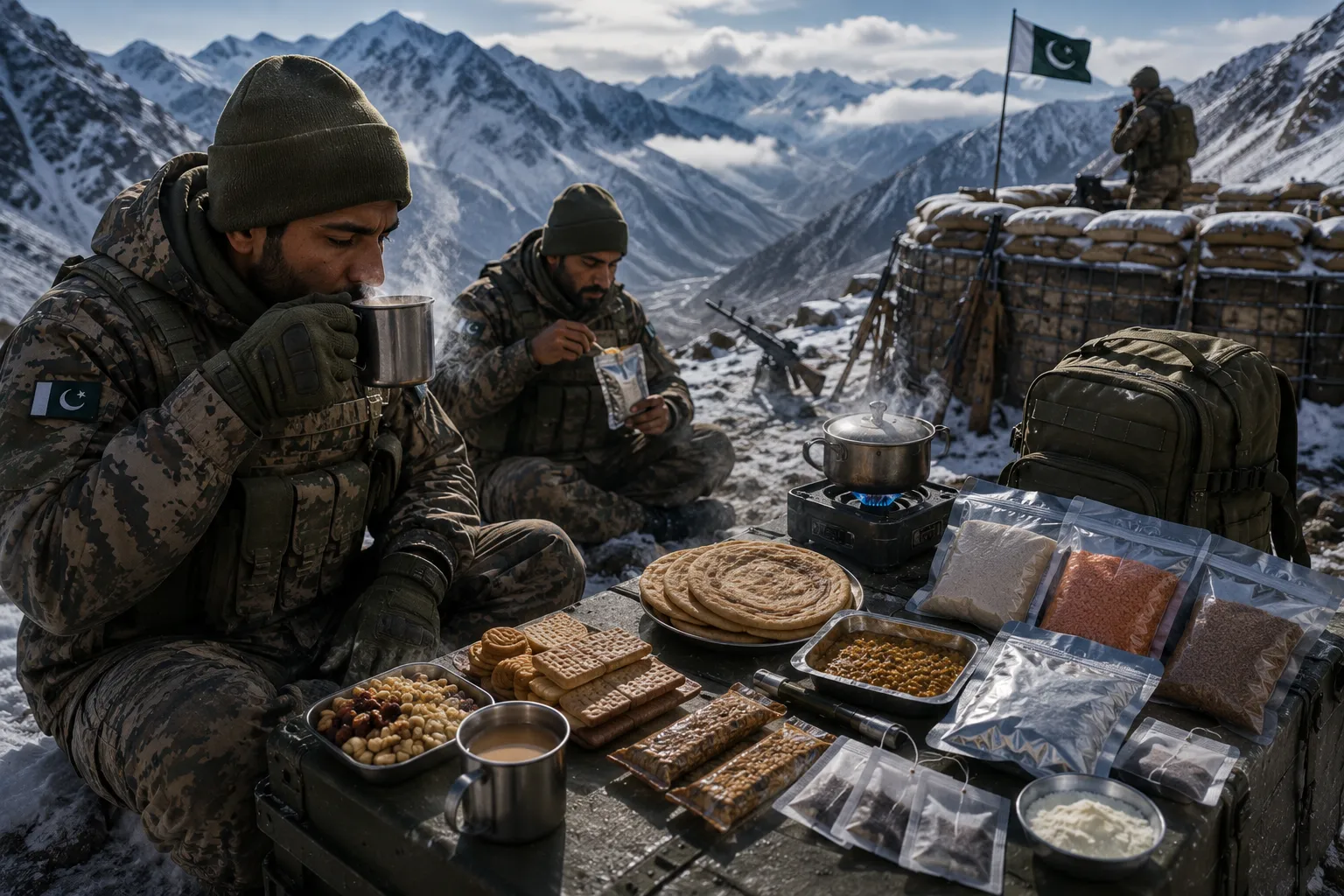
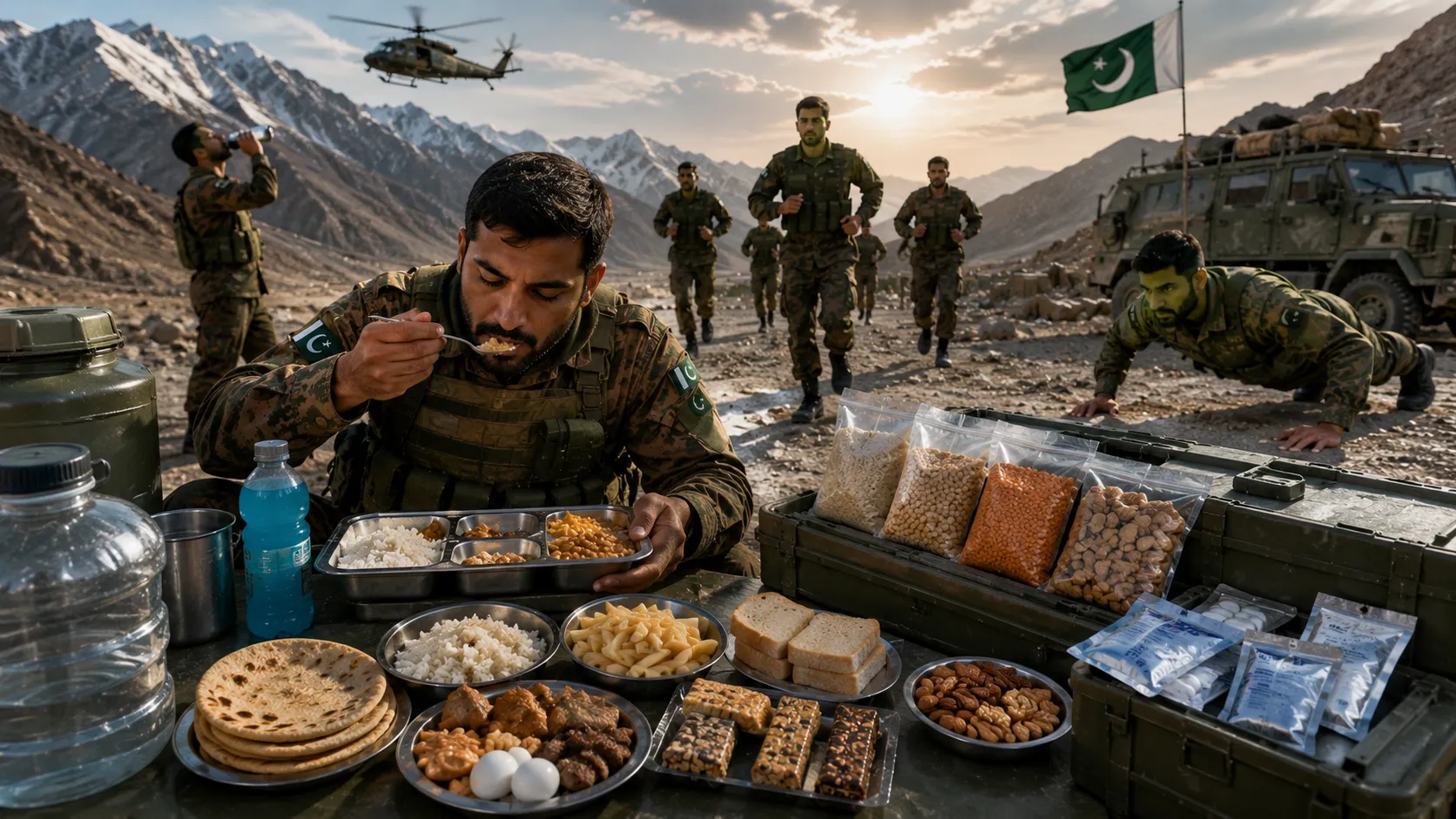
In extreme environments such as high-altitude posts, soldiers often depend on specially packed dry rations.
These include items that are lightweight and have a long shelf life, such as biscuits, parathas, dehydrated lentils, powdered milk, tea bags, and energy bars.
Hot beverages like tea (chai) play an important psychological and physical role, helping soldiers maintain warmth and alertness in freezing conditions. Instant food packets and ready-to-eat meals are also used where cooking fuel is limited.
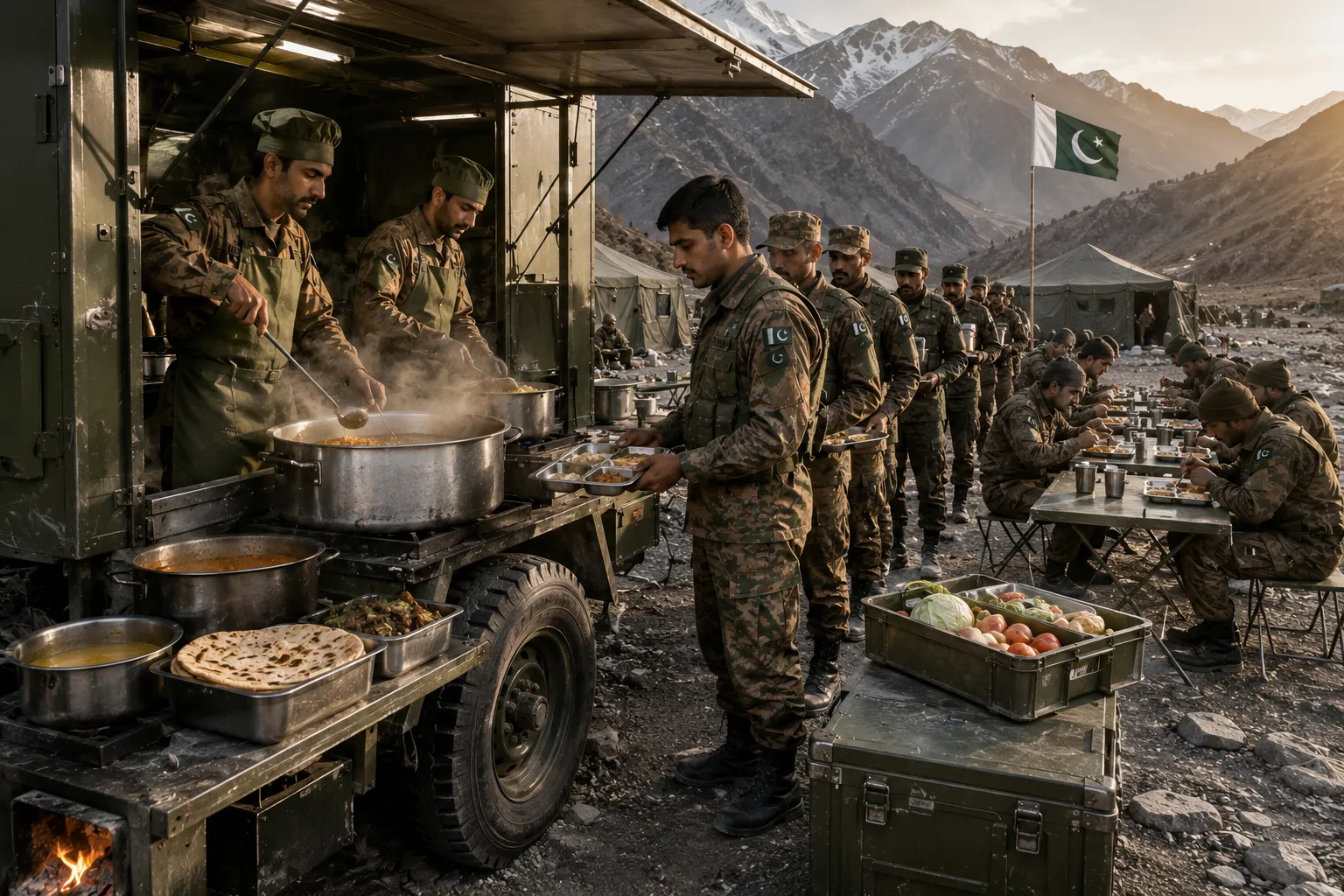
Whenever operational conditions allow, the army sets up field kitchens, which are mobile cooking units operated by trained cooks within the unit structure.
These kitchens prepare fresh meals for soldiers using stored ration supplies. Food is typically prepared in large quantities using fuel-efficient stoves or fire-based cooking setups.
Meals are served in shifts to accommodate operational duties, ensuring that soldiers remain on active rotation while still receiving proper nutrition. Freshly cooked food remains an important part of army logistics, as it boosts morale.
Army ration planning is not only about filling meals but also about maintaining physical performance and endurance.
A soldier’s daily diet is structured to include carbohydrates for energy, proteins for muscle strength, and fats for long-lasting fuel.
Hydration is equally important, especially in desert and high-altitude operations, where water supplies are carefully managed and distributed. In many cases, oral rehydration solutions and electrolyte drinks are also included in supply chains.
When Pakistan Army personnel are deployed in operational areas, whether in high mountains, deserts, or during counter-terrorism missions, access to regular kitchens is often limited.
When Pakistan Army personnel are deployed in operational areas, whether in high mountains, deserts, or during counter-terrorism missions, access to regular kitchens is often limited.
In such conditions, food must be compact, durable, and easy to prepare without complex cooking setups. To meet these needs, soldiers rely on pre-packed operational rations designed to provide sufficient energy and nutrition during active duty.
These rations are planned to support endurance, physical strength, and mental alertness in demanding environments.
The Pakistan Army uses a structured ration system that includes both cooked meals and packaged food supplies.
In field postings, one of the most common arrangements is the Unit Run Mess (URM) system, where meals are prepared centrally and distributed to troops.
Typical field meals often include staple Pakistani foods such as roti (flatbread), rice, daal (lentils), vegetables, and meat dishes like chicken or beef curry when available. These meals are designed to be filling and high in carbohydrates and protein to sustain energy levels.
In extreme environments such as high-altitude posts, soldiers often depend on specially packed dry rations.
These include items that are lightweight and have a long shelf life, such as biscuits, parathas, dehydrated lentils, powdered milk, tea bags, and energy bars.
Hot beverages like tea (chai) play an important psychological and physical role, helping soldiers maintain warmth and alertness in freezing conditions. Instant food packets and ready-to-eat meals are also used where cooking fuel is limited.
Whenever operational conditions allow, the army sets up field kitchens, which are mobile cooking units operated by trained cooks within the unit structure.
These kitchens prepare fresh meals for soldiers using stored ration supplies. Food is typically prepared in large quantities using fuel-efficient stoves or fire-based cooking setups.
Meals are served in shifts to accommodate operational duties, ensuring that soldiers remain on active rotation while still receiving proper nutrition. Freshly cooked food remains an important part of army logistics, as it boosts morale.
Army ration planning is not only about filling meals but also about maintaining physical performance and endurance.
A soldier’s daily diet is structured to include carbohydrates for energy, proteins for muscle strength, and fats for long-lasting fuel.
Hydration is equally important, especially in desert and high-altitude operations, where water supplies are carefully managed and distributed. In many cases, oral rehydration solutions and electrolyte drinks are also included in supply chains.



