

Pakistan’s e-commerce industry is experiencing a strong growth phase fueled by ongoing digital transformation and wider access to internet services.
More consumers are increasingly shifting from traditional brick-and-mortar shopping to online platforms, contributing to consistent double-digit growth in the sector.
According to industry estimates and data from the Pakistan Telecommunication Authority, this expansion is supported by rising smartphone penetration, improved 4G connectivity, and growing digital literacy among users.


The growth of e-commerce in Pakistan is strongly supported by the rapid improvement of digital payment systems.
Mobile wallets such as Easypaisa and JazzCash have made cashless transactions more accessible to a wider population, gradually reducing reliance on cash-on-delivery, which still remains common in the market.
At the same time, the introduction of the Raast infrastructure has further strengthened the digital payments ecosystem by enabling faster, secure, and low-cost fund transfers. These innovations are improving consumer confidence in online transactions.

Leading e-commerce platforms such as Daraz, Telemart, and Yayvo are investing significantly in technology-driven solutions to enhance customer experience and operational efficiency.
These platforms are increasingly integrating artificial intelligence to provide personalized product recommendations, improve demand forecasting, and optimize inventory management.
In addition to digital innovation, logistics infrastructure has seen major improvements across Pakistan. Enhanced delivery networks, real-time tracking systems, and expanded nationwide coverage are making online shopping
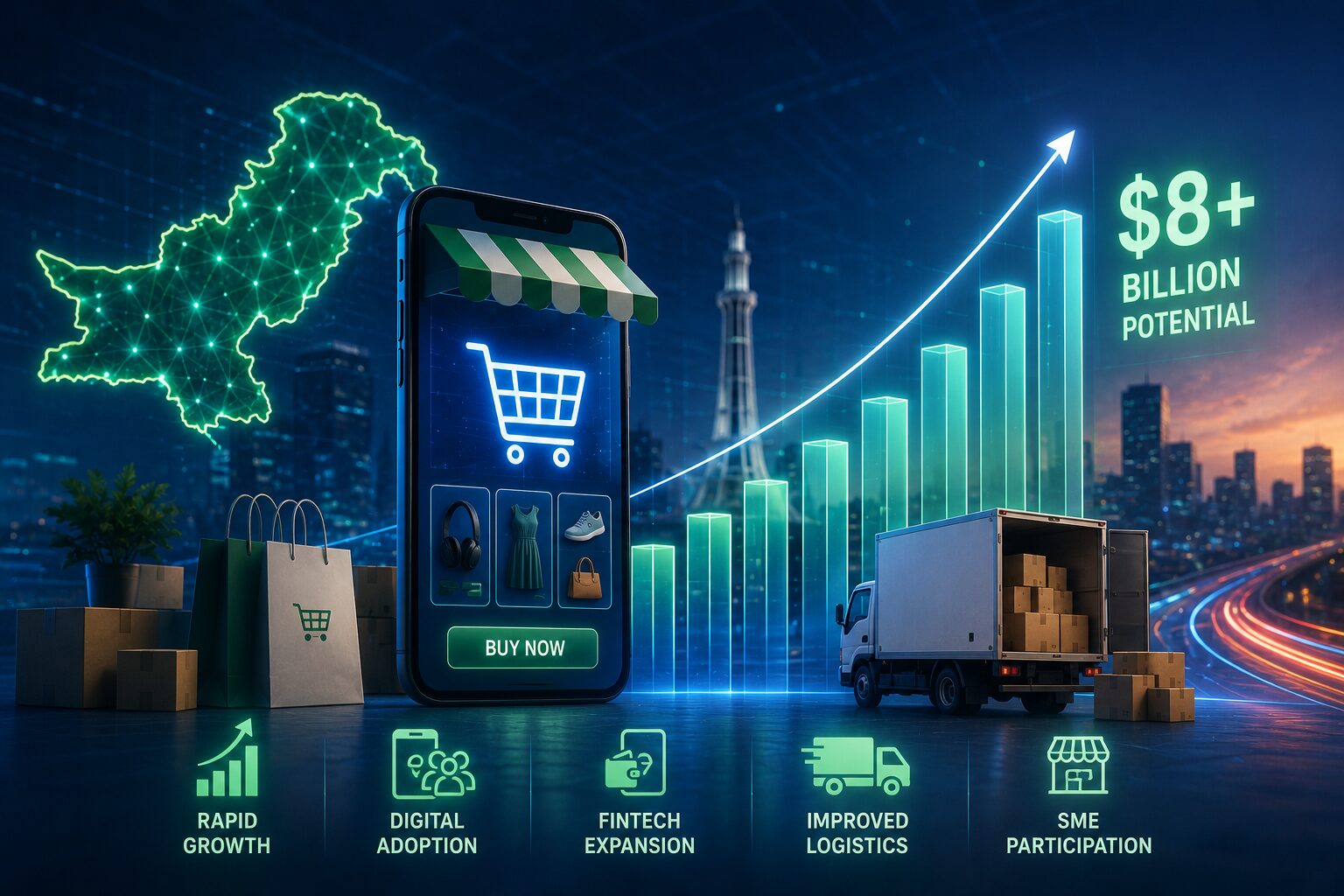
Pakistan’s e-commerce market has grown into a multi-billion-dollar industry and continues to expand at an estimated annual growth rate of around 10–20 percent.
This steady upward trend reflects increasing consumer confidence and rapid digital adoption across the country.
Industry experts project that the market could surpass the $8 billion milestone in the coming years, supported by continued fintech expansion, improved logistics, and growing participation from small and medium-sized enterprises.
Pakistan’s e-commerce industry is experiencing a strong growth phase fueled by ongoing digital transformation and wider access to internet services.
Pakistan’s e-commerce industry is experiencing a strong growth phase fueled by ongoing digital transformation and wider access to internet services.
More consumers are increasingly shifting from traditional brick-and-mortar shopping to online platforms, contributing to consistent double-digit growth in the sector.
According to industry estimates and data from the Pakistan Telecommunication Authority, this expansion is supported by rising smartphone penetration, improved 4G connectivity, and growing digital literacy among users.
The growth of e-commerce in Pakistan is strongly supported by the rapid improvement of digital payment systems.
Mobile wallets such as Easypaisa and JazzCash have made cashless transactions more accessible to a wider population, gradually reducing reliance on cash-on-delivery, which still remains common in the market.
At the same time, the introduction of the Raast infrastructure has further strengthened the digital payments ecosystem by enabling faster, secure, and low-cost fund transfers. These innovations are improving consumer confidence in online transactions.
Leading e-commerce platforms such as Daraz, Telemart, and Yayvo are investing significantly in technology-driven solutions to enhance customer experience and operational efficiency.
These platforms are increasingly integrating artificial intelligence to provide personalized product recommendations, improve demand forecasting, and optimize inventory management.
In addition to digital innovation, logistics infrastructure has seen major improvements across Pakistan. Enhanced delivery networks, real-time tracking systems, and expanded nationwide coverage are making online shopping
Pakistan’s e-commerce market has grown into a multi-billion-dollar industry and continues to expand at an estimated annual growth rate of around 10–20 percent.
This steady upward trend reflects increasing consumer confidence and rapid digital adoption across the country.
Industry experts project that the market could surpass the $8 billion milestone in the coming years, supported by continued fintech expansion, improved logistics, and growing participation from small and medium-sized enterprises.



