Colors, Culture, and Creativity: The World of Pakistani Truck Art
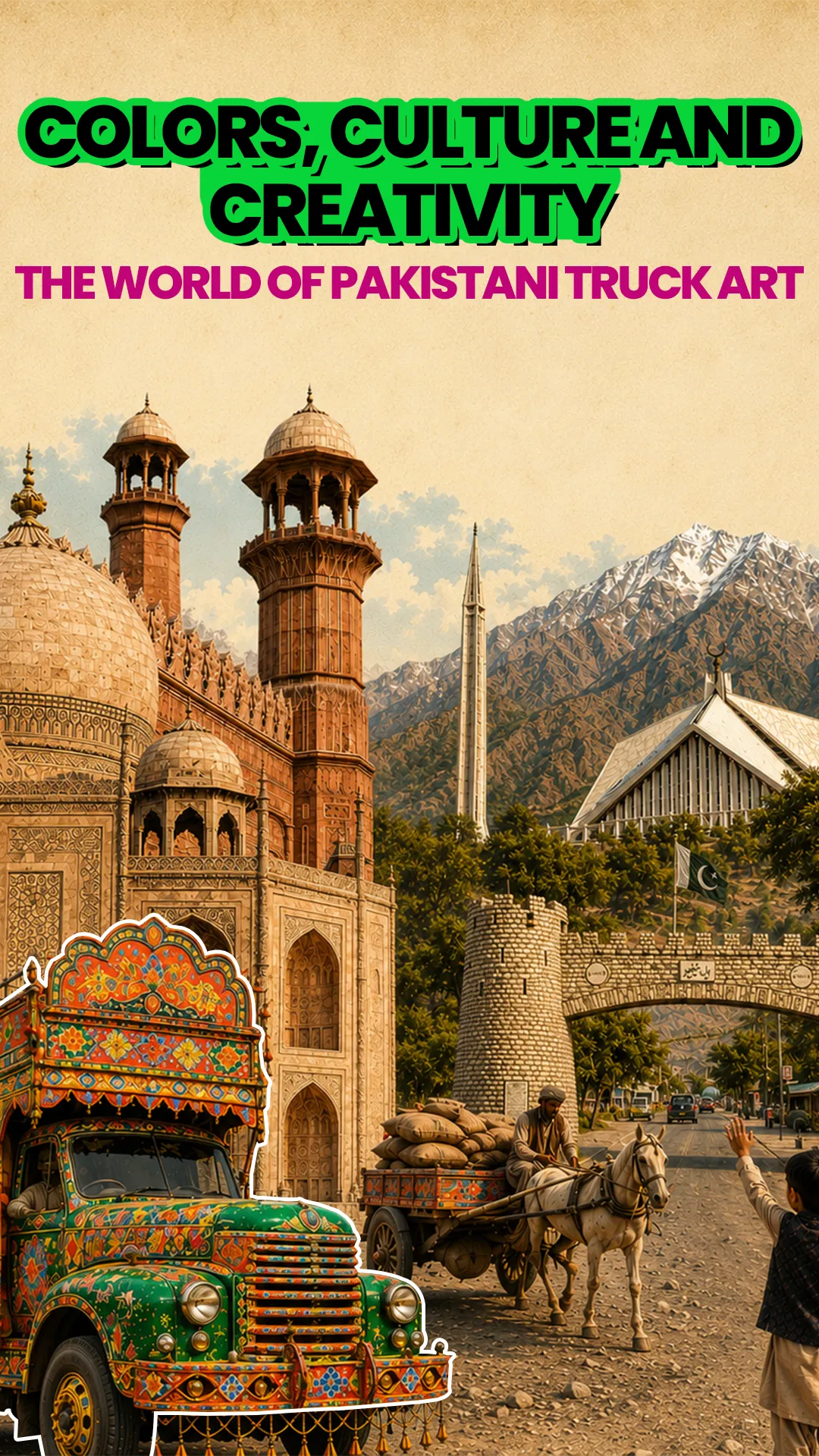

Truck art in Pakistan is a unique form of applied folk art that combines painting, calligraphy, woodwork, metal ornamentation, and decorative design.
Unlike factory-made decorations, each truck is customized by skilled artisans who work closely with vehicle owners and drivers to create a distinctive visual identity.
The artwork often features Islamic calligraphy, poetic verses, floral motifs, landscapes, birds, and symbolic imagery. These elements reflect personal beliefs, cultural values, regional influences, and individual preferences.


The roots of Pakistan’s truck art tradition can be traced back to the 1940s and 1950s, when motorized vehicles gradually replaced horse-drawn carts and traditional transport systems.
As trucks became more common, owners began decorating them to distinguish their vehicles from others on the road.
Early designs drew inspiration from South Asian craftsmanship traditions, including wagon painting, architectural ornamentation, and religious artwork.
Many trucks featured portraits of Sufi saints, Islamic calligraphy, floral patterns, and protective symbols believed to bring bles

During the 1960s and 1970s, truck art underwent a major transformation as specialized workshops emerged in major transport centers across Pakistan.
Artists began experimenting with more elaborate techniques, brighter colors, and increasingly detailed compositions.
While religious and spiritual themes remained important, newer subjects started appearing on trucks.
Portraits of national heroes, famous personalities, wildlife, scenic landscapes, and patriotic symbols became popular additions, expanding the visual language of truck art.

Every decorated truck tells a story. The artwork often reflects the personality, beliefs, experiences, and aspirations of the driver or owner, turning the vehicle into a highly personal expression of identity.
Urdu poetry frequently appears on truck panels, featuring verses about love, longing, faith, friendship, and humor. Alongside these literary elements, Quranic calligraphy, devotional phrases, and symbolic imagery add spiritual significance to the designs.
Combined with vibrant colors, intricate floral patterns, reflective mirrors, and handcrafted ornaments.

Truck art varies significantly across different regions of Pakistan, reflecting local traditions, artistic influences, and cultural identities. While the overall concept remains similar, each area has developed distinctive design characteristics over time.
In Punjab, particularly in cities such as Lahore and Rawalpindi, trucks are known for highly detailed floral patterns, vivid colors, and extensive decorative embellishments.
These designs often emphasize complexity and visual richness. In Khyber Pakhtunkhwa, bold calligraphy, symbolic motifs, and color contrasts are common.

What began as a local transport tradition has evolved into an internationally recognized symbol of Pakistani creativity. Today, truck art is celebrated around the world as a unique blend of folk craftsmanship and contemporary visual expression.
Its colorful designs have appeared in international art exhibitions, design festivals, museums, and cultural showcases in major cities including London, New York, and Dubai.
Artists, designers, and researchers frequently study truck art for its originality and cultural significance.
The influence of truck art has also expanded.

Despite modernization and changing transportation trends, truck art continues to thrive as one of Pakistan’s most distinctive cultural traditions.
Its enduring popularity reflects the value people place on craftsmanship, individuality, and artistic expression in everyday life. Unlike mass-produced designs, every decorated truck is handcrafted and unique.
Skilled artisans continue to preserve traditional techniques while incorporating contemporary influences, ensuring that the art form remains relevant to new generations. Today, truck art stands as more than just decoration.
Truck art in Pakistan is a unique form of applied folk art that combines painting, calligraphy, woodwork, metal ornamentation, and decorative design.
Truck art in Pakistan is a unique form of applied folk art that combines painting, calligraphy, woodwork, metal ornamentation, and decorative design.
Unlike factory-made decorations, each truck is customized by skilled artisans who work closely with vehicle owners and drivers to create a distinctive visual identity.
The artwork often features Islamic calligraphy, poetic verses, floral motifs, landscapes, birds, and symbolic imagery. These elements reflect personal beliefs, cultural values, regional influences, and individual preferences.
The roots of Pakistan’s truck art tradition can be traced back to the 1940s and 1950s, when motorized vehicles gradually replaced horse-drawn carts and traditional transport systems.
As trucks became more common, owners began decorating them to distinguish their vehicles from others on the road.
Early designs drew inspiration from South Asian craftsmanship traditions, including wagon painting, architectural ornamentation, and religious artwork.
Many trucks featured portraits of Sufi saints, Islamic calligraphy, floral patterns, and protective symbols believed to bring bles
During the 1960s and 1970s, truck art underwent a major transformation as specialized workshops emerged in major transport centers across Pakistan.
Artists began experimenting with more elaborate techniques, brighter colors, and increasingly detailed compositions.
While religious and spiritual themes remained important, newer subjects started appearing on trucks.
Portraits of national heroes, famous personalities, wildlife, scenic landscapes, and patriotic symbols became popular additions, expanding the visual language of truck art.
Every decorated truck tells a story. The artwork often reflects the personality, beliefs, experiences, and aspirations of the driver or owner, turning the vehicle into a highly personal expression of identity.
Urdu poetry frequently appears on truck panels, featuring verses about love, longing, faith, friendship, and humor. Alongside these literary elements, Quranic calligraphy, devotional phrases, and symbolic imagery add spiritual significance to the designs.
Combined with vibrant colors, intricate floral patterns, reflective mirrors, and handcrafted ornaments.
Truck art varies significantly across different regions of Pakistan, reflecting local traditions, artistic influences, and cultural identities. While the overall concept remains similar, each area has developed distinctive design characteristics over time.
In Punjab, particularly in cities such as Lahore and Rawalpindi, trucks are known for highly detailed floral patterns, vivid colors, and extensive decorative embellishments.
These designs often emphasize complexity and visual richness. In Khyber Pakhtunkhwa, bold calligraphy, symbolic motifs, and color contrasts are common.
What began as a local transport tradition has evolved into an internationally recognized symbol of Pakistani creativity. Today, truck art is celebrated around the world as a unique blend of folk craftsmanship and contemporary visual expression.
Its colorful designs have appeared in international art exhibitions, design festivals, museums, and cultural showcases in major cities including London, New York, and Dubai.
Artists, designers, and researchers frequently study truck art for its originality and cultural significance.
The influence of truck art has also expanded.
Despite modernization and changing transportation trends, truck art continues to thrive as one of Pakistan’s most distinctive cultural traditions.
Its enduring popularity reflects the value people place on craftsmanship, individuality, and artistic expression in everyday life. Unlike mass-produced designs, every decorated truck is handcrafted and unique.
Skilled artisans continue to preserve traditional techniques while incorporating contemporary influences, ensuring that the art form remains relevant to new generations. Today, truck art stands as more than just decoration.



