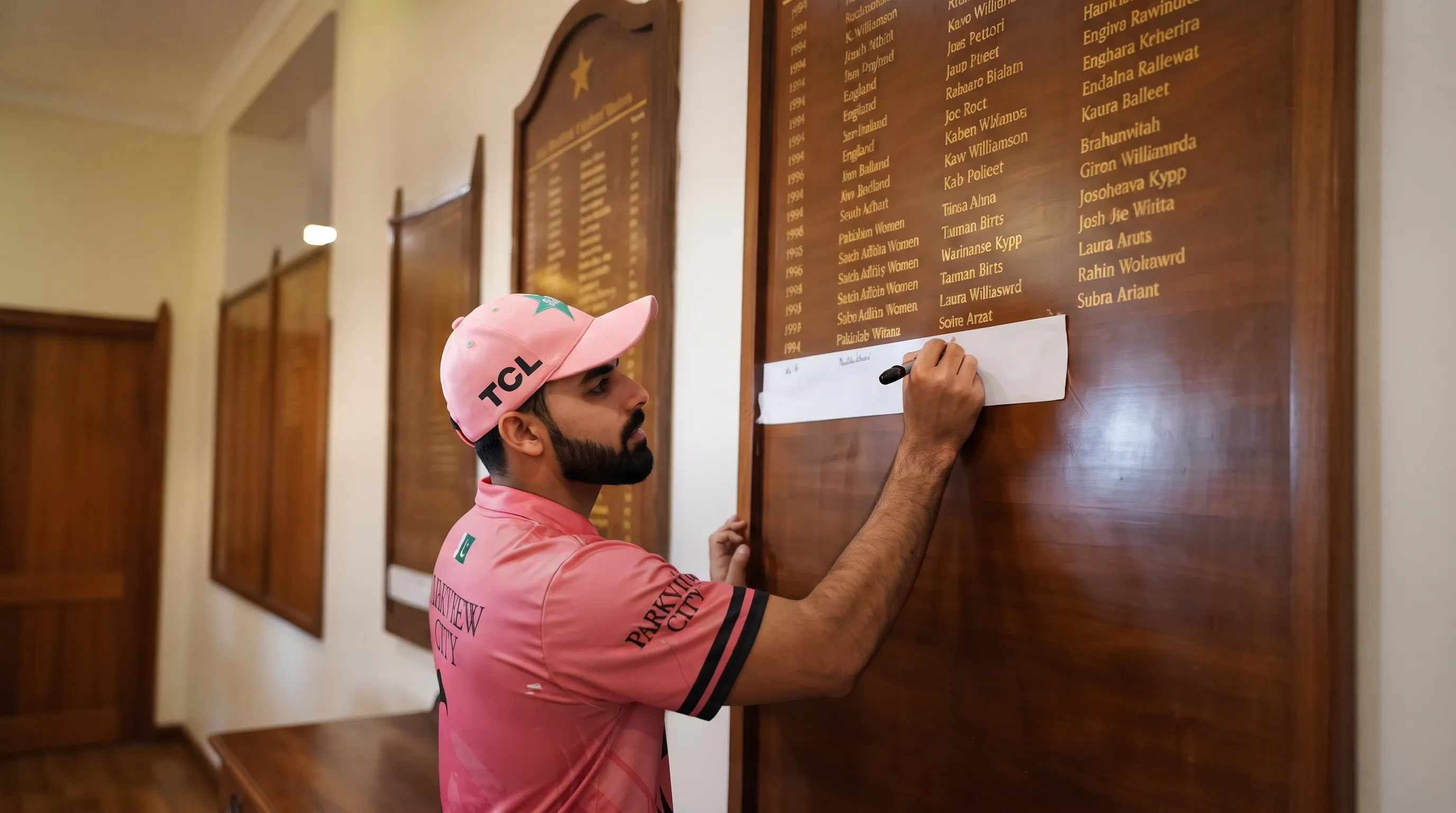
Shadab Khan has secured a lasting place in the history of Lahore’s Gaddafi Stadium after producing a match-winning innings against England on October 25, 2026. His unbeaten 113 runs helped Pakistan pull off a dramatic one-wicket victory in the ODI tri-series, even after the team had lost nine wickets for 154 runs.
The performance earned Shadab a place on the stadium’s honour board, marking a major milestone in his international career. Facing a steep challenge with Pakistan close to defeat, the all-rounder delivered his first international century, scoring 13 boundaries and five sixes from 96 deliveries.

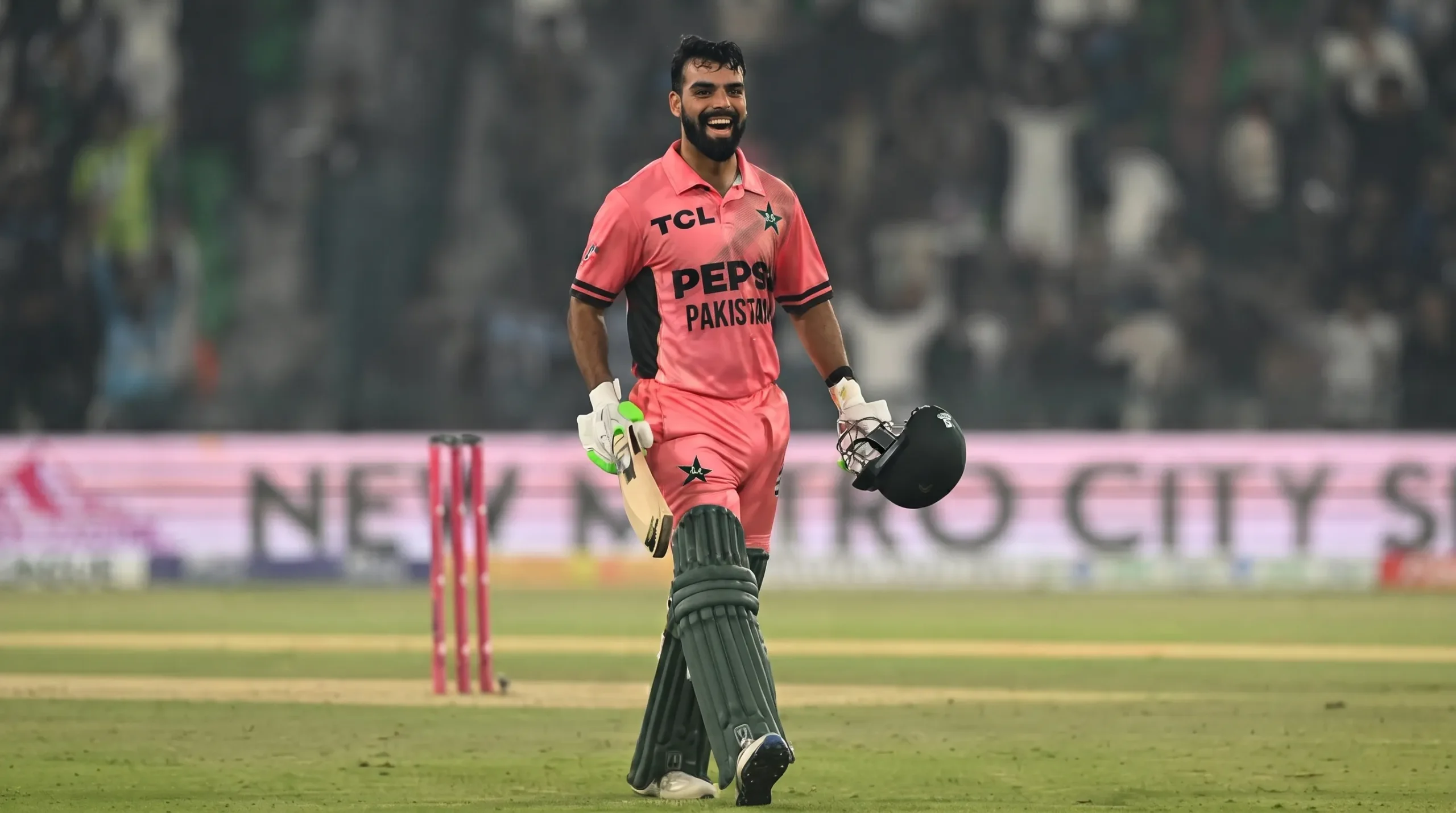
With Pakistan still needing 88 runs after losing its ninth wicket, the match appeared to be slipping away. Shadab found an unlikely partner in fast bowler Haris Rauf, and the pair refused to let the chase end. Their unbeaten 89-run partnership for the final wicket became the highest 10th-wicket stand in a successful men’s ODI run chase.
Rauf stayed at the crease to support Shadab before striking the boundary that sealed the win. The partnership surpassed the previous record of 64 runs in a successful ODI chase, set by West Indies against Pakistan in 1975. Their combined effort transformed a near-defeat into one of Pakistan’s most memorable finishes.
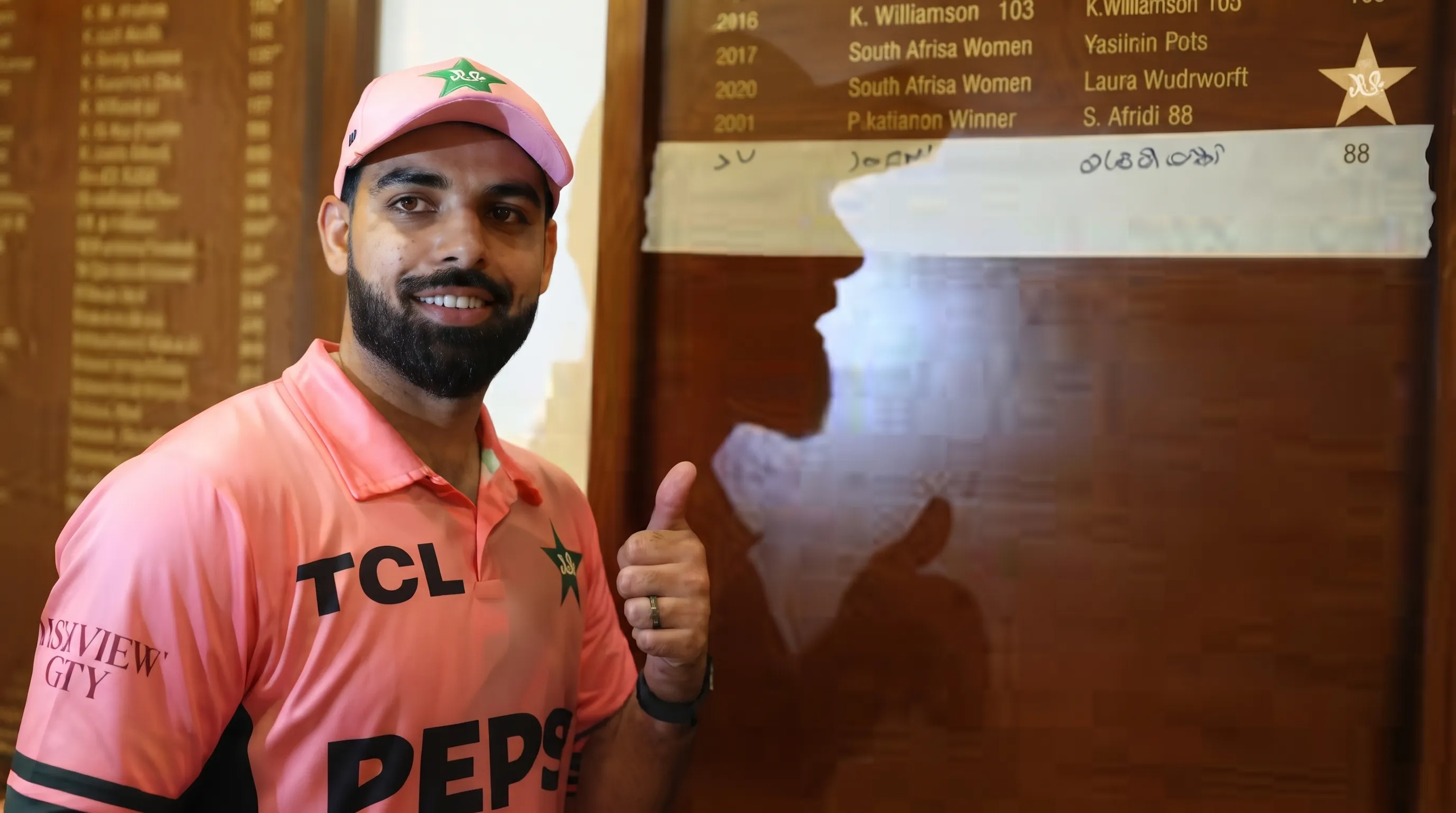
Shadab’s innings also set a new benchmark for men’s ODI cricket. His 113 not out became the highest individual score by a batter coming in at number eight or lower. Pakistan completed the chase in 47.1 overs, reaching 243 for nine while pursuing England’s target of 242.
The victory secured Pakistan’s place in the tri-series final and marked the team’s third consecutive win in the competition. More than the numbers, Shadab’s performance showed how one determined innings, supported by a teammate’s belief, can change the course of a match. His name on the Gaddafi Stadium honour board now commemorates a night of extraordinary resilience.
Shadab Khan has secured a lasting place in the history of Lahore’s Gaddafi Stadium after producing a match-winning innings against England on October 25, 2026.
Shadab Khan has secured a lasting place in the history of Lahore’s Gaddafi Stadium after producing a match-winning innings against England on October 25, 2026. His unbeaten 113 runs helped Pakistan pull off a dramatic one-wicket victory in the ODI tri-series, even after the team had lost nine wickets for 154 runs.
The performance earned Shadab a place on the stadium’s honour board, marking a major milestone in his international career. Facing a steep challenge with Pakistan close to defeat, the all-rounder delivered his first international century, scoring 13 boundaries and five sixes from 96 deliveries.
With Pakistan still needing 88 runs after losing its ninth wicket, the match appeared to be slipping away. Shadab found an unlikely partner in fast bowler Haris Rauf, and the pair refused to let the chase end. Their unbeaten 89-run partnership for the final wicket became the highest 10th-wicket stand in a successful men’s ODI run chase.
Rauf stayed at the crease to support Shadab before striking the boundary that sealed the win. The partnership surpassed the previous record of 64 runs in a successful ODI chase, set by West Indies against Pakistan in 1975. Their combined effort transformed a near-defeat into one of Pakistan’s most memorable finishes.
Shadab’s innings also set a new benchmark for men’s ODI cricket. His 113 not out became the highest individual score by a batter coming in at number eight or lower. Pakistan completed the chase in 47.1 overs, reaching 243 for nine while pursuing England’s target of 242.
The victory secured Pakistan’s place in the tri-series final and marked the team’s third consecutive win in the competition. More than the numbers, Shadab’s performance showed how one determined innings, supported by a teammate’s belief, can change the course of a match. His name on the Gaddafi Stadium honour board now commemorates a night of extraordinary resilience.



