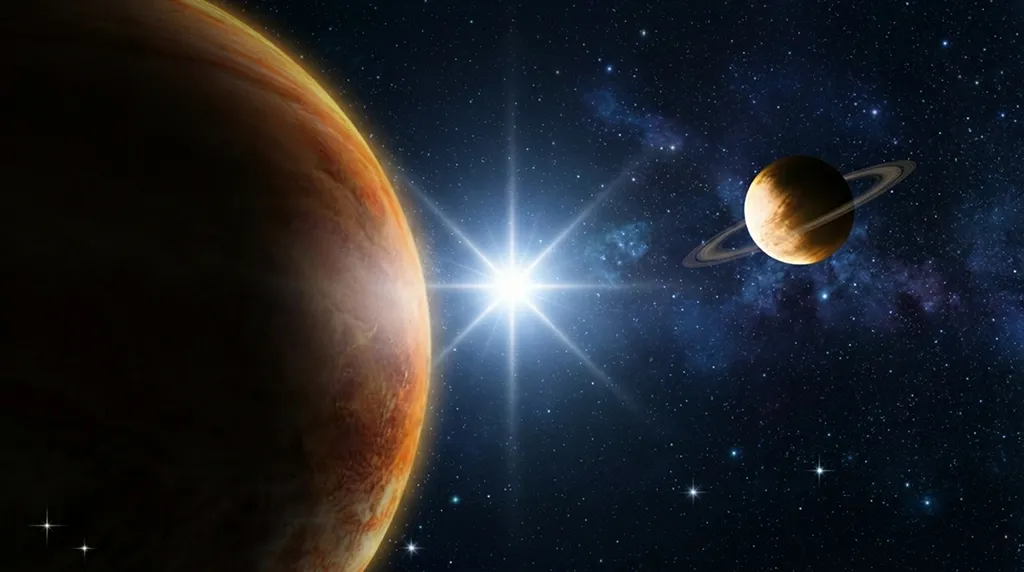
Venus takes about 243 Earth days to complete one rotation on its axis. Yet it takes only around 225 Earth days to travel once around the Sun. So, on Venus, one rotation lasts longer than an entire trip around the Sun.
There is another strange detail. Venus rotates backwards compared with most planets, meaning the Sun would appear to rise in the west and set in the east.
Its extremely slow rotation makes Venus one of the most unusual planets in our Solar System.

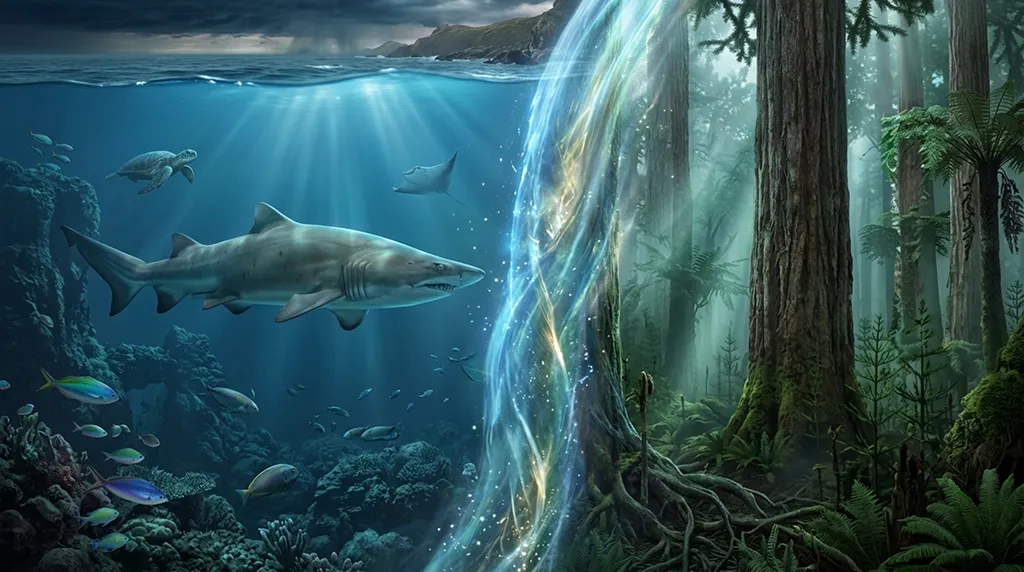
Sharks have existed for at least 400 million years, making them older than trees. The earliest sharks appeared hundreds of millions of years ago, while the first trees evolved later, around 385 million years ago.
That means sharks were already swimming through Earth's ancient oceans before forests began spreading across land. They also survived several major extinction events that wiped out huge numbers of other species.
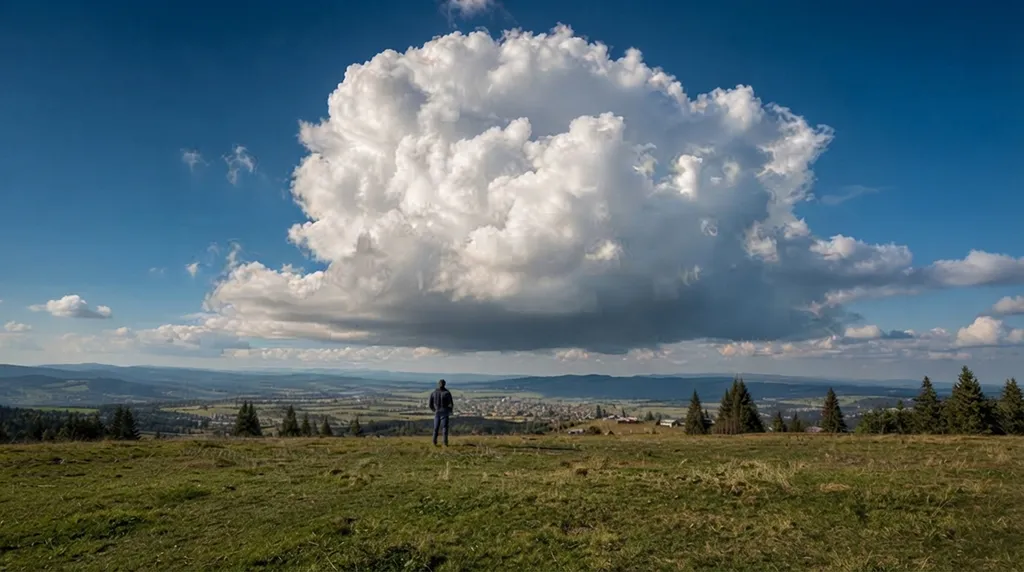
A fluffy white cloud can look almost weightless, but it can contain an enormous amount of water. A typical cumulus cloud may contain roughly 500,000 kilograms of water, equivalent to more than 1.1 million pounds.
So why doesn't it simply fall from the sky? The water is distributed among billions of tiny droplets and ice particles. These particles are small enough to remain suspended by air currents moving through the atmosphere.
The next time you see a cloud floating overhead, remember that something that looks weightless can have a massive amount of water inside it.
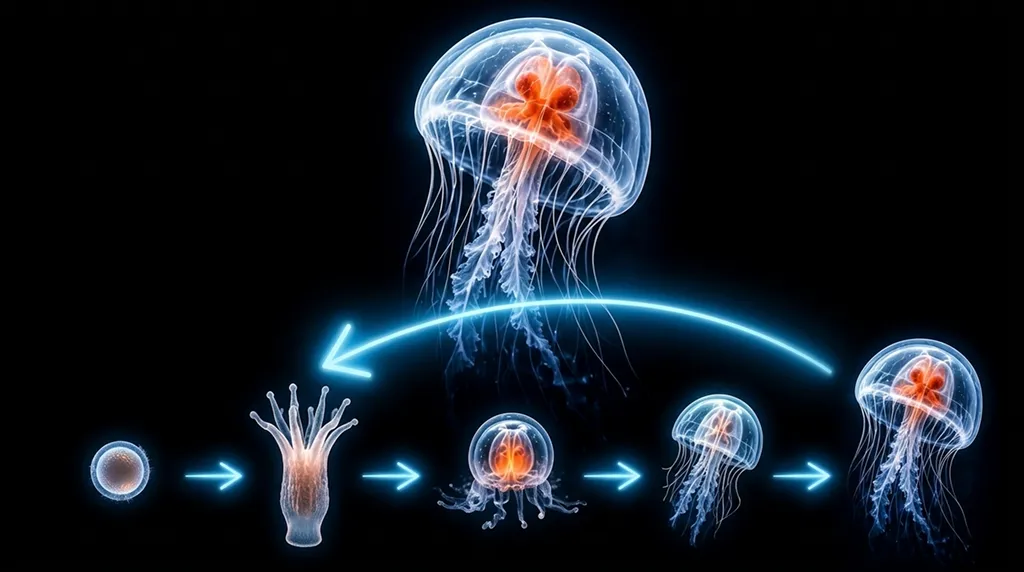
There is a jellyfish called Turritopsis dohrnii that has developed an extraordinary survival trick. When injured, starving or facing environmental stress, it can transform its adult body back into an earlier life stage called a polyp.
Instead of continuing through the normal life cycle toward death, its cells undergo a process known as transdifferentiation, effectively reorganising into different cell types. The polyp can then develop into a new adult jellyfish.
Most animals need oxygen to produce energy, but scientists discovered a tiny parasite called Henneguya salminicola that appears to have completely lost its mitochondrial genome, including the genes normally associated with oxygen based energy production.
The organism lives inside salmon and belongs to the same broad group as jellyfish and corals. Its unusual biology suggests it does not rely on oxygen in the way almost every other known animal does.
The discovery, published in 2020, challenged a basic assumption about animal life: that every animal needs oxygen to survive.
Venus takes about 243 Earth days to complete one rotation on its axis. Yet it takes only around 225 Earth days to travel once around the Sun. So, on Venus, one rotation lasts longer than an entire trip around the Sun.
Venus takes about 243 Earth days to complete one rotation on its axis. Yet it takes only around 225 Earth days to travel once around the Sun. So, on Venus, one rotation lasts longer than an entire trip around the Sun.
There is another strange detail. Venus rotates backwards compared with most planets, meaning the Sun would appear to rise in the west and set in the east.
Its extremely slow rotation makes Venus one of the most unusual planets in our Solar System.
Sharks have existed for at least 400 million years, making them older than trees. The earliest sharks appeared hundreds of millions of years ago, while the first trees evolved later, around 385 million years ago.
That means sharks were already swimming through Earth's ancient oceans before forests began spreading across land. They also survived several major extinction events that wiped out huge numbers of other species.
A fluffy white cloud can look almost weightless, but it can contain an enormous amount of water. A typical cumulus cloud may contain roughly 500,000 kilograms of water, equivalent to more than 1.1 million pounds.
So why doesn't it simply fall from the sky? The water is distributed among billions of tiny droplets and ice particles. These particles are small enough to remain suspended by air currents moving through the atmosphere.
The next time you see a cloud floating overhead, remember that something that looks weightless can have a massive amount of water inside it.
There is a jellyfish called Turritopsis dohrnii that has developed an extraordinary survival trick. When injured, starving or facing environmental stress, it can transform its adult body back into an earlier life stage called a polyp.
Instead of continuing through the normal life cycle toward death, its cells undergo a process known as transdifferentiation, effectively reorganising into different cell types. The polyp can then develop into a new adult jellyfish.
Most animals need oxygen to produce energy, but scientists discovered a tiny parasite called Henneguya salminicola that appears to have completely lost its mitochondrial genome, including the genes normally associated with oxygen based energy production.
The organism lives inside salmon and belongs to the same broad group as jellyfish and corals. Its unusual biology suggests it does not rely on oxygen in the way almost every other known animal does.
The discovery, published in 2020, challenged a basic assumption about animal life: that every animal needs oxygen to survive.



