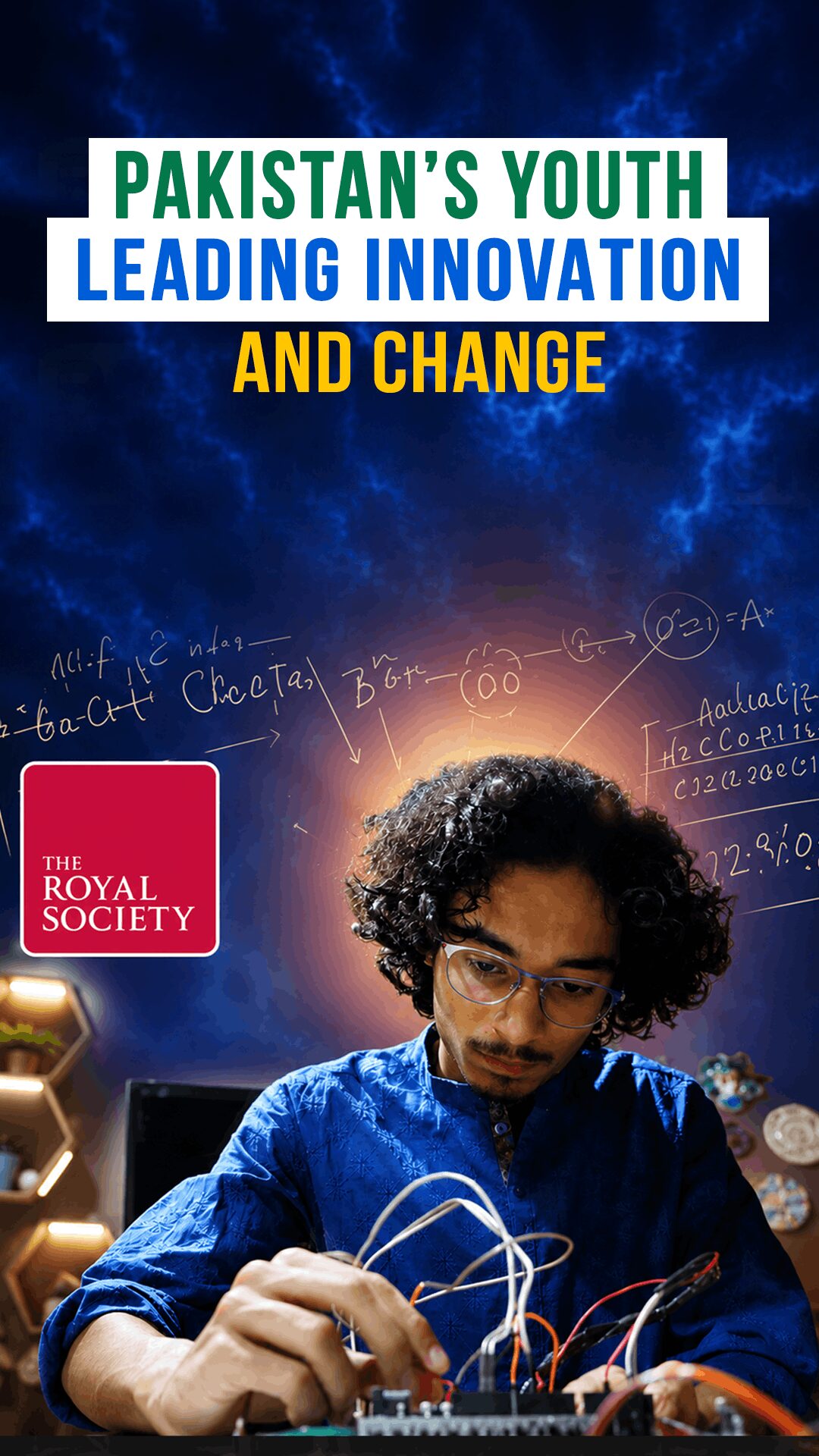
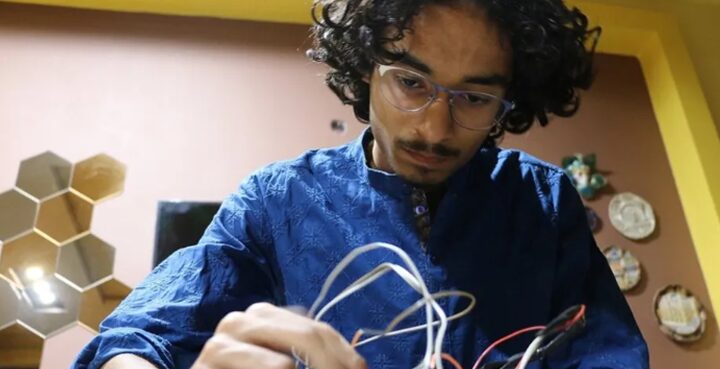
Muhammad Shaheer Niazi, a Lahore Grammar School student, turned curiosity into discovery by experimenting with how tiny particles react in electrically charged water an idea that began in the classroom but captured global attention.
But behind that experiment was a questioning mind eager to observe, test, and understand the hidden patterns of nature.
On the crowded and bustling streets of Karachi, Amjad Ali spent long hours driving a rickshaw to provide for his family.
Under the scorching sun, surrounded by traffic, noise, and constant challenges.
Each day was physically demanding and financially uncertain. Yet amid the hardships of daily life, he carried a dream far greater than survival a dream of building a brighter, more secure future for his children through education.
Shaheer’s groundbreaking work earned recognition far beyond Pakistan.
His research was published in Royal Society Open Science, one of the world’s respected scientific journals, bringing international attention to his discovery.
His achievement became a proud moment for Pakistan proof that young talent can contribute meaningfully to global science
Muhammad Shaheer Niazi is a young Pakistani scientist who gained international recognition for his groundbreaking research on the “electric honeycomb” phenomenon at just 16.
Muhammad Shaheer Niazi, a Lahore Grammar School student, turned curiosity into discovery by experimenting with how tiny particles react in electrically charged water an idea that began in the classroom but captured global attention.
But behind that experiment was a questioning mind eager to observe, test, and understand the hidden patterns of nature.
On the crowded and bustling streets of Karachi, Amjad Ali spent long hours driving a rickshaw to provide for his family.
Under the scorching sun, surrounded by traffic, noise, and constant challenges.
Each day was physically demanding and financially uncertain. Yet amid the hardships of daily life, he carried a dream far greater than survival a dream of building a brighter, more secure future for his children through education.
Shaheer’s groundbreaking work earned recognition far beyond Pakistan.
His research was published in Royal Society Open Science, one of the world’s respected scientific journals, bringing international attention to his discovery.
His achievement became a proud moment for Pakistan proof that young talent can contribute meaningfully to global science