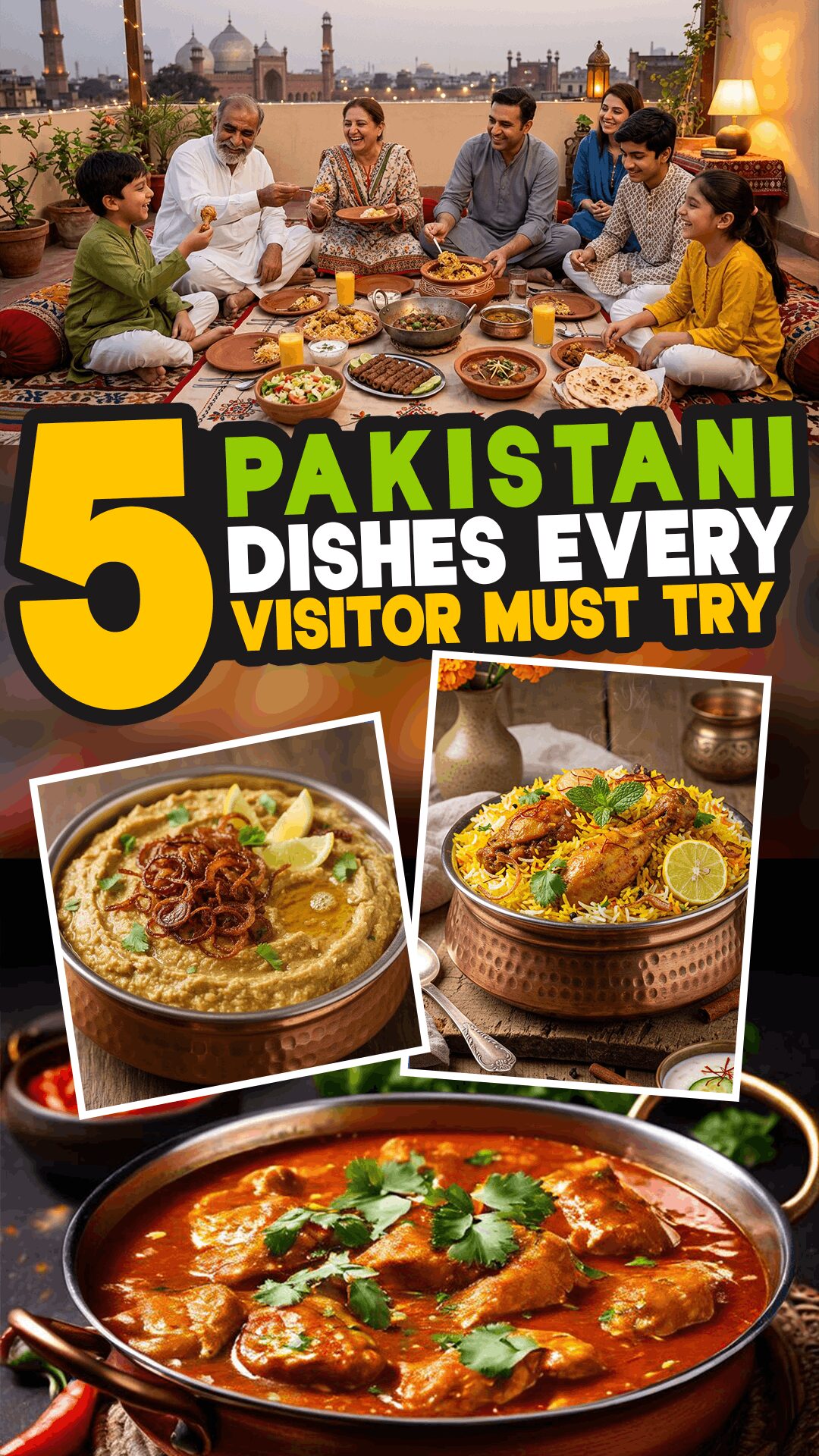
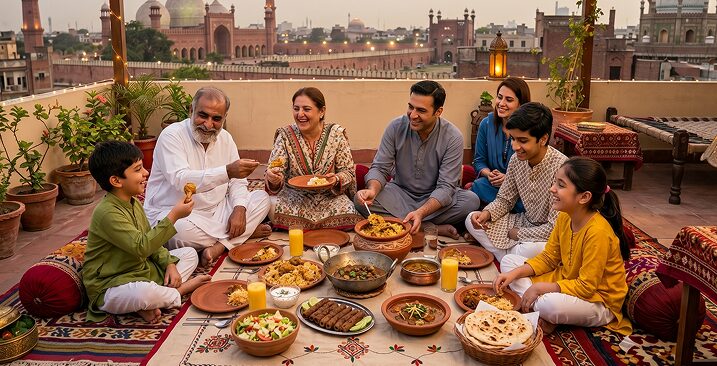
Pakistan’s cuisine is a vibrant blend of regional traditions, Mughal-era influences, and centuries of cultural exchange.
From spicy street food to slow-cooked royal dishes, every meal reflects a deep history and strong cultural identity. For visitors, food is one of the most authentic ways to experience Pakistan’s diversity.
Biryani is Pakistan’s most famous dish, especially in Karachi and southern regions. Made with fragrant basmati rice, meat, spices, and herbs, it delivers a rich, layered flavor.

Its origins trace back to the Mughal era, where Persian and South Asian culinary traditions merged to create royal-style rice dishes that evolved into today’s beloved biryani.
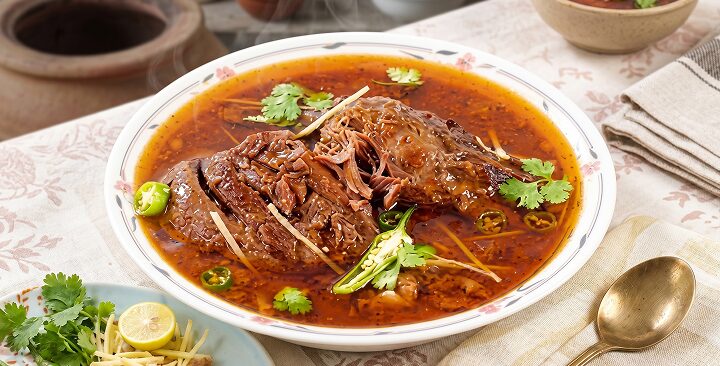
Nihari is a traditional slow-cooked meat stew often eaten as a breakfast dish in Pakistan. Originating in the Mughal royal kitchens of Delhi, it became deeply rooted in cities like Lahore and Karachi after partition.
Cooked overnight, the meat becomes extremely tender, producing a rich, aromatic gravy packed with deep spices.
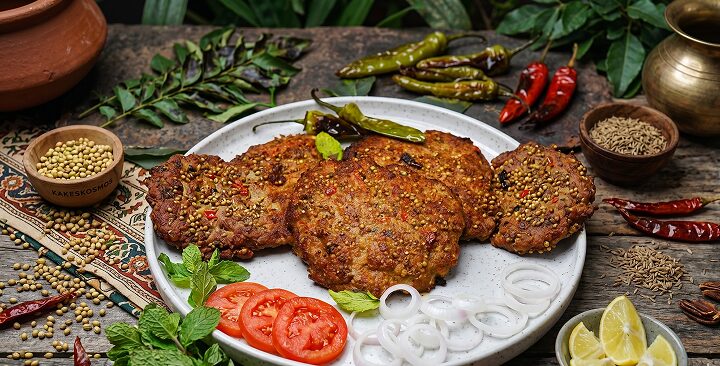
Chapli Kebab comes from Khyber Pakhtunkhwa, especially Peshawar.
These large, flat minced-meat patties are mixed with spices, tomatoes, herbs, and pomegranate seeds. Known for their bold and smoky flavor, Chapli Kebabs reflect the strong culinary traditions of Pashtun culture and are widely enjoyed across Pakistan today.
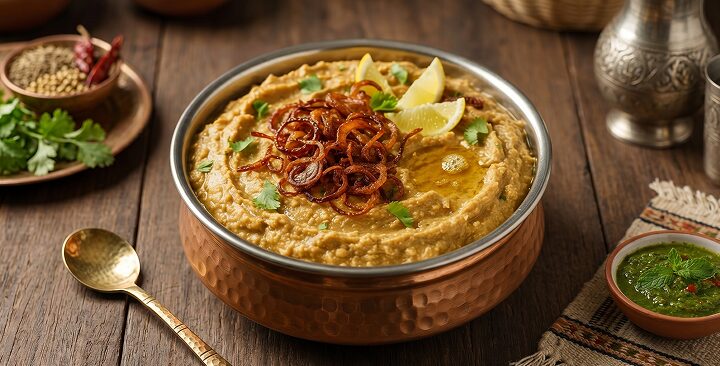
Haleem is a thick, nutritious dish made from slow-cooked wheat, lentils, and meat, popular during Ramadan in cities like Karachi and Hyderabad.
Flavored with aromatic spices and topped with fried onions, fresh coriander, ginger, lemon, and green chilies, haleem is known for its deep taste and hearty texture.
Today, haleem is valued not only as comfort food but also as a dish that reflects centuries of cultural exchange between Persian, and South Asian cuisines.
Pakistani cuisine is known for its rich flavors, spices, and regional diversity that reflect the country’s cultural heritage
Pakistan’s cuisine is a vibrant blend of regional traditions, Mughal-era influences, and centuries of cultural exchange.
From spicy street food to slow-cooked royal dishes, every meal reflects a deep history and strong cultural identity. For visitors, food is one of the most authentic ways to experience Pakistan’s diversity.
Biryani is Pakistan’s most famous dish, especially in Karachi and southern regions. Made with fragrant basmati rice, meat, spices, and herbs, it delivers a rich, layered flavor.
Its origins trace back to the Mughal era, where Persian and South Asian culinary traditions merged to create royal-style rice dishes that evolved into today’s beloved biryani.
Nihari is a traditional slow-cooked meat stew often eaten as a breakfast dish in Pakistan. Originating in the Mughal royal kitchens of Delhi, it became deeply rooted in cities like Lahore and Karachi after partition.
Cooked overnight, the meat becomes extremely tender, producing a rich, aromatic gravy packed with deep spices.
Chapli Kebab comes from Khyber Pakhtunkhwa, especially Peshawar.
These large, flat minced-meat patties are mixed with spices, tomatoes, herbs, and pomegranate seeds. Known for their bold and smoky flavor, Chapli Kebabs reflect the strong culinary traditions of Pashtun culture and are widely enjoyed across Pakistan today.
Haleem is a thick, nutritious dish made from slow-cooked wheat, lentils, and meat, popular during Ramadan in cities like Karachi and Hyderabad.
Flavored with aromatic spices and topped with fried onions, fresh coriander, ginger, lemon, and green chilies, haleem is known for its deep taste and hearty texture.
Today, haleem is valued not only as comfort food but also as a dish that reflects centuries of cultural exchange between Persian, and South Asian cuisines.