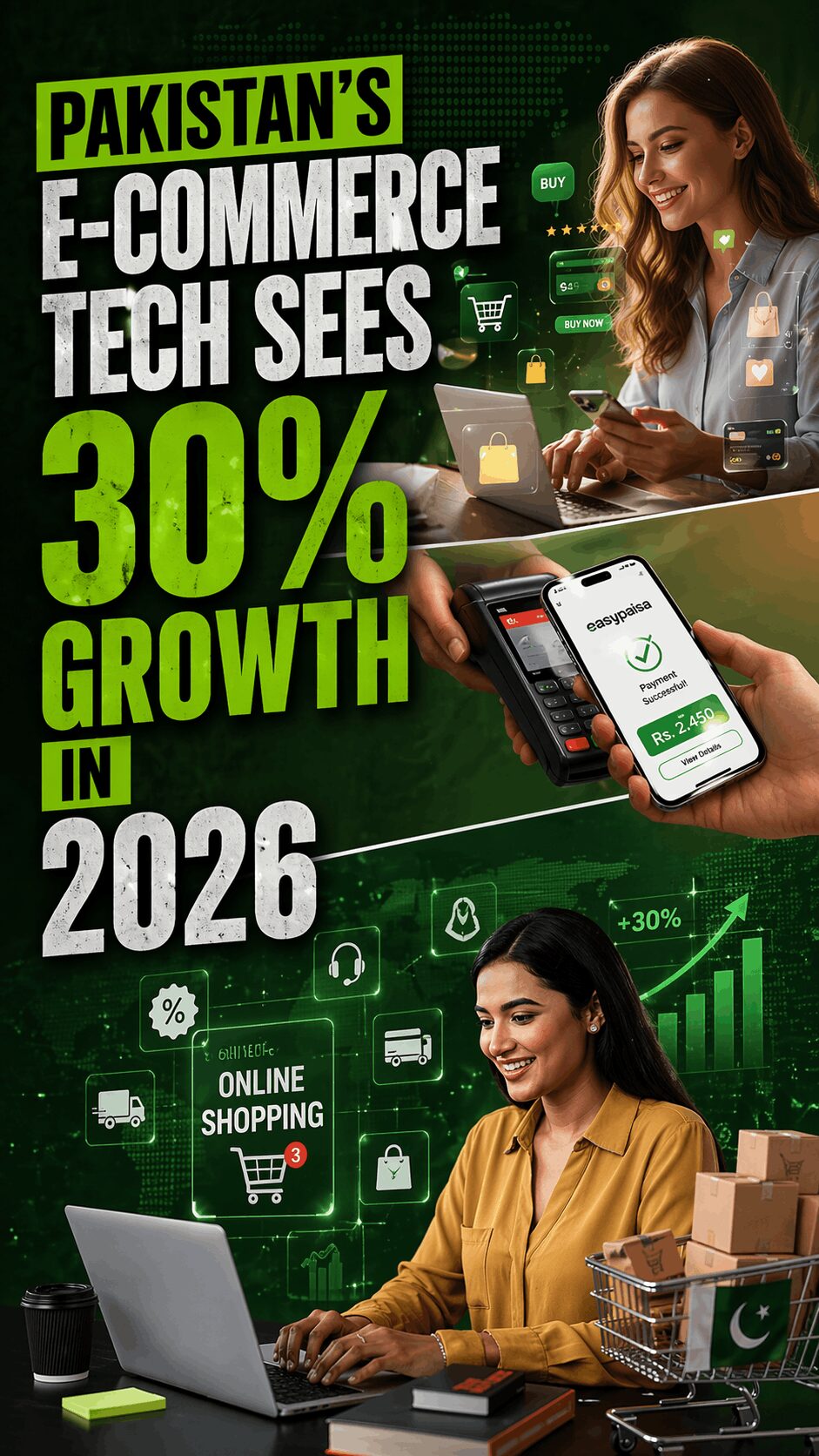

Pakistan’s e-commerce industry is entering a strong growth phase driven by digital transformation, wider internet access, and increased adoption of fintech solutions.
The sector is growing at a double-digit rate as more consumers shift from traditional retail to online platforms.
According to industry estimates and the Pakistan Telecommunication Authority, this growth is supported by rising smartphone usage, improved 4G connectivity, and increasing trust in online transactions across both urban and semi-urban regions.


A key driver of e-commerce expansion is the improvement in digital payment systems.
Mobile wallets such as Easypaisa and JazzCash have made cashless transactions more accessible, gradually reducing dependence on cash-on-delivery (COD), which still dominates the market.
The introduction of instant payment systems like Raast has further strengthened consumer confidence, enabling faster and more secure digital transactions across the country.
Major e-commerce platforms like Daraz, Telemart, and Yayvo are investing heavily in advanced technologies to improve user experience.

Artificial intelligence is being used for personalized recommendations, demand forecasting, and inventory management.
At the same time, logistics networks have improved significantly, offering faster deliveries, better tracking systems, and wider nationwide coverage, making online shopping more reliable and efficient.
Pakistan’s e-commerce market is currently valued in the multi-billion-dollar range and is expanding at an estimated 10–20% annual growth rate.
Experts predict strong long-term expansion, potentially pushing the market beyond the $8 billion mark in the coming

Growth is expected to accelerate further with increased fintech adoption, SME digitization, and the rise of social commerce platforms.
Pakistani e-commerce industry is experiencing strong growth as more consumers shift to online shopping for convenience, variety, and competitive prices.
Pakistan’s e-commerce industry is entering a strong growth phase driven by digital transformation, wider internet access, and increased adoption of fintech solutions.
The sector is growing at a double-digit rate as more consumers shift from traditional retail to online platforms.
According to industry estimates and the Pakistan Telecommunication Authority, this growth is supported by rising smartphone usage, improved 4G connectivity, and increasing trust in online transactions across both urban and semi-urban regions.
A key driver of e-commerce expansion is the improvement in digital payment systems.
Mobile wallets such as Easypaisa and JazzCash have made cashless transactions more accessible, gradually reducing dependence on cash-on-delivery (COD), which still dominates the market.
The introduction of instant payment systems like Raast has further strengthened consumer confidence, enabling faster and more secure digital transactions across the country.
Major e-commerce platforms like Daraz, Telemart, and Yayvo are investing heavily in advanced technologies to improve user experience.
Artificial intelligence is being used for personalized recommendations, demand forecasting, and inventory management.
At the same time, logistics networks have improved significantly, offering faster deliveries, better tracking systems, and wider nationwide coverage, making online shopping more reliable and efficient.
Pakistan’s e-commerce market is currently valued in the multi-billion-dollar range and is expanding at an estimated 10–20% annual growth rate.
Experts predict strong long-term expansion, potentially pushing the market beyond the $8 billion mark in the coming
Growth is expected to accelerate further with increased fintech adoption, SME digitization, and the rise of social commerce platforms.