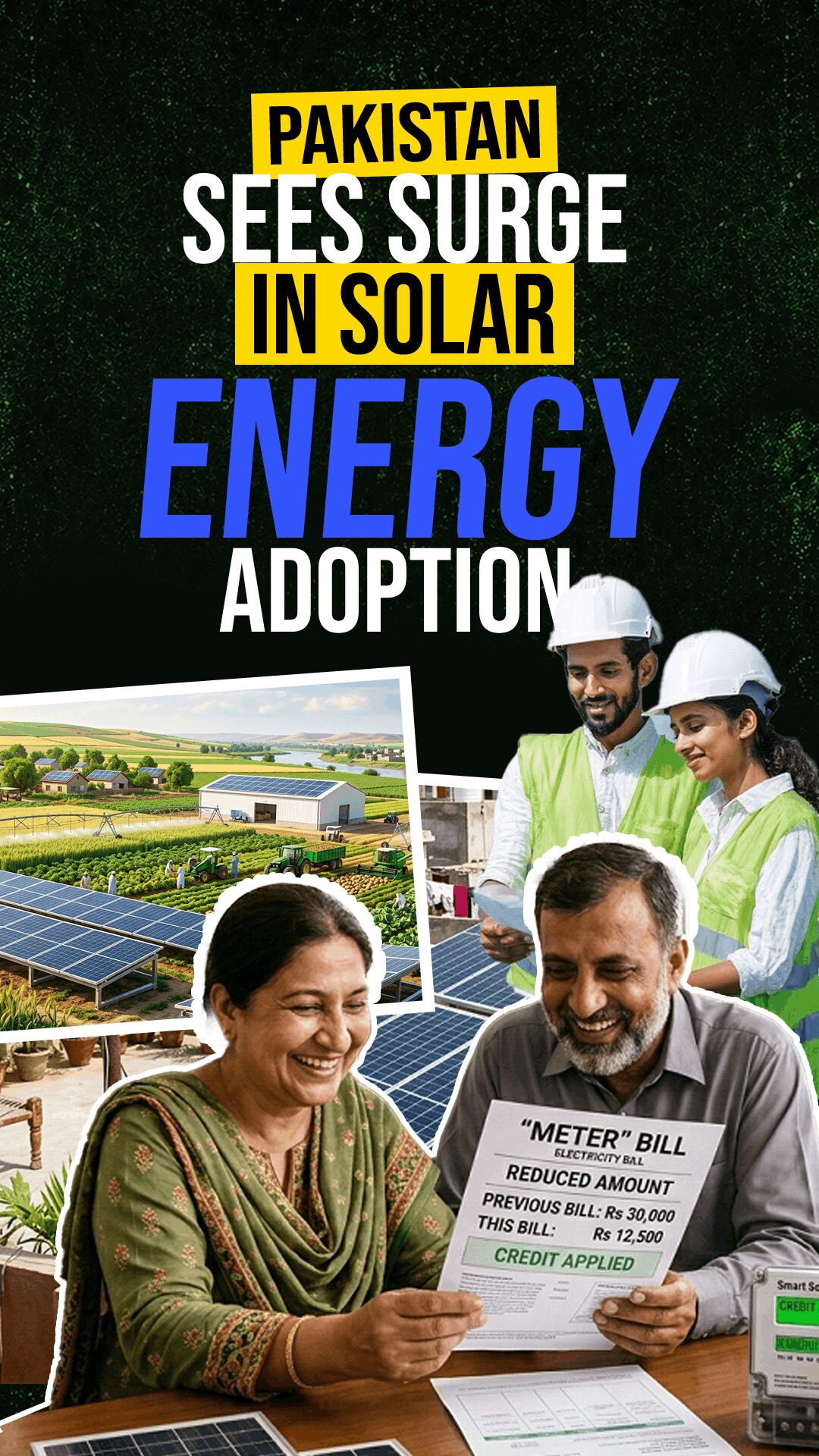
Pakistan is experiencing a major shift in its energy landscape as solar power becomes one of the fastest-growing electricity sources.
Rising electricity tariffs, frequent load shedding, and long-standing pressure on the national grid have pushed households, businesses, and industries to look for cleaner and more reliable alternatives.
Solar energy is now seen not just as an option, but as a practical solution for long-term energy stability and cost savings.
Across major cities such as Karachi, Lahore, and Islamabad, rooftop solar installations are increasing at a rapid pac

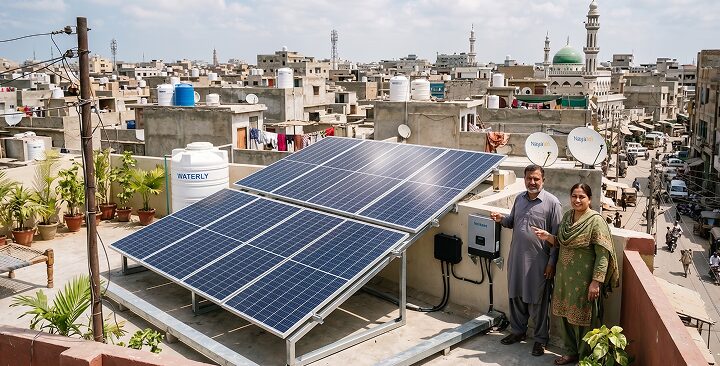
Residential homes, shopping centers, office buildings, and industrial units are installing photovoltaic systems to reduce dependence on the national grid.
This shift is changing the way electricity is produced and consumed, as more consumers become “prosumers” both producing and using their own electricity.
A key factor behind this growth is Pakistan’s net metering policy regulated by NEPRA.
This system allows solar users to send excess electricity back to the national grid and receive credits on their electricity bills.
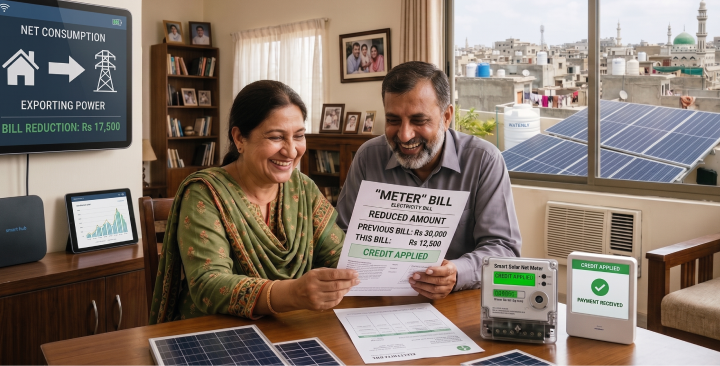
By improving the financial return on solar investments and reducing payback time, net metering has encouraged widespread adoption among households, commercial properties, and industrial users.
Pakistan’s solar capacity has expanded significantly in recent years. Net-metered solar installations surpassed 4 gigawatts by late 2024 and continued growing beyond 6 gigawatts by mid-2025.
This rapid expansion reflects strong demand across both urban and semi-urban areas. In addition to grid-connected systems, off-grid solar solutions such as battery-backed home systems.
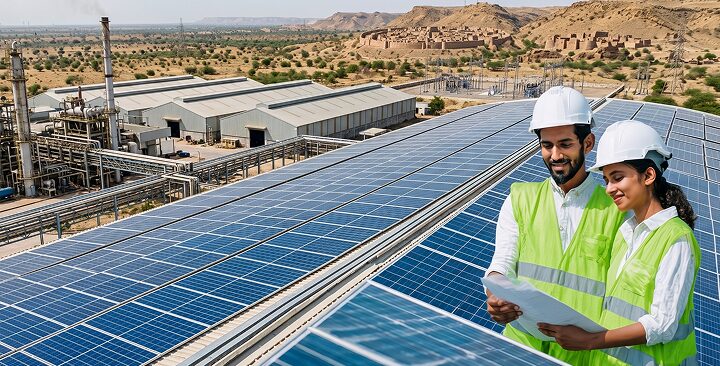
Pakistan’s long-term solar potential remains highly promising due to its abundant sunlight, high solar irradiance levels, and improving technology affordability.
Falling global prices of solar panels and increasing interest from industries such as textiles, manufacturing, and agriculture are expected to accelerate adoption further.
With better policies, financing options, and energy storage solutions, solar power could become a central pillar of Pakistan’s energy independence.
This shift is helping reduce reliance on the national grid while promoting a cleaner and more sustainable energy future.
Pakistan is experiencing a major shift in its energy landscape as solar power becomes one of the fastest-growing electricity sources.
Rising electricity tariffs, frequent load shedding, and long-standing pressure on the national grid have pushed households, businesses, and industries to look for cleaner and more reliable alternatives.
Solar energy is now seen not just as an option, but as a practical solution for long-term energy stability and cost savings.
Across major cities such as Karachi, Lahore, and Islamabad, rooftop solar installations are increasing at a rapid pac
Residential homes, shopping centers, office buildings, and industrial units are installing photovoltaic systems to reduce dependence on the national grid.
This shift is changing the way electricity is produced and consumed, as more consumers become “prosumers” both producing and using their own electricity.
A key factor behind this growth is Pakistan’s net metering policy regulated by NEPRA.
This system allows solar users to send excess electricity back to the national grid and receive credits on their electricity bills.
By improving the financial return on solar investments and reducing payback time, net metering has encouraged widespread adoption among households, commercial properties, and industrial users.
Pakistan’s solar capacity has expanded significantly in recent years. Net-metered solar installations surpassed 4 gigawatts by late 2024 and continued growing beyond 6 gigawatts by mid-2025.
This rapid expansion reflects strong demand across both urban and semi-urban areas. In addition to grid-connected systems, off-grid solar solutions such as battery-backed home systems.
Pakistan’s long-term solar potential remains highly promising due to its abundant sunlight, high solar irradiance levels, and improving technology affordability.
Falling global prices of solar panels and increasing interest from industries such as textiles, manufacturing, and agriculture are expected to accelerate adoption further.
With better policies, financing options, and energy storage solutions, solar power could become a central pillar of Pakistan’s energy independence.